Did you know…
How many apollo 11 astronauts are still alive?
Short answer
One. Buzz Aldrin, born on 20 January 1930, is the only surviving member of the Apollo 11 crew (as of September 2026). Neil Armstrong, the first person to walk on the Moon, died on 25 August 2012, and Michael Collins, who orbited alone aboard the command module Columbia, died in April 2021.

The crew, one by one
Apollo 11 flew with three men, named to the mission only months before launch. Neil Armstrong, the commander and the first person to set foot on another world, died on 25 August 2012. Michael Collins, who stayed in lunar orbit aboard Columbia while his crewmates landed and who described those hours alone on the far side with unusual candour, died in April 2021. Buzz Aldrin, the lunar module pilot and the second man to walk on the surface, was born on 20 January 1930 and is still living (as of September 2026), which leaves exactly one survivor of the crew.
Three very different afterwards
None of them had an obvious second act. Armstrong left NASA within a couple of years and taught aerospace engineering in Ohio, giving few interviews and guarding a privacy often mistaken for reclusiveness. Collins ran the National Air and Space Museum through its formative years and wrote the memoir that pilots still recommend above any other account of the programme. Aldrin, after a public struggle with depression and alcohol that he spoke about when almost nobody did, became the most visible campaigner of the three for sending people to Mars.
A cohort nearly gone
The wider group is thinning fast. The men who walked on the Moon between 1969 and 1972 were all born in the 1930s or earlier, and only a handful remain; the same is true of the command module pilots who waited in orbit overhead and of the flight controllers who talked them through it. Within a decade the landings will pass out of living first-hand memory altogether, which is why agencies, museums and oral history projects have spent recent years recording those voices while there is still someone to record.
More questions
- Image pending
Astronauts and life in space
Why does astronauts float in space?
Because they are in free fall, not because gravity is absent. At the International Space Station's altitude of about 400 km, Earth still pulls almost as hard… more…
- Image pending
Astronauts and life in space
Why did yuri gagarin die?
Gagarin died in an aircraft crash, not in a spacecraft. On 27 March 1968 the MiG-15UTI trainer he was flying with instructor Vladimir Seryogin went down in… more…
- Image pending
Astronauts and life in space
How much an astronaut is paid?
NASA's civilian astronauts are ordinary federal employees, paid on the General Schedule grade-and-step scale with no bonus per flight, per spacewalk or per… more…
.png)
Astronauts and life in space
Why is blue origin so slow?
Blue Origin was built on deliberate, owner-funded incrementalism: its motto is Gradatim Ferociter, step by step, and it spent its first two decades on… more…
Astronauts and life in space
When did astronauts last walk on the moon?
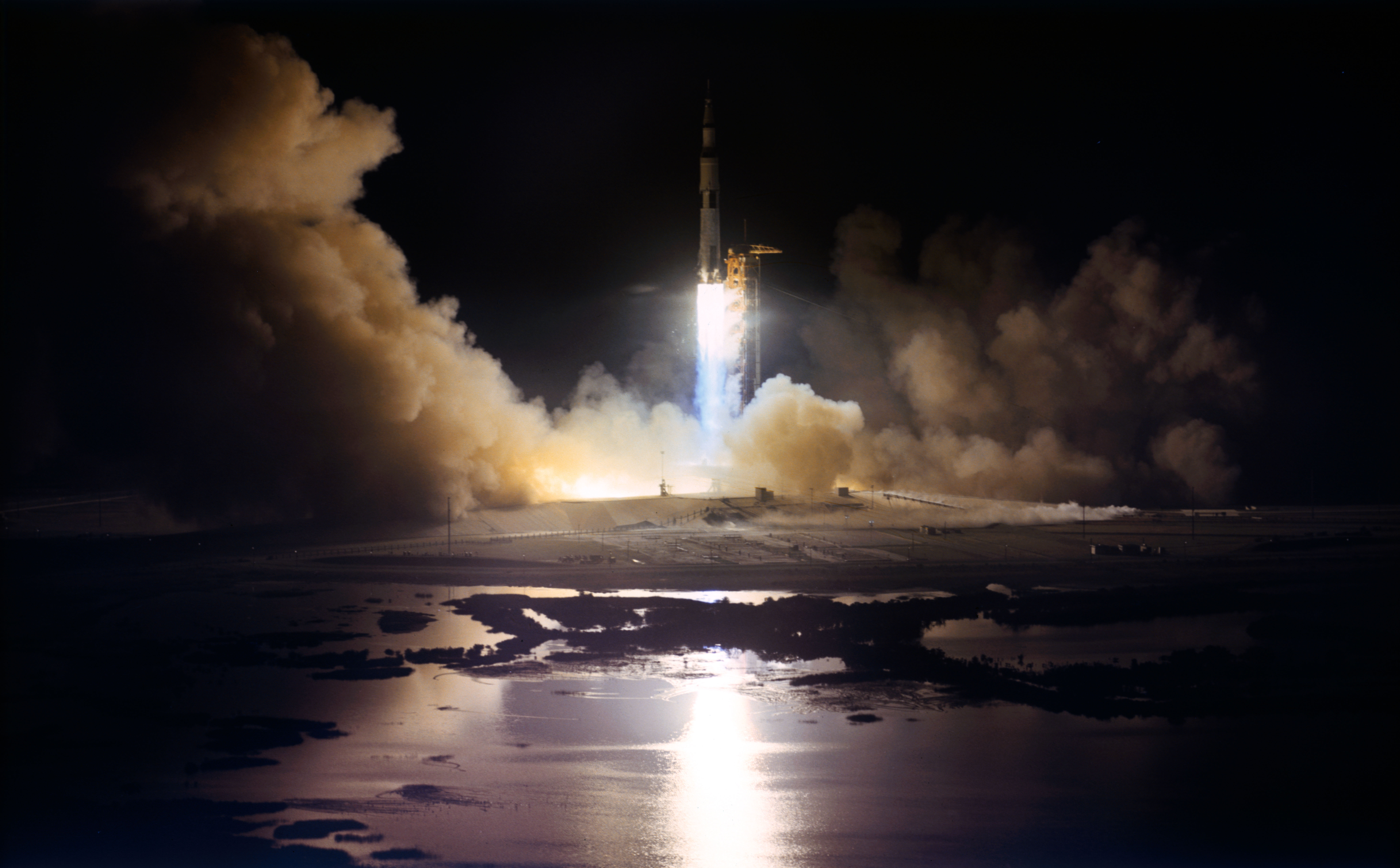
Apollo 17, in December 1972. Eugene Cernan and Harrison Schmitt landed in the Taurus-Littrow valley on 11 December 1972, worked on the surface for three days… more…
- Image pending
Astronauts and life in space
How high do astronauts orbit the earth?
Crewed spaceflight today happens a few hundred kilometres up. The International Space Station orbits at about 400 km, lapping the planet roughly every 90… more…
