Did you know…
How long neil armstrong stayed on moon?
Short answer
Neil Armstrong was on the Moon for about 21 hours and 36 minutes: Eagle landed on 20 July 1969 at 20:17 UTC and lifted off the next day at 17:54 UTC. Of that, he spent roughly 2 hours and 31 minutes outside the cabin, stepping onto the surface at 02:56 UTC on 21 July 1969.

Two clocks, two answers
The time Apollo 11 spent on the Moon is usually quoted in two different ways, and both are correct. Eagle touched down in the Sea of Tranquillity on 20 July 1969 at 20:17 UTC and fired its ascent engine on 21 July at 17:54 UTC, which puts the stay on the surface at about 21 hours and 36 minutes. The time Armstrong actually spent outside, in vacuum, was far shorter: roughly 2 hours and 31 minutes, beginning when he stepped off the ladder at 02:56 UTC on 21 July. The two figures count different things — the lander's stay and the moonwalk itself.
What had to fit into one excursion
That single outing carried the whole surface programme. Armstrong collected a contingency sample within minutes of stepping down, in case the crew had to leave in a hurry. He and Buzz Aldrin then photographed the site, planted the flag, took a call from the White House, deployed a solar wind collector, a laser reflector and a seismometer, and filled the sample boxes, all while a stiff pressurised suit turned every bend of the waist into work. Every task had been rehearsed on Earth against a timeline measured in minutes.
Why the visit was so brief
Eagle was a first landing, not an expedition. Its consumables, the backpack life support and the margin kept for an emergency launch all argued for a short, cautious stay, and there was no rover to extend the crew's reach beyond a short walk from the ladder. The margin mattered more than the science return: nobody had yet proved that a crew could rest, repressurise and launch again from another world. Later missions, with upgraded life support and a vehicle to ride, measured their surface time in days rather than hours, and their crews travelled kilometres from the lander.
More questions
- Image pending
Astronauts and life in space
Why does astronauts float in space?
Because they are in free fall, not because gravity is absent. At the International Space Station's altitude of about 400 km, Earth still pulls almost as hard… more…
- Image pending
Astronauts and life in space
Why did yuri gagarin die?
Gagarin died in an aircraft crash, not in a spacecraft. On 27 March 1968 the MiG-15UTI trainer he was flying with instructor Vladimir Seryogin went down in… more…
- Image pending
Astronauts and life in space
How much an astronaut is paid?
NASA's civilian astronauts are ordinary federal employees, paid on the General Schedule grade-and-step scale with no bonus per flight, per spacewalk or per… more…
.png)
Astronauts and life in space
Why is blue origin so slow?
Blue Origin was built on deliberate, owner-funded incrementalism: its motto is Gradatim Ferociter, step by step, and it spent its first two decades on… more…
Astronauts and life in space
When did astronauts last walk on the moon?
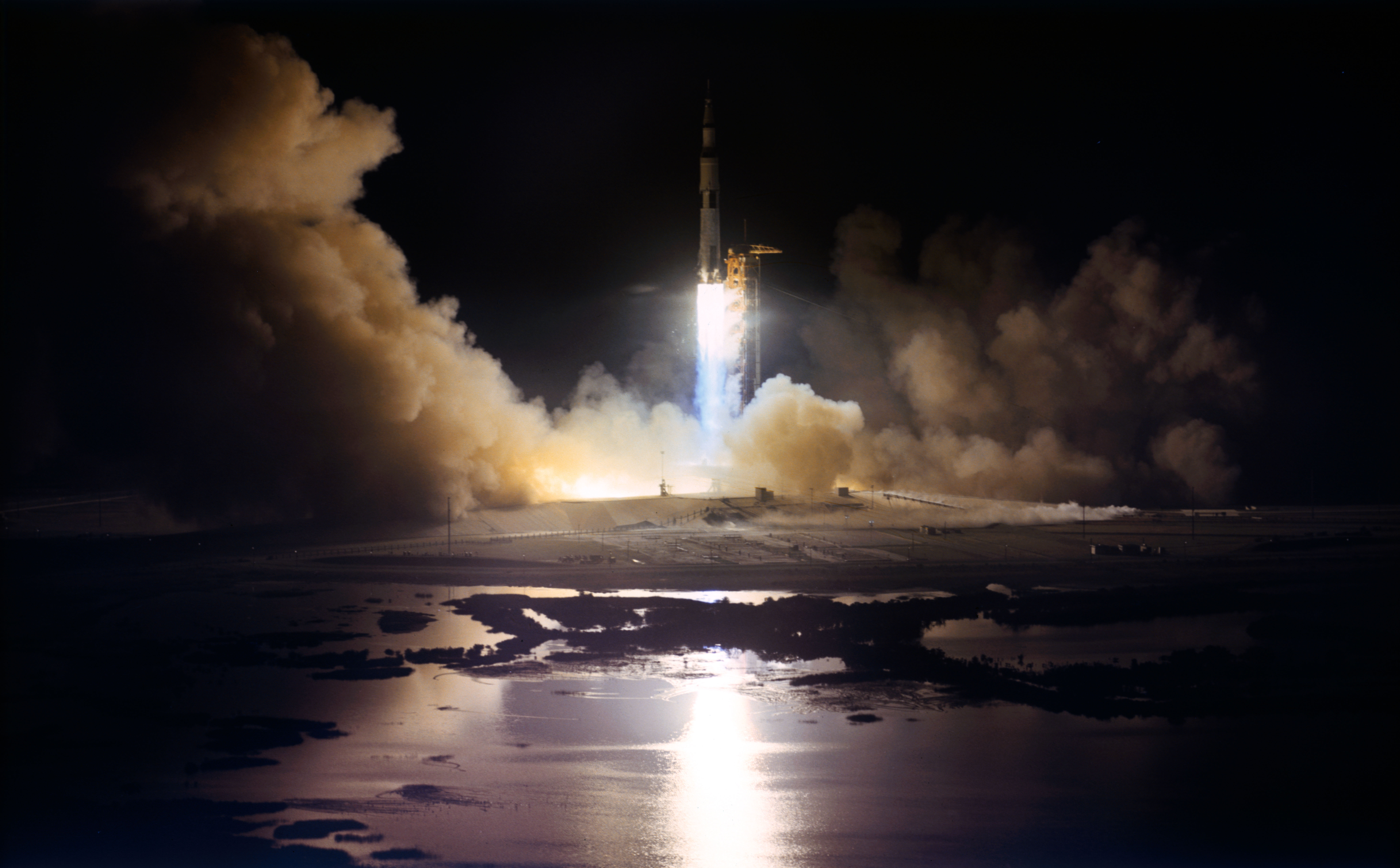
Apollo 17, in December 1972. Eugene Cernan and Harrison Schmitt landed in the Taurus-Littrow valley on 11 December 1972, worked on the surface for three days… more…
- Image pending
Astronauts and life in space
How high do astronauts orbit the earth?
Crewed spaceflight today happens a few hundred kilometres up. The International Space Station orbits at about 400 km, lapping the planet roughly every 90… more…
