Did you know…
How long neil armstrong on moon?
Short answer
Armstrong spent about 2 hours 31 minutes outside the lunar module on the surface, and roughly 21 hours 36 minutes on the Moon in total, counting the time inside Eagle. He stepped onto the surface about six and a half hours after Eagle touched down on 20 July 1969.

Two clocks, two answers
Confusion about the length of Armstrong's stay comes from measuring different things. The moonwalk itself, from opening the hatch of the lunar module Eagle to closing it again, lasted about 2 hours 31 minutes. The stay on the Moon, counted from touchdown to lift-off, was roughly 21 hours 36 minutes, most of it spent inside the cabin. Both figures are small against the mission as a whole, which ran a little over eight days from Florida to the Pacific.
The timeline of 20-21 July 1969
Eagle landed in the Sea of Tranquillity late on 20 July, Universal Time, with less propellant margin than anyone had wanted. The flight plan called for a rest period first; the crew asked to skip it and depressurised early. Armstrong climbed down the ladder and stepped onto the surface in the small hours of 21 July UTC, about six and a half hours after touchdown, and Buzz Aldrin joined him some twenty minutes later. The hatch closed before the crew tried to sleep, and Eagle lifted off later that day to rendezvous with Michael Collins aboard Columbia.
What fitted into two and a half hours
Very little, by the standards of later missions. The two men planted the flag, took a call from the White House, photographed the site and the spacecraft, collected rock and soil, and set out a small experiment package with a passive seismometer and a laser reflector that is still used today. Neither strayed more than a short walk from the module, and both worked inside a tight schedule read up from Houston. Everything after Apollo 11 was longer: Apollo 12 managed two excursions, and by Apollo 17 the crew spent about three days on the surface and drove a rover kilometres from the landing point.
More questions
- Image pending
Astronauts and life in space
Why does astronauts float in space?
Because they are in free fall, not because gravity is absent. At the International Space Station's altitude of about 400 km, Earth still pulls almost as hard… more…
- Image pending
Astronauts and life in space
Why did yuri gagarin die?
Gagarin died in an aircraft crash, not in a spacecraft. On 27 March 1968 the MiG-15UTI trainer he was flying with instructor Vladimir Seryogin went down in… more…
- Image pending
Astronauts and life in space
How much an astronaut is paid?
NASA's civilian astronauts are ordinary federal employees, paid on the General Schedule grade-and-step scale with no bonus per flight, per spacewalk or per… more…
.png)
Astronauts and life in space
Why is blue origin so slow?
Blue Origin was built on deliberate, owner-funded incrementalism: its motto is Gradatim Ferociter, step by step, and it spent its first two decades on… more…
Astronauts and life in space
When did astronauts last walk on the moon?
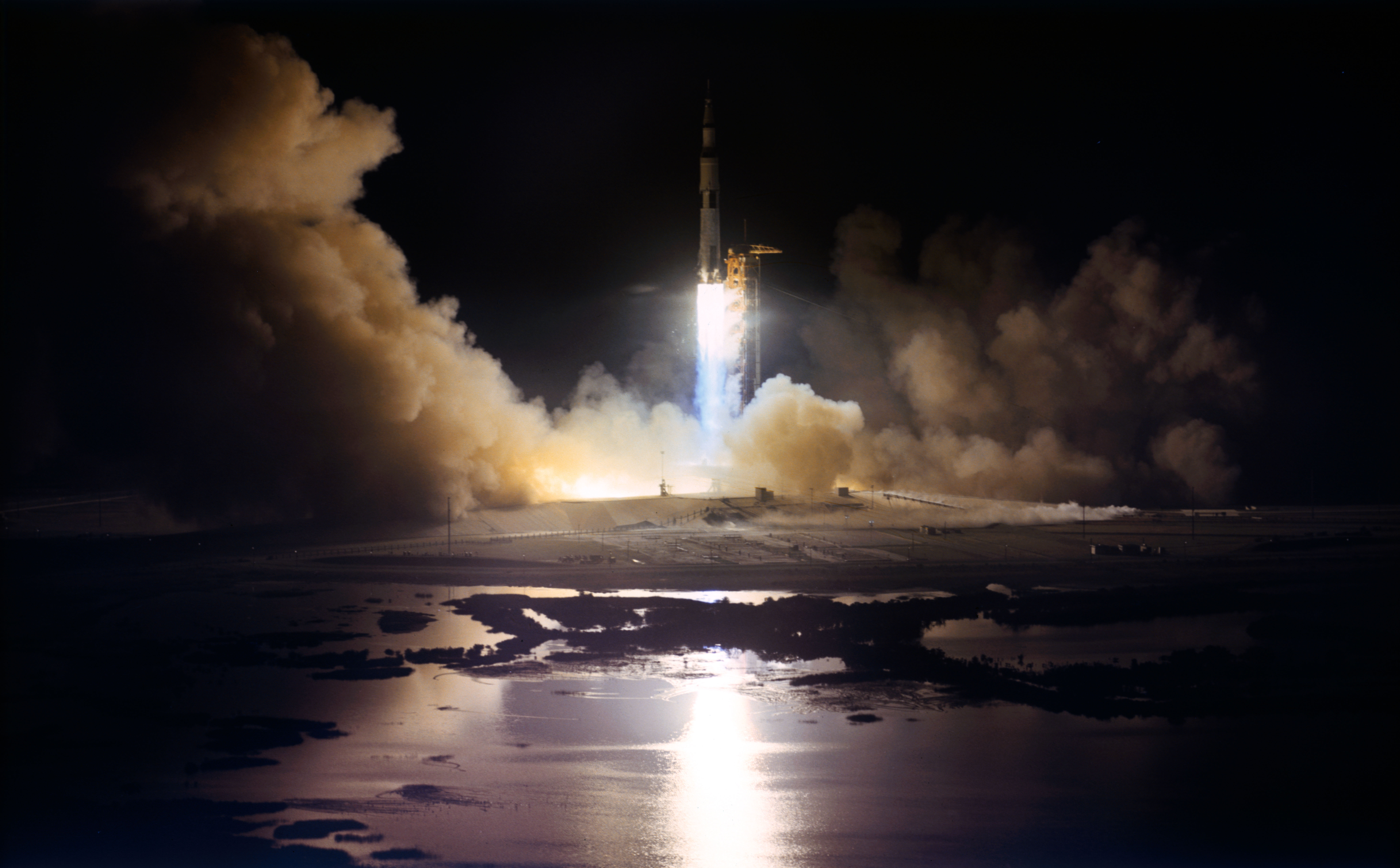
Apollo 17, in December 1972. Eugene Cernan and Harrison Schmitt landed in the Taurus-Littrow valley on 11 December 1972, worked on the surface for three days… more…
- Image pending
Astronauts and life in space
How high do astronauts orbit the earth?
Crewed spaceflight today happens a few hundred kilometres up. The International Space Station orbits at about 400 km, lapping the planet roughly every 90… more…
