Did you know…
How long does it take a rocket to reach the Moon?
Short answer
Between eight hours and thirteen months, depending on the trajectory. New Horizons passed the Moon 8 hours and 35 minutes after launch; the Apollo missions took about three days to arrive, and the European probe SMART-1, using ion propulsion, needed about 13 months to reach lunar orbit.

Three Days, the Benchmark Figure
ESA sums up the crewed case: the Apollo missions took about three days to reach the Moon. Apollo 11 illustrates this well, since its lunar module landed in the Sea of Tranquility at 102 hours, 45 minutes and 40 seconds after launch: to the outbound trip must be added lunar orbit insertion and descent. That timeline is a compromise between propellant use, safety and time, not a speed record. NASA's most recent crewed flight, Artemis II, launched on April 1, 2026 and flew past the Moon on April 6, on the sixth day of the flight, without entering lunar orbit.
The Flyby and the Patient Spiral
Two opposite ways of traveling mark the extremes. New Horizons passed the Moon 8 hours and 35 minutes after launch, on its way to Pluto: it did not need to slow down, so it crossed the lunar distance at full speed and continued on its way. At the opposite end, SMART-1 launched on September 27, 2003 and was not captured by lunar gravity until November 15, 2004, a cruise of about 13 months. Its ion engine provides minimal but constant thrust, so the probe had to widen its Earth orbit lap by lap before finally being captured.
What Sets the Clock
The distance barely changes: the Moon orbits between 350,000 and 400,000 kilometers from Earth. What changes is the energy available and what is planned upon arrival. A spacecraft that only flies past can accelerate without reservation; one that must stay in orbit or land has to arrive slowly enough to brake using the propellant it carries. That is why, at the Moon, going fast and stopping are competing goals, and why travel time says more about the mission plan than about the rocket.
More questions
Moon and Mars
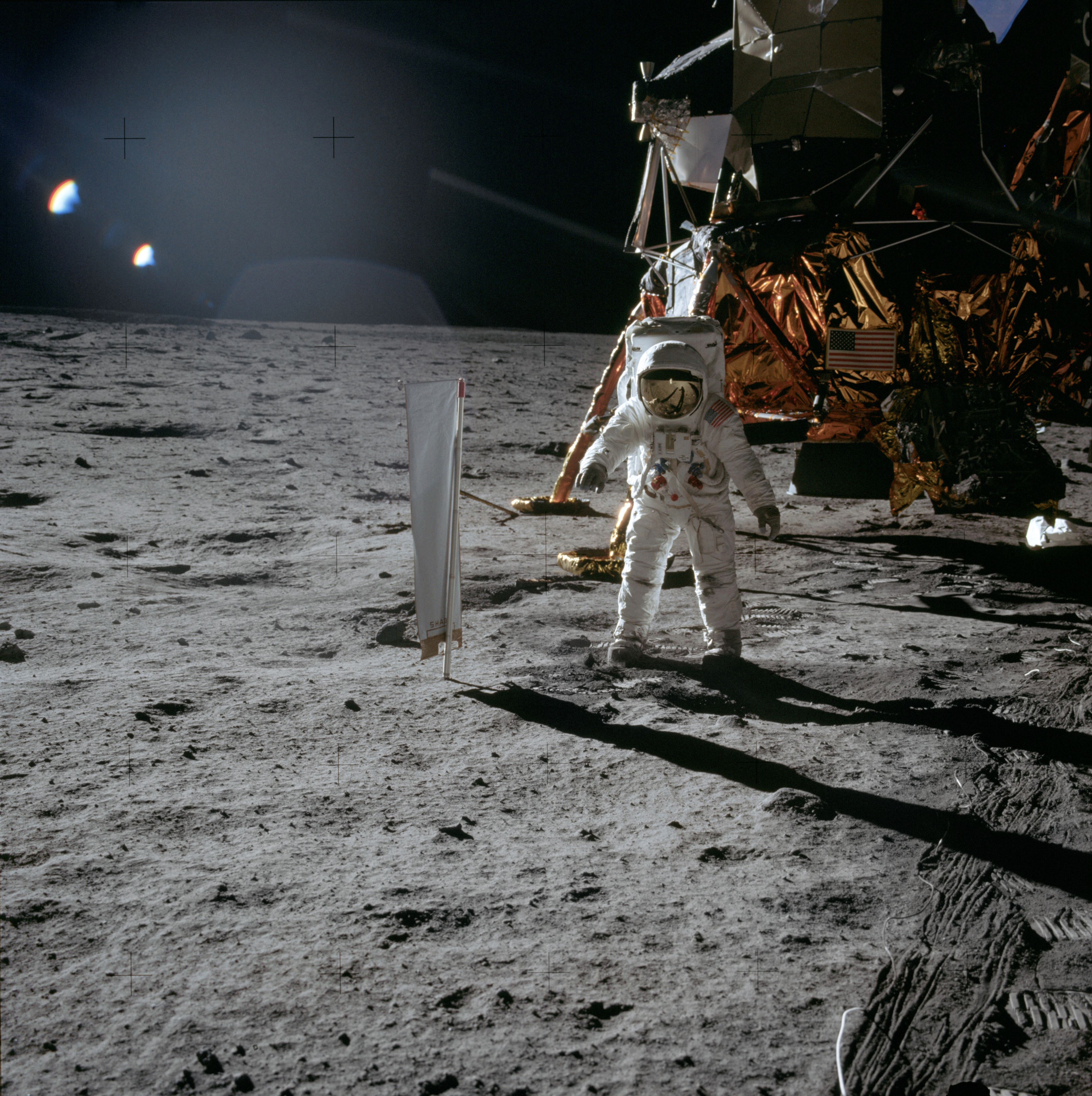
How does neil armstrong look like?
The face most people picture is not his: the gold-visored astronaut in the famous Apollo 11 photograph is Buzz Aldrin, shot by Armstrong. Armstrong himself is… more…

Richard Dorrell (CC BY SA), vía commons Moon and Mars
How does the moon affect the tides?
By pulling unevenly on it. Tidal forces vary inversely as the cube of the distance, so the near side of the Earth is tugged harder than the far side: one… more…
Moon and Mars
Why does neil armstrong have a hollywood star?
Strictly he does not have a star. Armstrong, Aldrin and Collins share four circular monuments resembling the Moon, one at each corner of Hollywood and Vine… more…
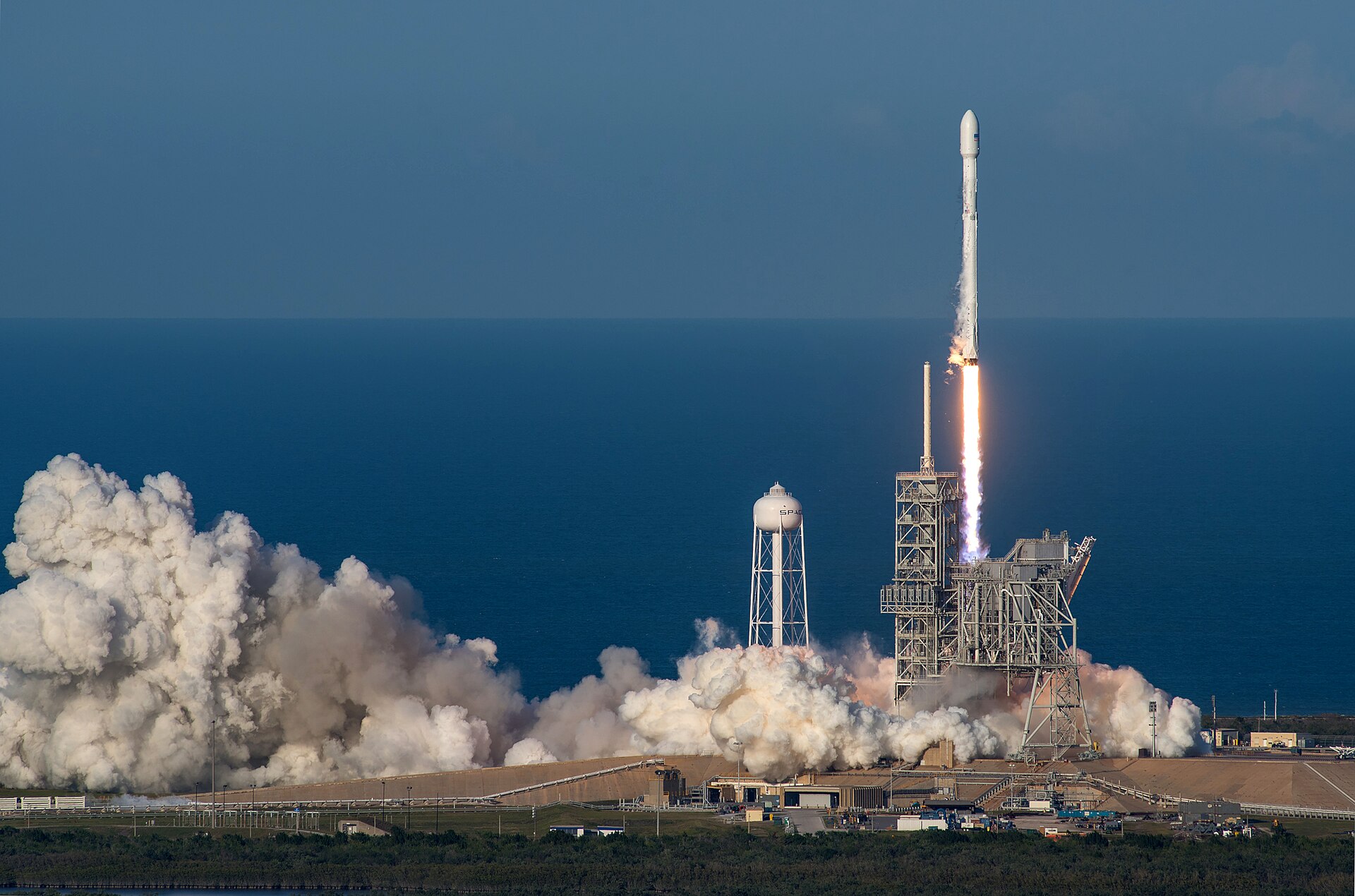
Foto: SpaceX (CC0) Moon and Mars
Why did falcon 9 hit the moon?
Because a spent upper stage on a lunar trajectory has no mission and no way to steer. A Falcon 9 upper stage from the January 2025 Firefly Blue Ghost 1 launch… more…
Moon and Mars
How much apollo 11 cost?
NASA never published a price for Apollo 11 on its own; what is documented is the program. The United States spent $25.8 billion on Project Apollo between 1960… more…
Moon and Mars
How much time neil armstrong spent on moon?
Armstrong and Aldrin spent 21 hours, 36 minutes on the Moon's surface, almost all of it inside the lunar module Eagle. Armstrong stepped onto the surface… more…
