Did you know…
How fast did the 1955 Ye-50 fly?
Short answer
The Ye-50 did not fly in 1955: the first of its three prototypes, the Ye-50/1, took off on January 9, 1956. On June 17, 1957, the second prototype, the Ye-50/2, reached Mach 2.33 and an altitude of 25,600 m. It combined a Tumansky AM-9Ye turbojet with a Dushkin S-155 bi-propellant rocket engine.

The Ye prototypes in the mid-1950s
Mikoyan's OKB had closed in 1954 the preliminary design study of a prototype designated Ye-1, the origin of what would become the MiG-21. That project was quickly reworked, after it was determined that the intended engine was underpowered, which led to the second prototype, the Ye-2. These and other early prototypes had swept wings. The first with the delta wing of the production variants was the Ye-4, which flew on June 16, 1955.
Turbojet and rocket engine
The Ye-50 was designed around a Tumansky AM-9Ye (RD-9Ye) turbojet with 3,800 kgf of afterburning thrust and a Dushkin S-155 bi-propellant rocket engine of 1,300 kgf. The first of the three prototypes, the Ye-50/1, flew on January 9, 1956. Its rocket-engine trials began on June 8, 1956. On June 17, 1957, the second prototype, the Ye-50/2, reached Mach 2.33 and an altitude of 25,600 m. The third, the Ye-50/3, received a lengthened fuselage nose and more internal fuel, and was lost during flight testing when its vertical fin broke away.
The batch that was never built
The Gorky factory was ordered to build a batch of 20 aircraft designated Ye-50A, with the AM-11 engine and the S-155 rocket, intended for operational evaluation. None were built: rocket engines were lacking, as the Dushkin OKB had meanwhile closed down.
More questions
Aviation history
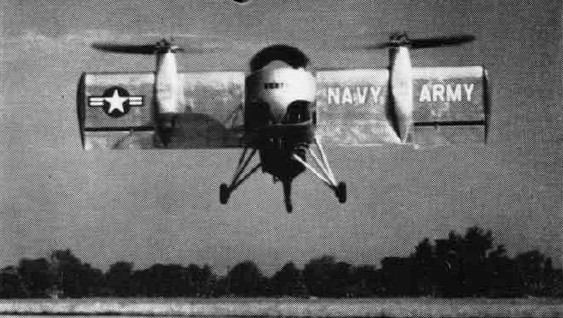
What was special about the Vertol 76?
Vertol's VZ-2 tested the tiltwing concept for vertical take-off and landing. After ground trials beginning in April 1957, it first took off on 13 August only… more…

Aviation history
Which was the most-produced American fighter of the Second World War?
The Republic P-47 Thunderbolt, of which 15,636 or 15,683 units were built, depending on the source. It was also one of the heaviest fighters of the conflict… more…

Aviation history
Who flew the E-66 at 2,149 km/h?
Konstantin or Vladimir Kokkinaki, depending on the source. Konstantin is credited with the absolute record on a closed 100 km circuit, at 2,148.66 km/h, set… more…

Fly-by-Owen (CC BY SA), vía commons Aviation history
How many I-11Bs were built?
Between 208 and around 450, depending on the source: one of the AISA I-11 reference sheets gives 208 examples built, while All-Aero speaks of around 400 built… more…

Aviation history
How many HH-53s could be converted to Pave Low III?
Eight HH-53C aircraft received an improved systems package and were redesignated HH-53H Pave Low III. The other figure in circulation, nine MH-53H and 32… more…

SCDBob (CC BY SA), vía commons Aviation history
What did the A129 Mangusta's armor protect?
The fuselage: the A129's airframe is armored and, according to All-Aero, designed to protect against 12.7 mm rounds, with partial protection against 23 mm… more…


