Did you know…
Is there evidence the Japanese called the Corsair "Whistling Death"?
Short answer
No. The claim is repeated so often it has acquired the status of fact, but the Japanese equivalent appears in no Japanese literature, no war records, not even in prisoner interrogations; the nickname was manufactured by Vought's publicity department and has been misattributed ever since.

The story that circulates
The most repeated version claims that the Japanese nicknamed the fighter "Whistling Death." It is linked to the aircraft's sound: air rushing at high speed through the wing's slots gave it a very distinctive noise.
Why it doesn't hold up
The claim has been repeated so relentlessly that it has taken on the status of fact, but the Japanese equivalent appears nowhere: not in Japanese literature, not in war records, not even in prisoner interrogations. The nickname was actually invented by Vought's publicity department. Skepticism about this nickname goes back a long way. One reason to distrust these fearsome nicknames is that, in reality, enemies never give flattering labels to their adversary's aircraft.
The Beaufighter precedent
Before the Corsair appeared, the phrase was associated with whizzing bullets and artillery shells in anecdotes from the American Civil War and the First World War. The unit that operated the Beaufighter when it received, under similar circumstances and supposedly from the Japanese, the nickname "Whispering Death" was the 224 Group, an Australian squadron. It would not be far-fetched to suppose the phrase traveled from the antipodes all the way to Guadalcanal. In the Beaufighter's case, the attribution appears to come from false wartime Allied propaganda. It is also objected that Japanese combatants spoke Japanese and would not have said "whispering death." The claim is described as blatantly ridiculous propaganda, endlessly repeated online. A reward of a thousand pounds sterling has even been offered to anyone who can provide convincing evidence that a Japanese person called the Beaufighter that during the Second World War.
More questions
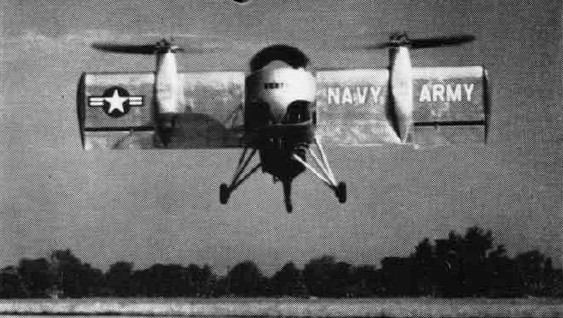
Aviation history
What was special about the Vertol 76?
Vertol's VZ-2 tested the tiltwing concept for vertical take-off and landing. After ground trials beginning in April 1957, it first took off on 13 August only… more…

Aviation history
Which was the most-produced American fighter of the Second World War?
The Republic P-47 Thunderbolt, of which 15,636 or 15,683 units were built, depending on the source. It was also one of the heaviest fighters of the conflict… more…

Aviation history
Who flew the E-66 at 2,149 km/h?
Konstantin or Vladimir Kokkinaki, depending on the source. Konstantin is credited with the absolute record on a closed 100 km circuit, at 2,148.66 km/h, set… more…

Fly-by-Owen (CC BY SA), vía commons Aviation history
How many I-11Bs were built?
Between 208 and around 450, depending on the source: one of the AISA I-11 reference sheets gives 208 examples built, while All-Aero speaks of around 400 built… more…

Aviation history
How many HH-53s could be converted to Pave Low III?
Eight HH-53C aircraft received an improved systems package and were redesignated HH-53H Pave Low III. The other figure in circulation, nine MH-53H and 32… more…

SCDBob (CC BY SA), vía commons Aviation history
What did the A129 Mangusta's armor protect?
The fuselage: the A129's airframe is armored and, according to All-Aero, designed to protect against 12.7 mm rounds, with partial protection against 23 mm… more…


