Did you know…
Is it true that the Moon is moving away from Earth?
Short answer
Yes. The Moon is moving away from Earth by about 3.8 centimeters a year. We know this because the Apollo 11 astronauts left a laser reflector on the surface in 1969: by timing the round trip of laser pulses from Earth, the distance can be calculated with a precision of about two centimeters.

The mirror in the Sea of Tranquility
The figure doesn't come from a theoretical calculation but from a measurement repeated for more than half a century. Among the instruments the Apollo 11 crew installed in 1969 was a retroreflector: a square 46-centimeter aluminum panel holding one hundred fused-silica prisms, each 3.8 centimeters in diameter, cut so that they return any beam of light exactly in the direction it came from. It needs no electricity or maintenance, which is why it is still operating: thirty years after its installation it was still working without a single failure.
How the distance is measured
From several Earth-based observatories, laser pulses are fired at that panel and the round trip is timed. Of the countless photons sent out, only a handful return, but that is enough to fix the distance between Earth and the Moon with a precision of about two centimeters. The relative accuracy is better than one part in ten billion, comparable to measuring the distance between Los Angeles and New York with an error of one hundredth of an inch. Accumulating measurements year after year reveals the trend: a recession of about 3.8 centimeters a year.
What drives the phenomenon
The cause lies in the gravitational interaction between the two bodies. The tides the Moon raises in Earth's oceans do not stay aligned with it: the planet's rotation drags them slightly ahead, and that displaced bulge pulls the Moon forward, pushing it into a somewhat higher orbit, while almost imperceptibly slowing Earth's spin. It is a bookkeeping exchange: the Moon gains orbital energy and Earth loses rotational speed. Over a human lifetime the effect goes unnoticed, but on geological timescales it has visible consequences, such as total solar eclipses gradually becoming harder to produce.
More questions
Moon and Mars
How does neil armstrong look like?
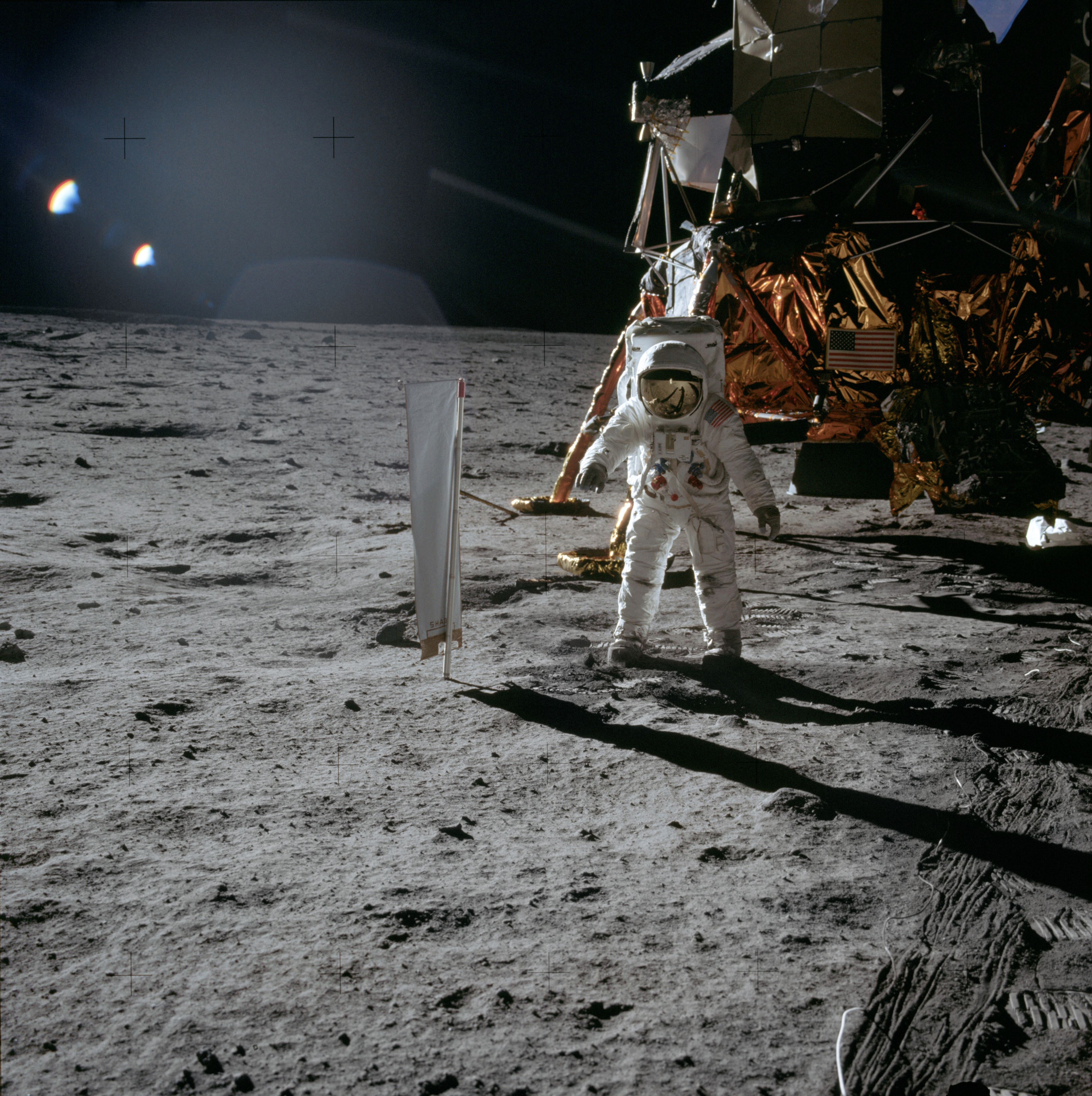
The face most people picture is not his: the gold-visored astronaut in the famous Apollo 11 photograph is Buzz Aldrin, shot by Armstrong. Armstrong himself is… more…

Richard Dorrell (CC BY SA), vía commons Moon and Mars
How does the moon affect the tides?
By pulling unevenly on it. Tidal forces vary inversely as the cube of the distance, so the near side of the Earth is tugged harder than the far side: one… more…
Moon and Mars
Why does neil armstrong have a hollywood star?
Strictly he does not have a star. Armstrong, Aldrin and Collins share four circular monuments resembling the Moon, one at each corner of Hollywood and Vine… more…
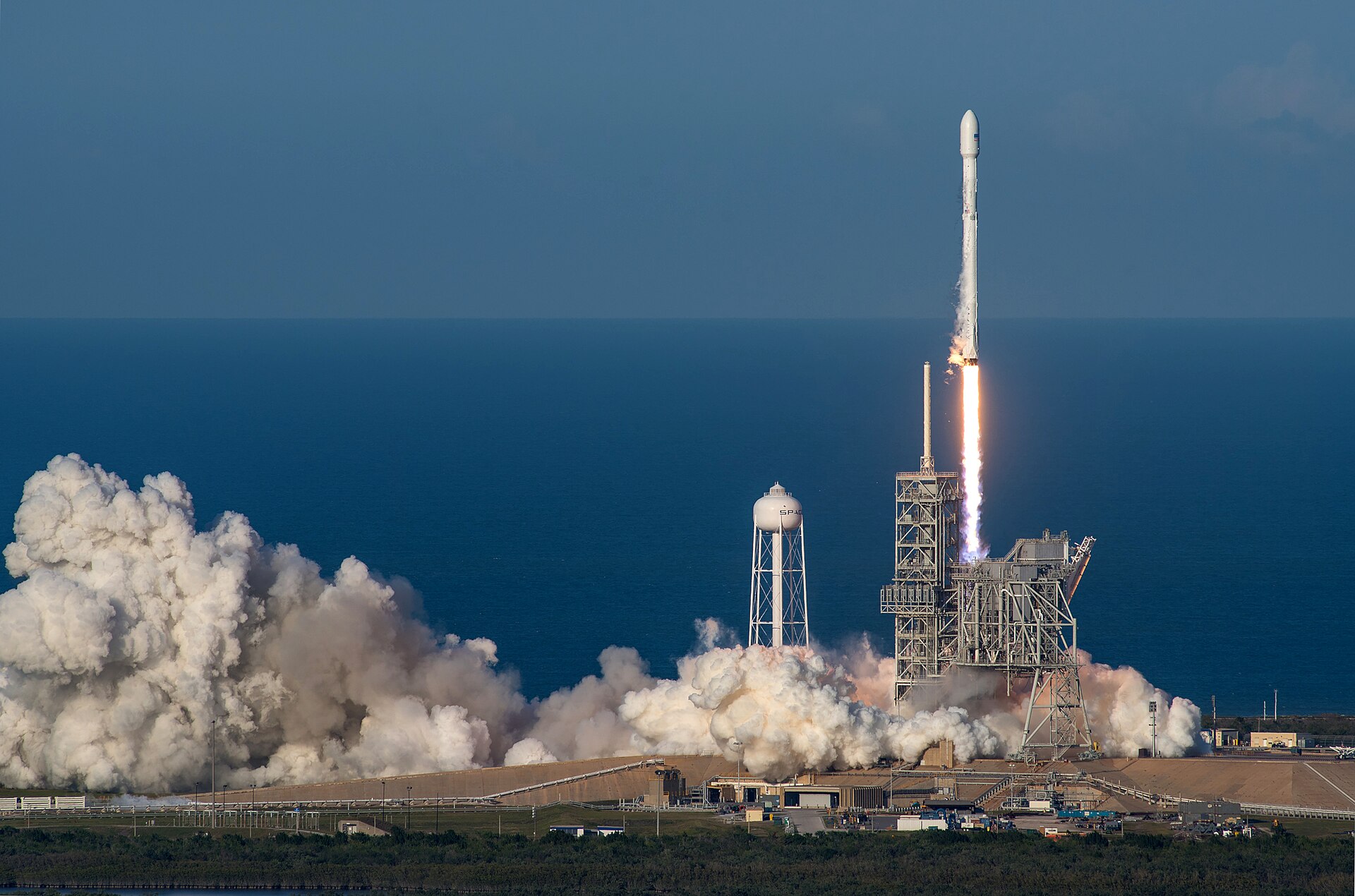
Foto: SpaceX (CC0) Moon and Mars
Why did falcon 9 hit the moon?
Because a spent upper stage on a lunar trajectory has no mission and no way to steer. A Falcon 9 upper stage from the January 2025 Firefly Blue Ghost 1 launch… more…
Moon and Mars
How much apollo 11 cost?
NASA never published a price for Apollo 11 on its own; what is documented is the program. The United States spent $25.8 billion on Project Apollo between 1960… more…
Moon and Mars
How much time neil armstrong spent on moon?
Armstrong and Aldrin spent 21 hours, 36 minutes on the Moon's surface, almost all of it inside the lunar module Eagle. Armstrong stepped onto the surface… more…
