Did you know…
From which aircraft did Alan Cobham refuel in flight when he tried to reach India in an Airspeed Courier in 1934?
Short answer
From a Handley Page W.10 acting as a tanker. Cobham took off from Portsmouth on 24 September 1934 in the Courier prototype and refuelled in flight successfully, but a broken throttle linkage forced him to make an emergency landing in Malta and the non-stop flight to India remained an attempt.
A made-to-measure aeroplane
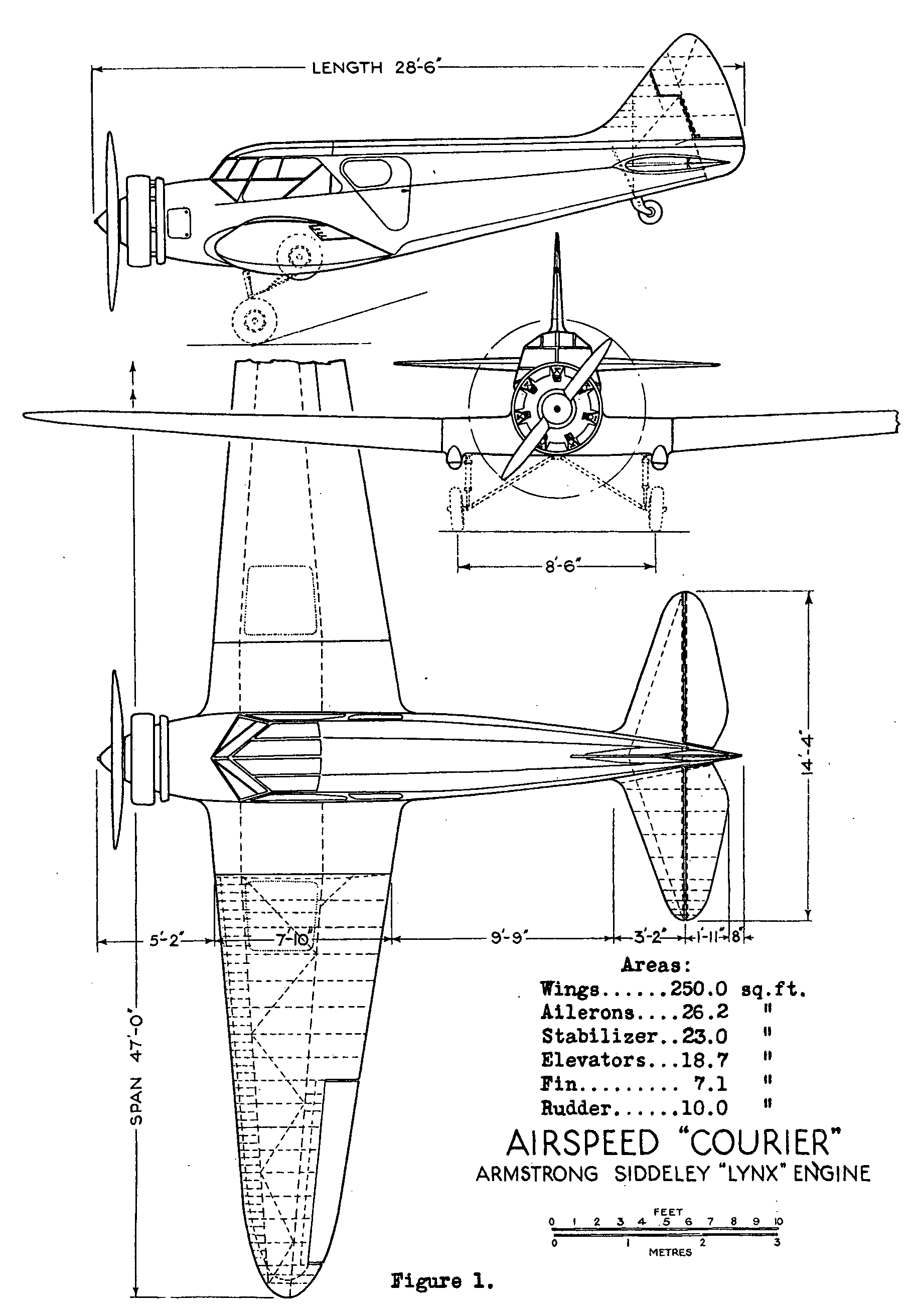
Sir Alan Cobham was looking for an aeroplane to fly non-stop to India by refuelling in the air, and Airspeed's project fitted his plan. From April 1932 Airspeed, Cobham and Lord Wakefield negotiated, and on 6 May 1932 a provisional contract was signed for a single aircraft: £10,000 with the Armstrong Siddeley Lynx engine included, delivery before 6 April 1933 and penalty clauses for delay. The prototype G-ABXN was given a fuel capacity of 1,250 litres (275 imperial gallons), with which it could not take off because of excess weight: those tanks could only be filled completely in flight.
Trials with two W.10s
The aircraft flew in April 1933 and, after repairing the minor damage from a mishap at Portsmouth, moved to Martlesham Heath for the refuelling trials, with two Handley Page W.10s as tankers. Cobham spent nearly a year perfecting the technique. Nevil Shute, a co-founder of Airspeed, recalled in his autobiography Slide Rule hanging half out of the Courier trying to catch the hose as they flew in formation beneath the Handley Page.
The 1934 attempt
On 24 September 1934 Cobham took off from Portsmouth bound for India and refuelled successfully from a W.10, but a broken throttle linkage forced him into an emergency landing in Malta. The flight failed, although the feasibility of aerial refuelling had been demonstrated and Cobham went on refining the method in the following years. The prototype was impressed by the RAF in June 1940 with the military serial X9127, and its final fate is unknown.