Did you know…
How many tons of iron ore did Sweden export to Germany in 1939?
Short answer
About 9 million tonnes a year in the year before the war, not a figure dated to 1939: 7 million from Kiruna and Gällivare, in Lapland, and 2 million from the deposits in central Sweden. Germany then received 22 million tonnes of ore from all its sources.

Nine million tonnes a year
In the year before the war Germany received 22 million tonnes of iron ore from various sources. It produced around 10 million tonnes of its own each year, of low quality, which it needed to blend with high-quality material from other countries, such as Sweden, which supplied it annually with 9 million tonnes. Of that volume, 7 million came from Kiruna and Gällivare, in Lapland, and 2 million from the deposits in central Sweden, northwest of Stockholm.
Two outbound routes
The ore is mined at Kiruna and Malmberget and reaches the ports of Luleå and Narvik by rail. Ore from the northern region was shipped from Luleå and sailed down the Gulf of Bothnia to the German ports on the northern Baltic: Lübeck, Swinemünde, and Stettin. The other route went by rail to the Narvik station and from there by sea, along the deeply indented Norwegian west coast, to Germany. Narvik, well above the Arctic Circle, remained open to ore shipments all year round.
Traffic as a military target
German industry depended heavily on imported ore from the mines of Swedish Lapland, and most of it was shipped through the ice-free Norwegian port of Narvik. On the British side it was argued that the Narvik ore traffic should be stopped by laying a series of small minefields in Norwegian territorial waters in succession. On 3 April the War Cabinet authorized the mining of the Skjaergaard, and on the morning of Monday 8 April 1940 the British informed the Norwegian authorities of their intentions and carried out Operation Wilfred.
More questions
Aviation history
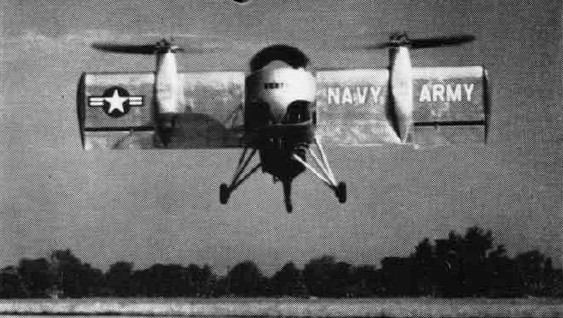
What was special about the Vertol 76?
Vertol's VZ-2 tested the tiltwing concept for vertical take-off and landing. After ground trials beginning in April 1957, it first took off on 13 August only… more…

Aviation history
Which was the most-produced American fighter of the Second World War?
The Republic P-47 Thunderbolt, of which 15,636 or 15,683 units were built, depending on the source. It was also one of the heaviest fighters of the conflict… more…

Aviation history
Who flew the E-66 at 2,149 km/h?
Konstantin or Vladimir Kokkinaki, depending on the source. Konstantin is credited with the absolute record on a closed 100 km circuit, at 2,148.66 km/h, set… more…

Fly-by-Owen (CC BY SA), vía commons Aviation history
How many I-11Bs were built?
Between 208 and around 450, depending on the source: one of the AISA I-11 reference sheets gives 208 examples built, while All-Aero speaks of around 400 built… more…

Aviation history
How many HH-53s could be converted to Pave Low III?
Eight HH-53C aircraft received an improved systems package and were redesignated HH-53H Pave Low III. The other figure in circulation, nine MH-53H and 32… more…

SCDBob (CC BY SA), vía commons Aviation history
What did the A129 Mangusta's armor protect?
The fuselage: the A129's airframe is armored and, according to All-Aero, designed to protect against 12.7 mm rounds, with partial protection against 23 mm… more…


