Did you know…
What is the speed of sound?
Short answer
The speed of sound isn't a moment in time but a measurable quantity: in air at 15 °C at sea level it equals 340 m/s, or 1,225 km/h (661 kn), and an aircraft reaches it when flying at Mach 1. Since it depends only on temperature, it drops to 295 m/s (1,062 km/h) at 11,000 m altitude, where the air is at −56.5 °C.

A figure that changes with altitude
The question is usually asked while thinking of the moment an aircraft "breaks the sound barrier." That moment arrives when its airspeed equals the local speed of sound, and that speed is not fixed. In the standard atmosphere it is 340 m/s at sea level (1,225 km/h), 328 m/s at 3,000 m, 316 m/s at 6,000 m, and 295 m/s from 11,000 m up to 20,000 m, where temperature holds steady at −56.5 °C. A fighter jet accelerating at high altitude reaches Mach 1 at around 1,060 km/h; the same aircraft at sea level would need to reach 1,225 km/h. That's why pilots and engineers speak in terms of Mach number rather than kilometers per hour: it's the figure that describes what happens to the air around the aircraft.
What happens when you get there
Below Mach 1, the pressure disturbances an aircraft generates travel ahead of it, warning the air to move out of the way. Once it reaches the speed of sound, those disturbances can no longer outrun it; they pile up and form shock waves — first over areas where the airflow locally accelerates (the upper surface of a wing can be supersonic at Mach 0.8 even if the aircraft itself isn't), then at the nose and leading edges. Drag increases sharply, the center of pressure shifts aft, and conventional controls lose effectiveness — which is what made World War II fighter dives so dangerous. For an observer on the ground, the passage of the shock waves is perceived as a sonic boom, a double crack that trails the aircraft the entire time it remains supersonic, not just at the instant it crosses Mach 1.
The first time
The first documented level supersonic flight was Chuck Yeager's on October 14, 1947, flying the Bell X-1 after being launched from a B-29 over the Mojave Desert: he reached Mach 1.06, about 1,127 km/h, at 13,100 m (43,000 ft). The X-1 used an all-moving horizontal tail, the solution that restored pitch control in the transonic regime and that every later supersonic aircraft adopted. Concorde, the only passenger aircraft to routinely exceed that speed, stopped flying in 2003; fighter jets cross it routinely, and several supersonic business jet projects are trying to bring the speed of sound back to civil aviation.
More questions
Physics of flight
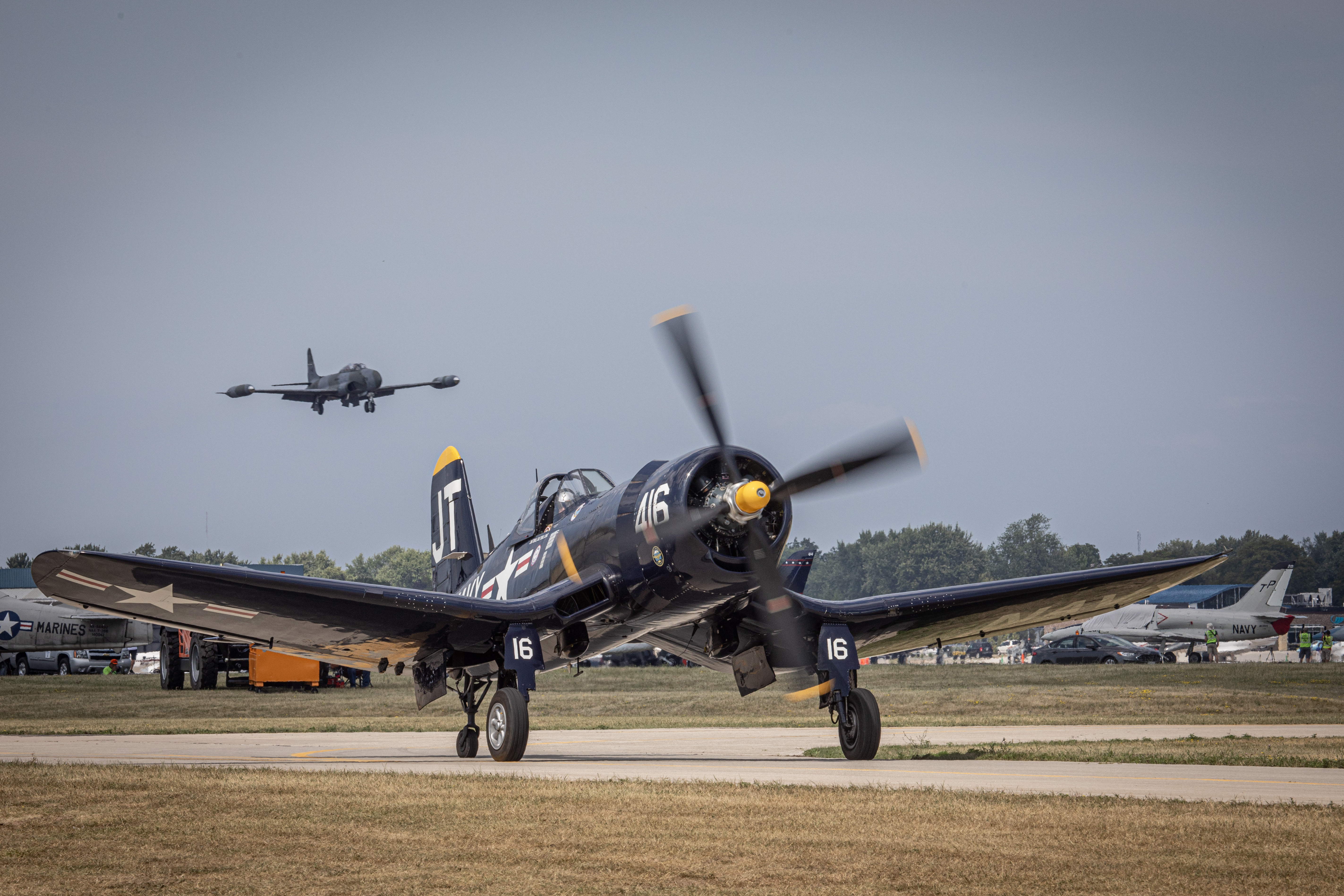
Why can't a Corsair pilot apply full power when going around after a failed carrier landing?
Because at low speed and high power the Corsair would drop its left wing suddenly and with almost no warning, due to propeller torque. If the throttle was… more…
Physics of flight
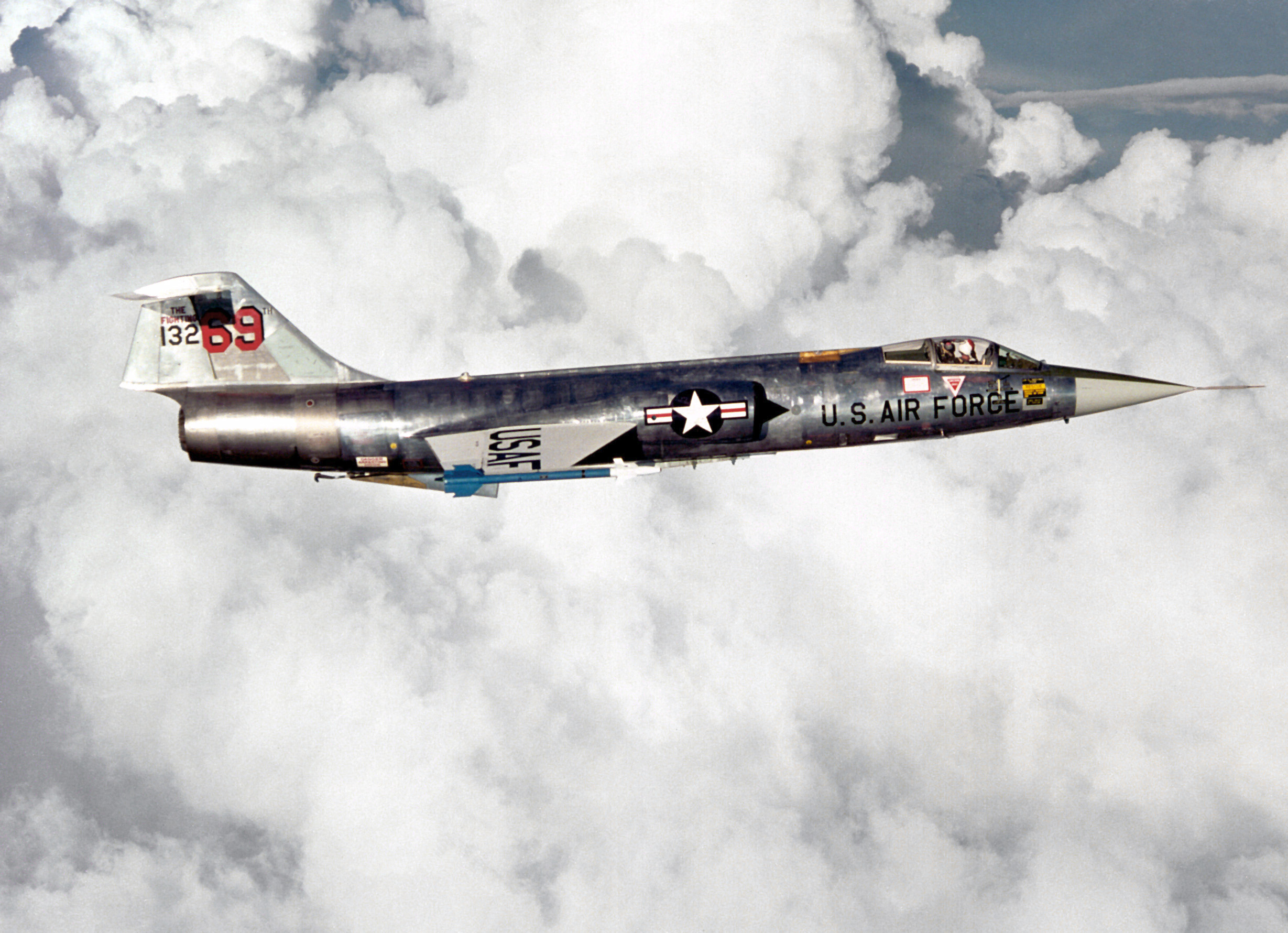
What did the phrase "banking with intent to turn" mean among F-104 pilots?
It was a joke among Canadian F-104 pilots: banking the aircraft "with intent to turn" referred to its poor low-speed turning. Its sustained turn capability… more…
Julian Herzog (Website) (CC BY), vía commons Physics of flight
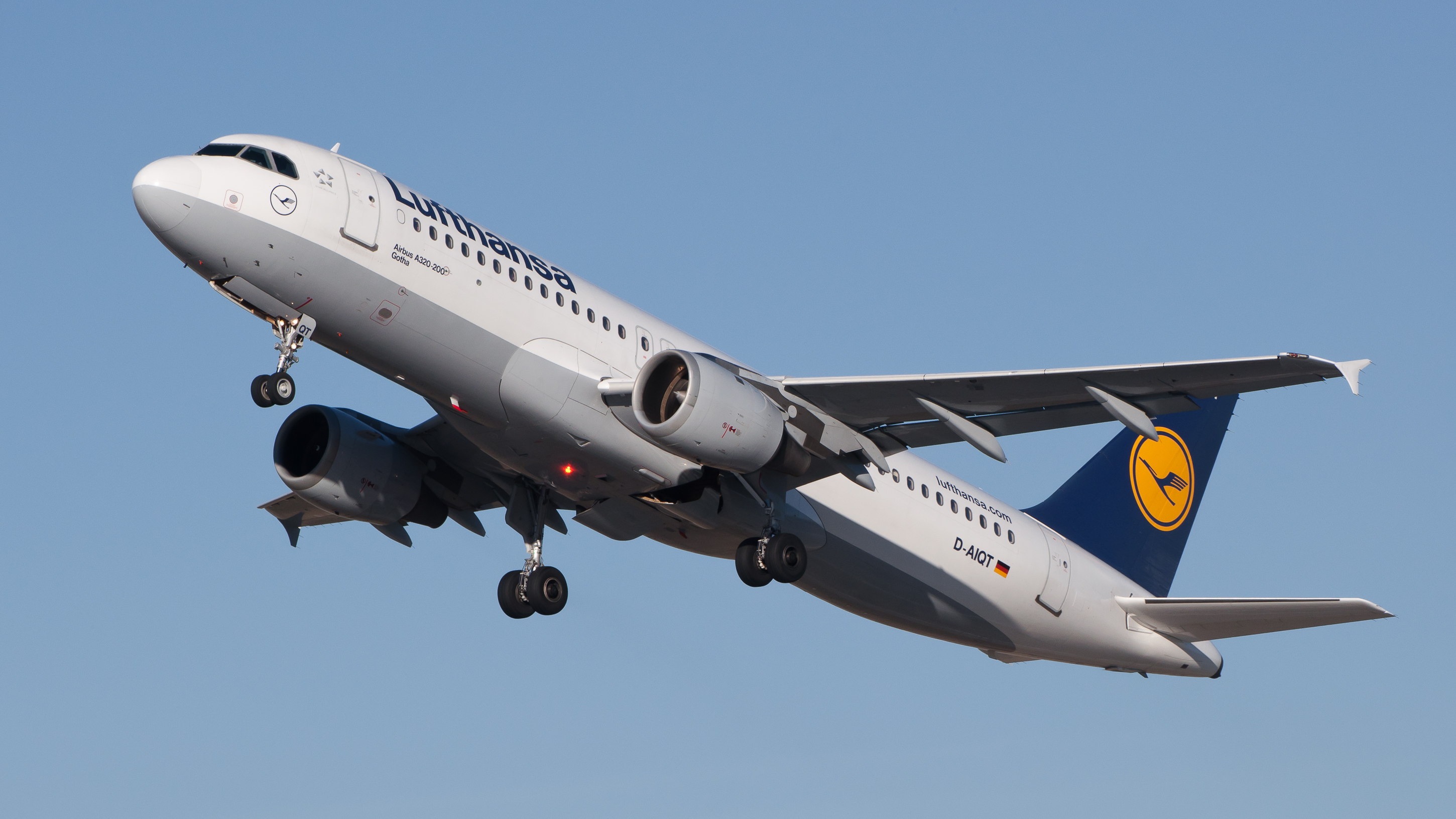
What is "flight envelope protection," which the A320 pioneered?
A set of limits embedded in the flight control software: it calculates the flight envelope, adds a safety margin, and blocks pilot inputs that would take the… more…
Julian Herzog (Website) (CC BY), vía commons Physics of flight
What is the A320's SHARP package for?
SHARP (SHort AiRfield Package) improves takeoff and landing performance on short runways and is designed to increase low-speed lift. It combines aerodynamic… more…
Physics of flight
What flaw sank Vought's all-metal V-141 fighter?
It wasn't a single flaw: tests showed the V-141 still flew poorly, was prone to spinning, and also suffered tail flutter, which is why it was rejected. It… more…
Physics of flight
What wind tunnel did NACA use to study the Corsair, and how big was it?
The full-scale 30- by 60-Foot Tunnel at the Langley Research Center, in Hampton, Virginia. NACA dedicated the facility on 27 May 1931 and used it to test the… more…


