Did you know…
How did Hitler learn of Churchill's plan to mine the Narvik fjords?
Short answer
The turning point was the Altmark incident: on 16 February 1940 the destroyer HMS Cossack entered Norwegian territorial waters. Hitler read it as a clear sign that the Allies too would violate Norwegian neutrality, and this hardened his resolve to invade. On 1 March he signed the official approval for the invasion.
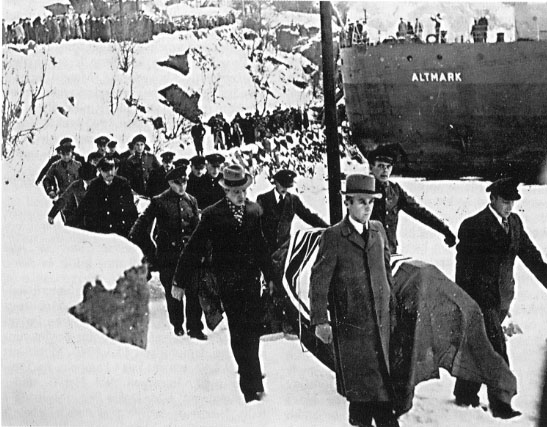
The Altmark incident
In the late hours of 16 February 1940, the Royal Navy destroyer HMS Cossack entered Norwegian territorial waters. There it boarded the German ship Altmark. The Altmark had served as a supply ship for the pocket battleship Admiral Graf Spee and was trying to return to Germany with prisoners of war captured by the Graf Spee, illegally using Norwegian waters to evade the British blockade.
The German reading
Hitler saw in the episode a clear sign that the Allies were also willing to violate Norwegian neutrality, and became even more determined to invade Norway. The whole affair led the Germans to speed up their plans to invade the country. High command had initially thought that a neutral Norway suited their interests. Großadmiral Erich Raeder, on the other hand, argued for invasion.
Mines, decisions and dates
Churchill was a strong advocate for action in Scandinavia, since he wanted to cut off Germany's access to Sweden. In January 1940 a less ambitious plan was first approved: mining the southern approaches to Narvik. In March the idea came up again. Hitler signed the official approval for the invasion and occupation of Denmark and Norway on 1 March. The German invasion began on 3 April 1940, when the disguised supply ships started putting to sea ahead of the main force.
More questions
Pedro Argao (CC BY SA), vía commons Aviation history
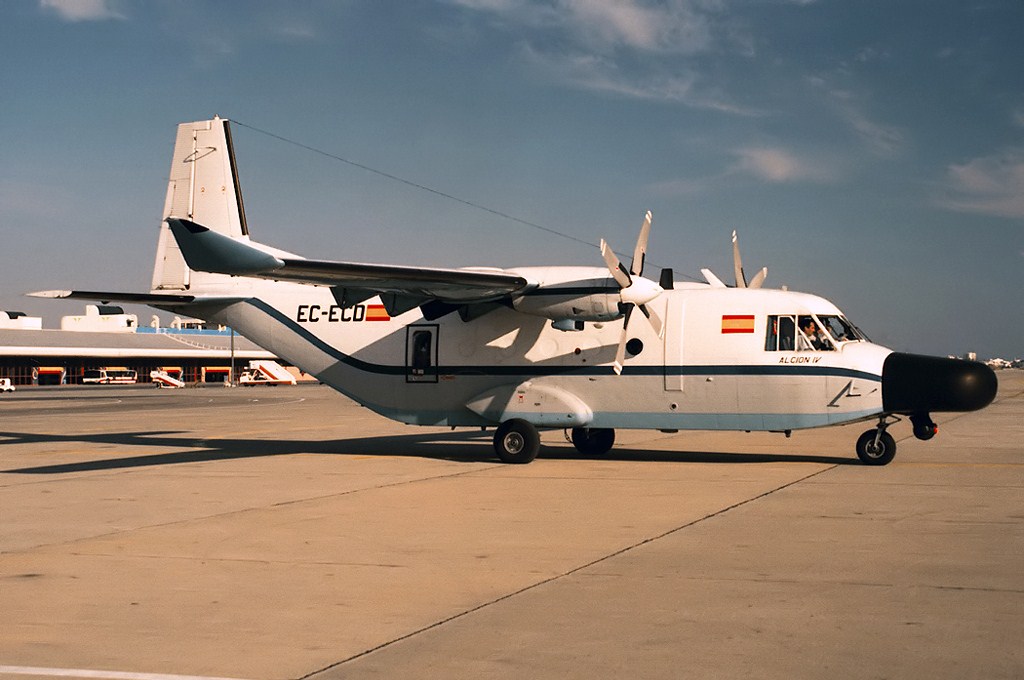
What is the most exported Spanish aircraft in aviation history as of 1982?
The CASA C-212 Aviocar, with 478 aircraft sold in total — a figure covering its whole commercial career, not just 1982 — of which 126 were built under license… more…

RB7MRV (CC BY SA), vía commons Aviation history
Why were pure turbojets ruled out for the C-101?
Due to cost and fuel consumption: CASA soon ruled out the pure turbojets from General Electric and Rolls-Royce. Turbofans' efficiency and savings were well… more…
RB7MRV (CC BY SA), vía commons Aviation history
Where was the C-101's spin tested?
In Lille, France, where the Aviojet's tunnel campaign closed with spin behavior tests on a 1/18 scale model. In flight, spinning was part of the test phase… more…
RB7MRV (CC BY SA), vía commons Aviation history
Where was the C-101 tested at low and high speed?
The low-speed tests were done in tunnel No. 1 of the National Institute of Aerospace Technology (INTA) "Esteban Terradas," using a 1/7 scale model. The… more…
RB7MRV (CC BY SA), vía commons Aviation history
How was the C-101 camouflaged at Farnborough?
With a camouflage scheme closer to a Saab Viggen's than to a Spanish Air Force aircraft's: at Farnborough the Aviojet appeared dressed "the Swedish way." The… more…
Vitaly Druchenok (CC BY SA), vía commons Aviation history
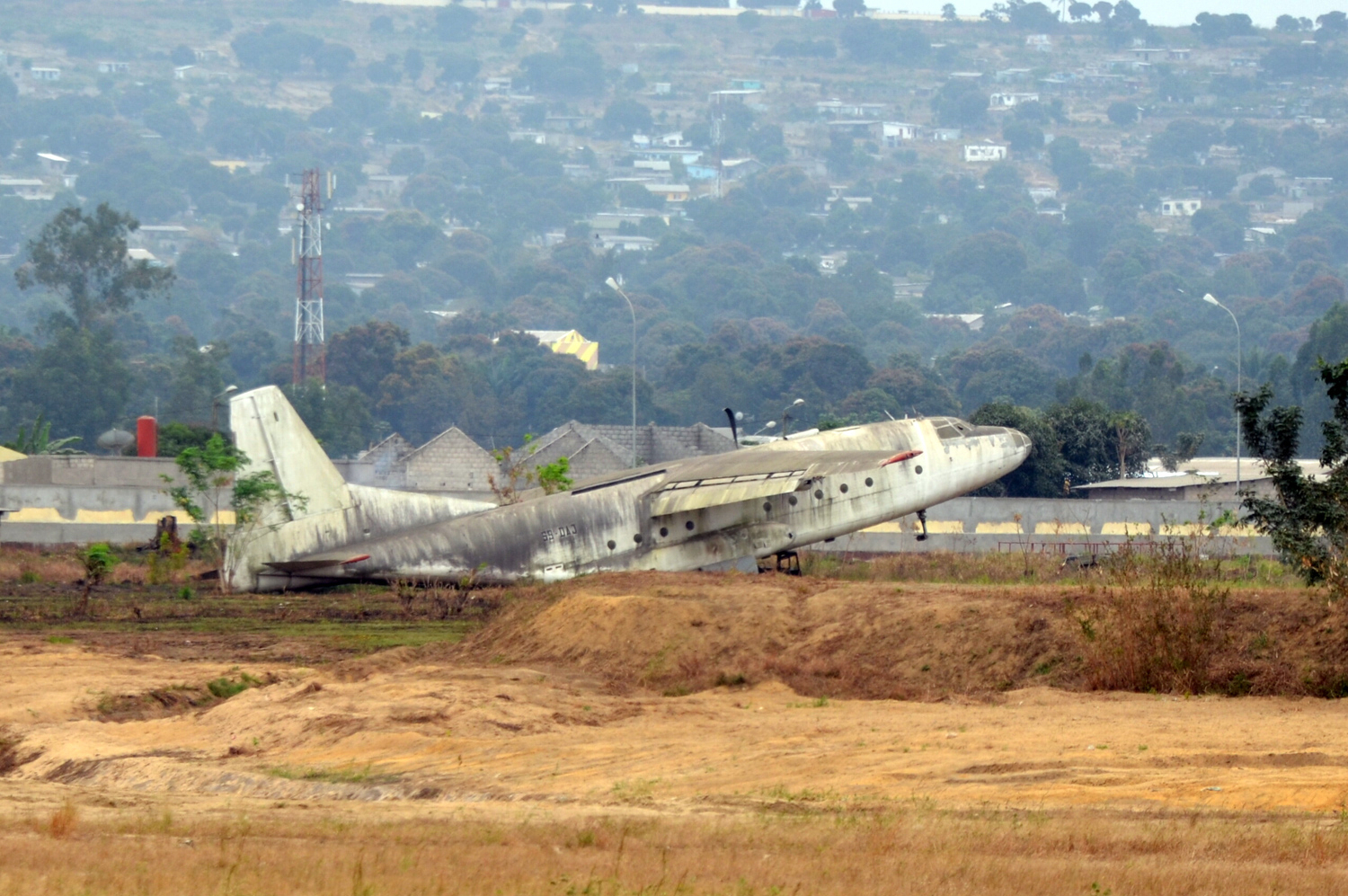
What "typically Russian" features did the An-8 have?
The An-8 was a Soviet light military transport with a high wing and two turboprops, featuring a glazed nose for the navigator, a chin radome for navigation… more…


