Did you know…
What are aircraft engines like?
Short answer
Aircraft engines fall into two main families: piston engines, which drive a propeller and power light aviation, and gas turbines, which compress air, burn it with kerosene, and expel gases at high speed. Among these, the turbofan dominates commercial aviation: its front fan provides almost all the thrust; the turboprop uses the turbine to drive a propeller.

Piston engines: light aviation
The reciprocating gasoline engine was the only option available during the early decades of aviation and still powers the vast majority of trainer and touring light aircraft. The most common are four- or six-cylinder horizontally opposed, air-cooled engines with dual ignition for safety and outputs of 75 to 300 kW (100 to 400 hp). They drive a fixed- or variable-pitch propeller and burn leaded aviation gasoline, although the shift toward unleaded fuels and diesel engines that burn kerosene is advancing. They are simple and relatively cheap, but lose power with altitude and their moving parts limit their reliability compared with turbines.
Gas turbines: the same cycle, different outputs
All aviation turbines share a core: a compressor takes in air and compresses it, a combustion chamber mixes it with kerosene and burns it at constant pressure, and a turbine extracts energy from the hot gases to drive the compressor. What changes is how the leftover energy is used. In the pure turbojet, all the gas exits through a nozzle at high speed: it's efficient at very high speeds and noisy, and today it's practically limited to older military applications and missiles. In the turbofan, the turbine also drives a large front fan that pushes a much greater mass of air around the core; in modern engines, most of the thrust comes from the fan, with bypass ratios of 9:1 to 12:1. It is the engine of every current airliner because of its moderate fuel consumption and contained noise. In the turboprop, the turbine drives a propeller through a reduction gearbox: it's the most efficient solution below about 650 km/h and powers regional and cargo aircraft. The turboshaft is the variant that delivers power through a shaft, for helicopters.
What sets a modern engine apart
A current turbofan measures up to 3.4 m in fan diameter, like the GE9X on the Boeing 777X, and generates more than 450 kN of thrust. Its turbine blades operate in gases hotter than the melting point of their alloy thanks to internal cooling channels and ceramic coatings. Composite materials in the fan, additive manufacturing, and gearboxes between fan and turbine, as in the Pratt & Whitney PW1000G, have cut fuel consumption per seat by around 15 percent compared with the previous generation. At the other end of the spectrum are electric motors, still limited to small aircraft and demonstrators because of battery energy density, and hybrid projects that combine a turbine with a generator.
More questions
Physics of flight
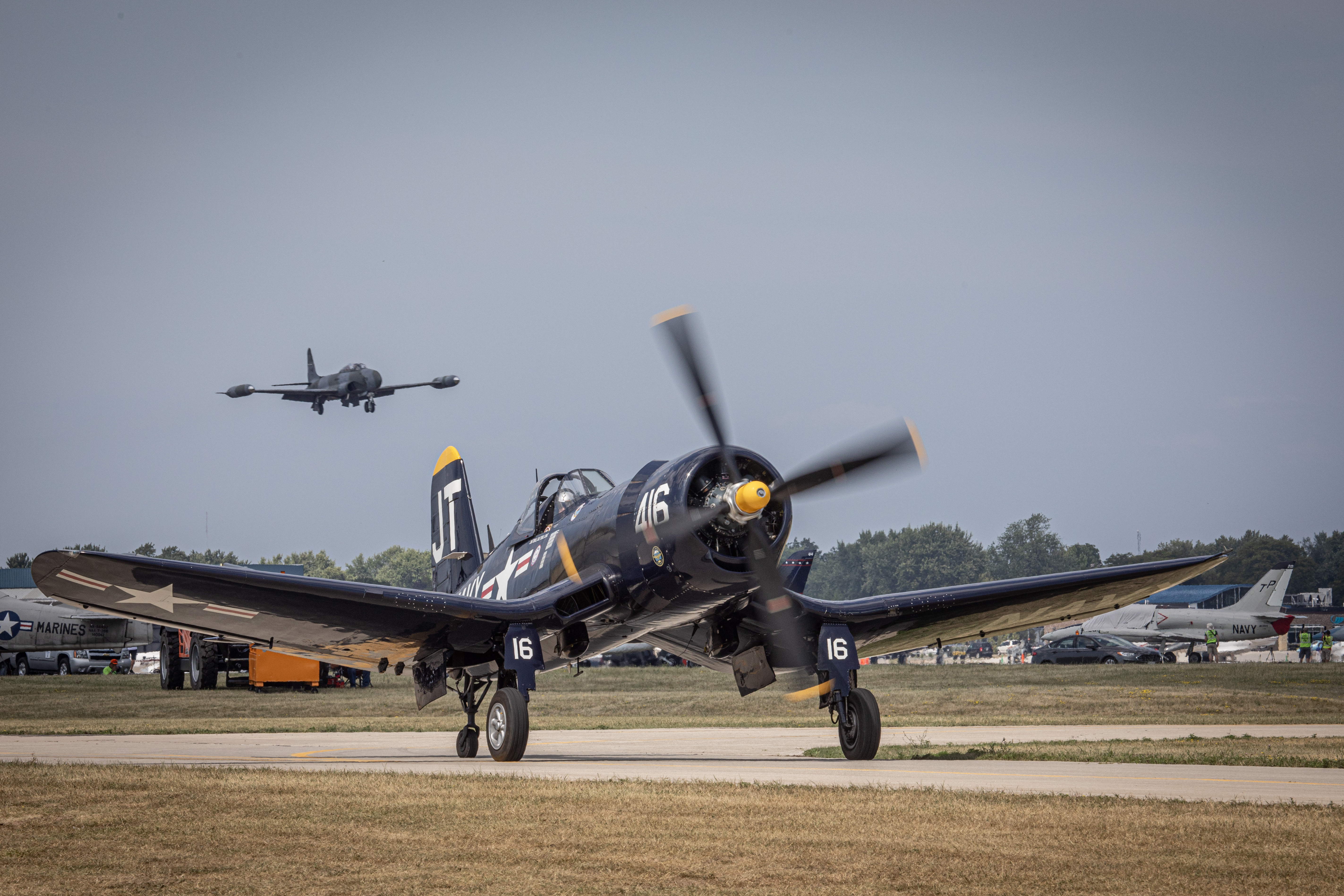
Why can't a Corsair pilot apply full power when going around after a failed carrier landing?
Because at low speed and high power the Corsair would drop its left wing suddenly and with almost no warning, due to propeller torque. If the throttle was… more…
Physics of flight
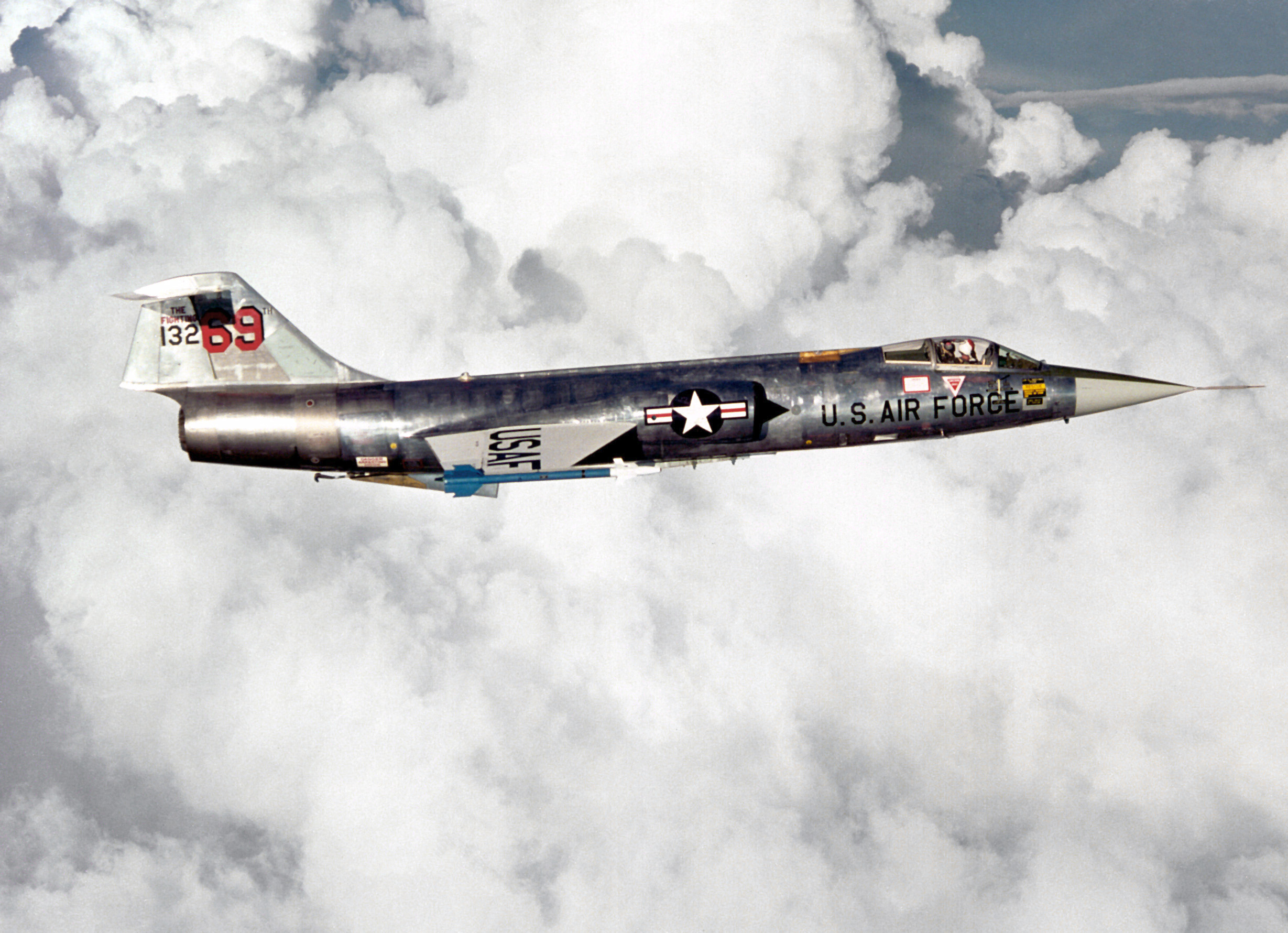
What did the phrase "banking with intent to turn" mean among F-104 pilots?
It was a joke among Canadian F-104 pilots: banking the aircraft "with intent to turn" referred to its poor low-speed turning. Its sustained turn capability… more…
Julian Herzog (Website) (CC BY), vía commons Physics of flight
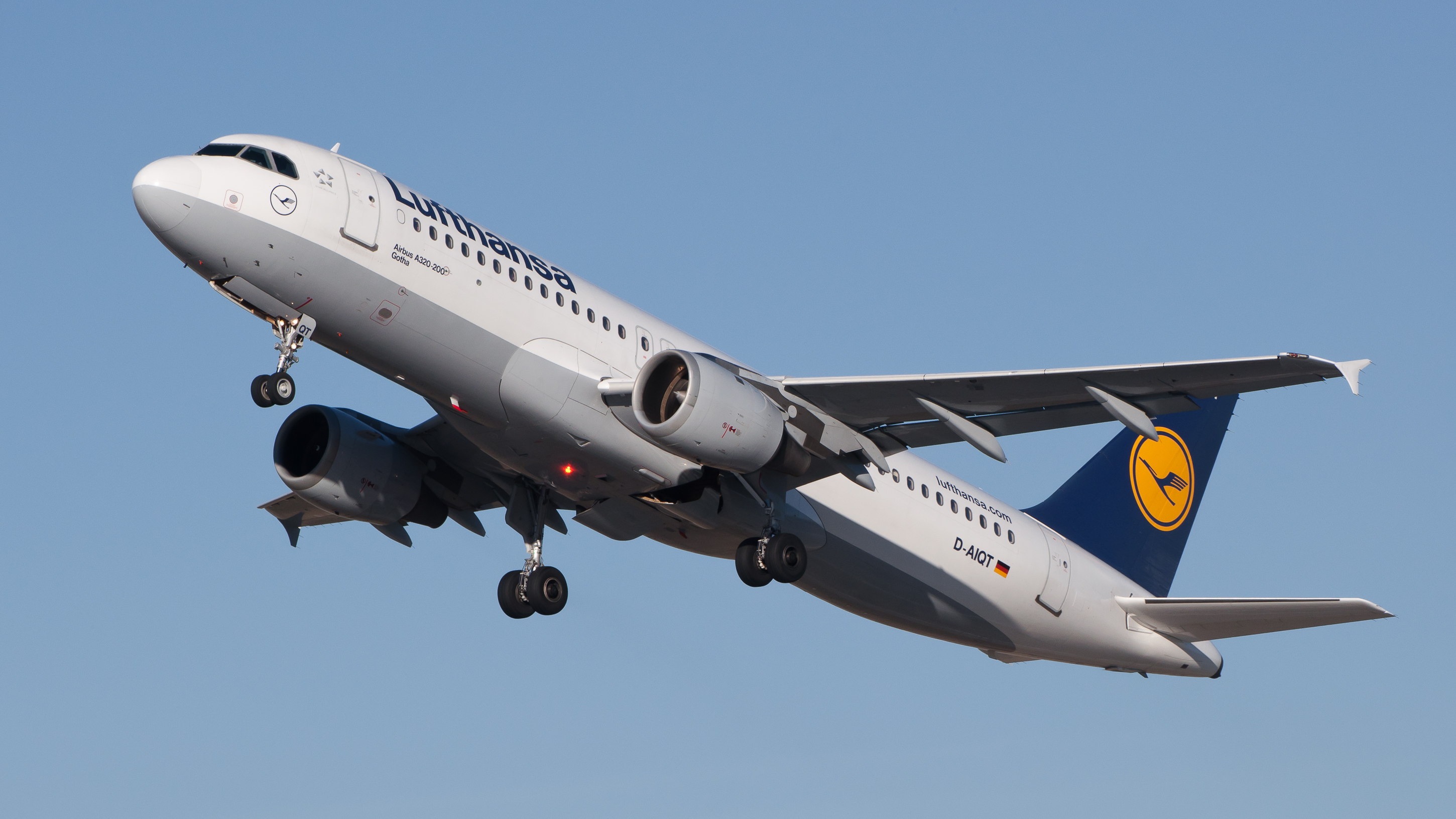
What is "flight envelope protection," which the A320 pioneered?
A set of limits embedded in the flight control software: it calculates the flight envelope, adds a safety margin, and blocks pilot inputs that would take the… more…
Julian Herzog (Website) (CC BY), vía commons Physics of flight
What is the A320's SHARP package for?
SHARP (SHort AiRfield Package) improves takeoff and landing performance on short runways and is designed to increase low-speed lift. It combines aerodynamic… more…
Physics of flight
What flaw sank Vought's all-metal V-141 fighter?
It wasn't a single flaw: tests showed the V-141 still flew poorly, was prone to spinning, and also suffered tail flutter, which is why it was rejected. It… more…
Physics of flight
What wind tunnel did NACA use to study the Corsair, and how big was it?
The full-scale 30- by 60-Foot Tunnel at the Langley Research Center, in Hampton, Virginia. NACA dedicated the facility on 27 May 1931 and used it to test the… more…


