Did you know…
How does the sound barrier work?
Short answer
The sound barrier is the sharp rise in drag and control difficulty an aircraft meets as it nears Mach 1, about 1,062 km/h (573 kn) at cruise altitude. Air ahead of the plane cannot move aside faster than sound, so it piles up into shock waves. Those waves add drag, shift the wing's lift and can freeze the controls; enough thrust and the right shapes push through.

Air that cannot get out of the way
At ordinary speeds an aircraft announces itself. Pressure disturbances run ahead of it at the speed of sound, and the air begins to part before the nose and wing arrive, flowing smoothly around them. As the aircraft approaches the speed of sound, that warning has less and less time to work. Air arrives at the surfaces before it can adjust, and instead of easing aside it is compressed abruptly across a very thin region called a shock wave. Across a shock the pressure, temperature and density jump almost instantly while the flow slows. The first shocks appear not at Mach 1 but earlier, typically around Mach 0.8, because air accelerating over a curved wing top is already locally supersonic even when the aircraft as a whole is not.
The transonic drag rise
Shock waves cost energy, and the aircraft pays for it as drag. Between roughly Mach 0.8 and Mach 1.2, the transonic range, drag can multiply several times over as shocks form, strengthen and move across the wings and fuselage. Behind a shock the boundary layer often separates from the surface, causing buffet and a loss of lift. The centre of lift moves rearward, pitching the nose down in a tendency called Mach tuck, and control surfaces sitting behind a shock can lose their effect because the air reaching them has already been disturbed. Propeller-driven aircraft of the Second World War met these effects in high-speed dives, and several were lost, which is where the idea of a solid barrier came from.
Designing through it
The barrier turned out to be a matter of thrust and shape rather than an absolute limit. Jet and rocket engines supplied thrust that kept increasing at high speed, unlike propellers whose tips went supersonic first. Thin wings and sharp noses delay and weaken the shocks; sweeping the wings back lowers the speed the air sees across the chord and pushes the drag rise to a higher Mach number. An all-moving tailplane, rather than a hinged elevator, keeps pitch control through the transonic range. The area rule, discovered in the 1950s, showed that smoothing the way an aircraft's total cross-section changes along its length cuts transonic drag sharply, which is why some supersonic designs have pinched fuselages. Once past Mach 1 the shocks settle into a stable pattern and the flight becomes calmer again, though the drag remains higher than in subsonic cruise.
More questions
Physics of flight
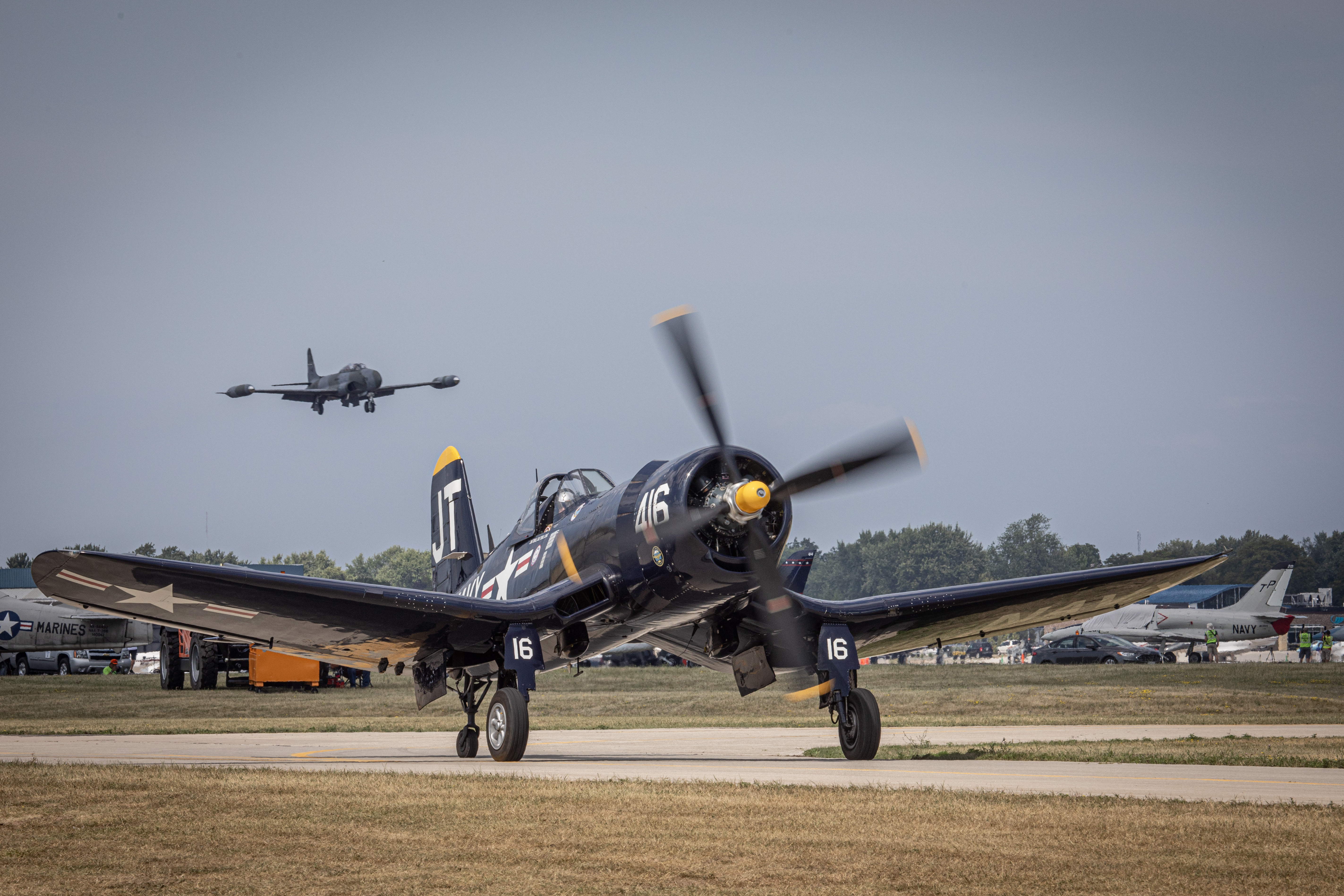
Why can't a Corsair pilot apply full power when going around after a failed carrier landing?
Because at low speed and high power the Corsair would drop its left wing suddenly and with almost no warning, due to propeller torque. If the throttle was… more…
Physics of flight
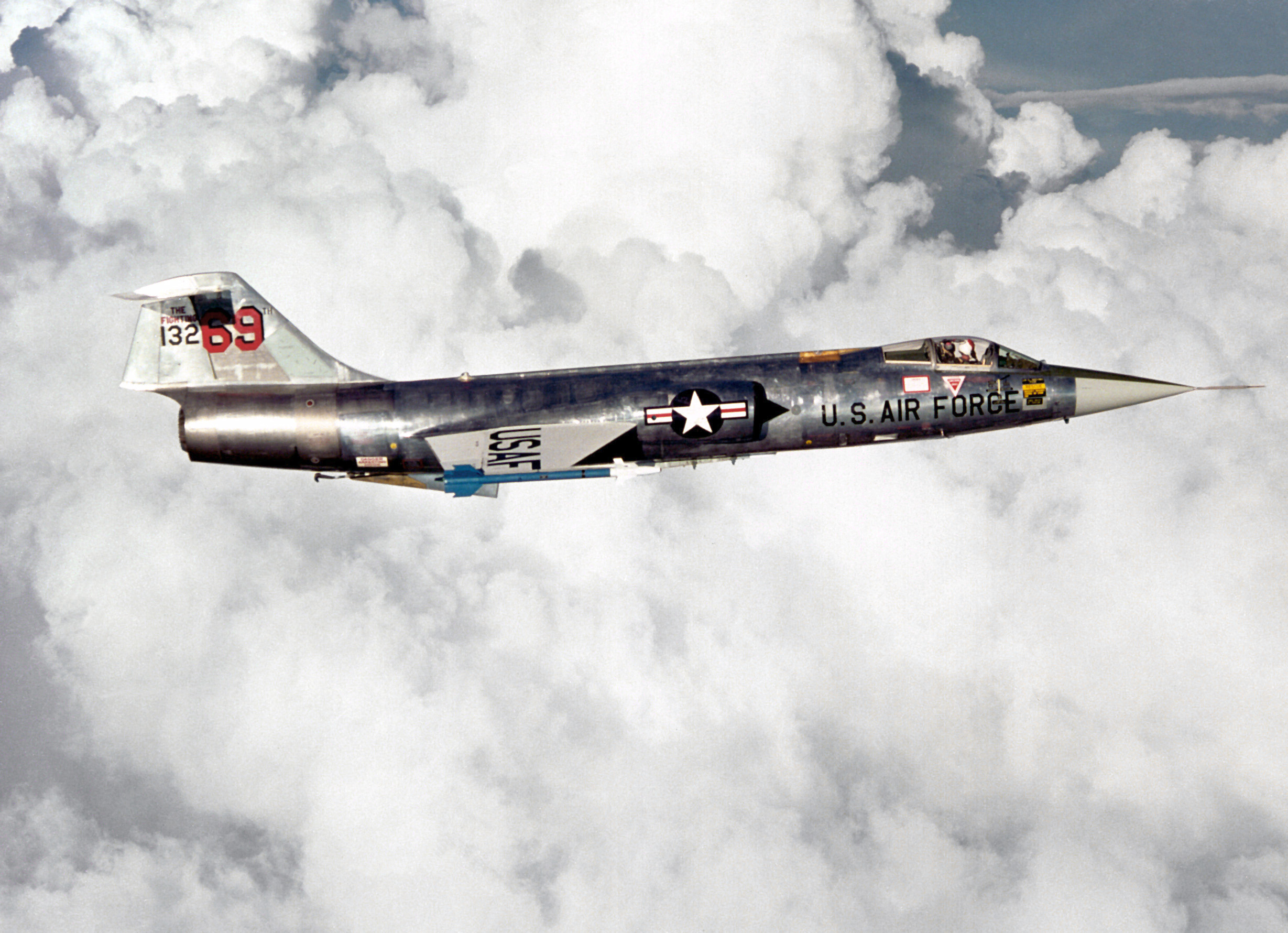
What did the phrase "banking with intent to turn" mean among F-104 pilots?
It was a joke among Canadian F-104 pilots: banking the aircraft "with intent to turn" referred to its poor low-speed turning. Its sustained turn capability… more…
Julian Herzog (Website) (CC BY), vía commons Physics of flight
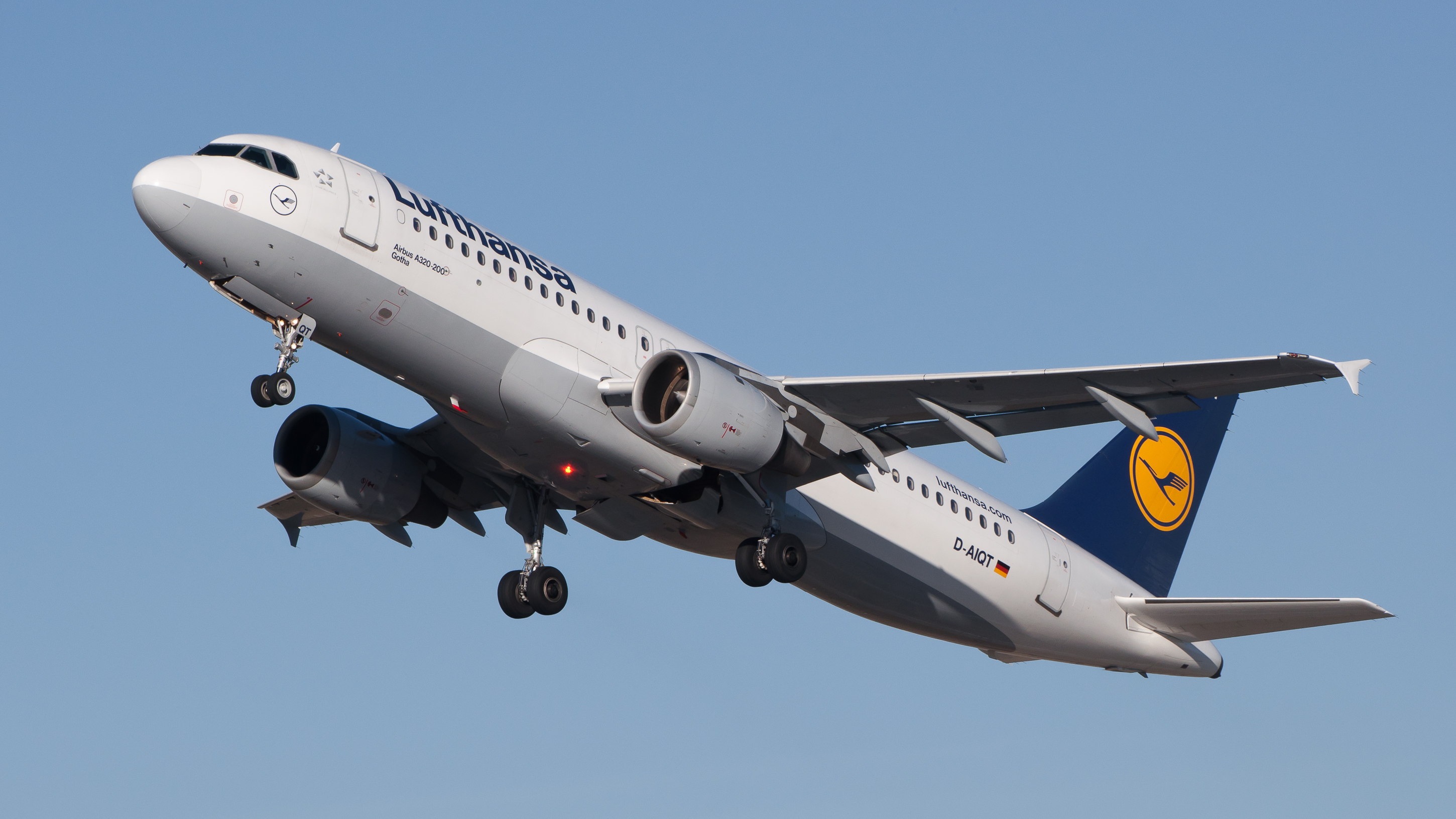
What is "flight envelope protection," which the A320 pioneered?
A set of limits embedded in the flight control software: it calculates the flight envelope, adds a safety margin, and blocks pilot inputs that would take the… more…
Julian Herzog (Website) (CC BY), vía commons Physics of flight
What is the A320's SHARP package for?
SHARP (SHort AiRfield Package) improves takeoff and landing performance on short runways and is designed to increase low-speed lift. It combines aerodynamic… more…
Physics of flight
What flaw sank Vought's all-metal V-141 fighter?
It wasn't a single flaw: tests showed the V-141 still flew poorly, was prone to spinning, and also suffered tail flutter, which is why it was rejected. It… more…
Physics of flight
What wind tunnel did NACA use to study the Corsair, and how big was it?
The full-scale 30- by 60-Foot Tunnel at the Langley Research Center, in Hampton, Virginia. NACA dedicated the facility on 27 May 1931 and used it to test the… more…


