Did you know…
How long does it take for a plane to land?
Short answer
An airliner takes about 20-30 minutes from the start of its descent from cruise until touchdown, since the descent point lies some 150-200 km from the airport. The final approach, with gear and flaps extended, takes up the last 3-5 minutes, and the landing roll to taxi speed lasts 30 to 60 seconds, typically covering 1,500-2,500 m of runway.

Descent begins much earlier than it seems
When the captain announces the start of the descent, the aircraft is usually still at 11,000-12,000 m (36,000-39,000 ft) and more than 150 km from the airport. Pilots calculate the top-of-descent point with a simple rule: about three nautical miles of distance are needed for every thousand feet to be lost, giving a continuous descent of roughly 3 degrees. From cruise level that works out to between 100 and 120 nautical miles (185-220 km) and around 20 to 25 minutes with the engines close to idle. A continuous descent, without level-offs, saves fuel and noise, and is what controllers try to enable when traffic allows. Below 3,000 m (10,000 ft), speed is limited in many airspaces to 250 knots (463 km/h), which slightly lengthens the final phase.
The approach: configuring the aircraft
About 20-30 km from the runway the aircraft intercepts the approach path, usually guided by an ILS or by satellite navigation, and begins extending flaps in stages. The landing gear comes down between 2,000 and 1,500 feet above the ground, and with the aircraft in its final configuration it slows to its landing reference speed, which for a single-aisle jet is around 130-145 knots (240-270 km/h) depending on weight. The stabilised final approach, from about 1,000 feet to the threshold, lasts between three and five minutes; during this segment procedures require speed, configuration, flight path and rate of descent to already be set. If something doesn't add up, the correct call is to go around and climb away.
Flare, touchdown and braking
At about 6-9 m (20-30 ft) above the runway the pilot raises the nose slightly to reduce the rate of descent, known as the flare, and the aircraft touches down on the main gear between 300 and 600 m past the threshold, within the marked touchdown zone. From there, three systems take over: spoilers, which deploy on the wing to kill lift and put weight on the wheels; the brakes, often set to a preselected autobrake level; and reverse thrust, which redirects part of the engine jet forward. An airliner slows from around 250 km/h to taxi speed in 30-60 seconds over 1,500-2,500 m, depending on weight, wet or dry runway, airport altitude and wind. Certification requires landing distances shorter than the available runway with safety margins, and airlines add further factors in day-to-day operations.
What changes depending on the aircraft and airport
A light aircraft lands at 100 km/h and stops within 300-400 m; a widebody at maximum landing weight needs considerably more runway and brakes with more energy going into the wheels, which can reach high temperatures. High-altitude airports, such as those in the Andes or some in Africa, lengthen distances because thinner air forces higher true airspeeds. And the part passengers notice most, the taxi to the gate, can take anywhere from two minutes to more than a quarter of an hour at very large airports.
More questions
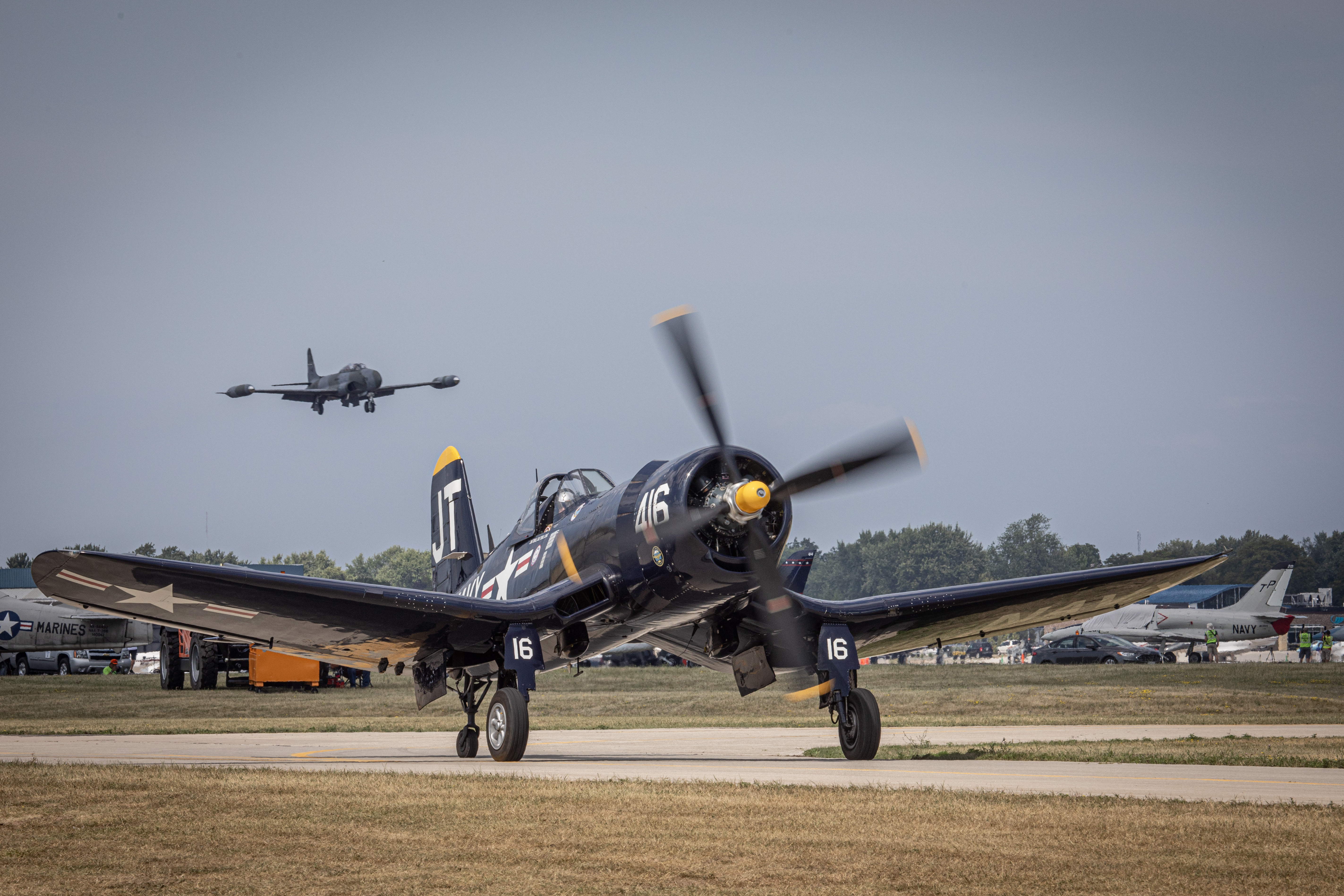
Physics of flight
Why can't a Corsair pilot apply full power when going around after a failed carrier landing?
Because at low speed and high power the Corsair would drop its left wing suddenly and with almost no warning, due to propeller torque. If the throttle was… more…
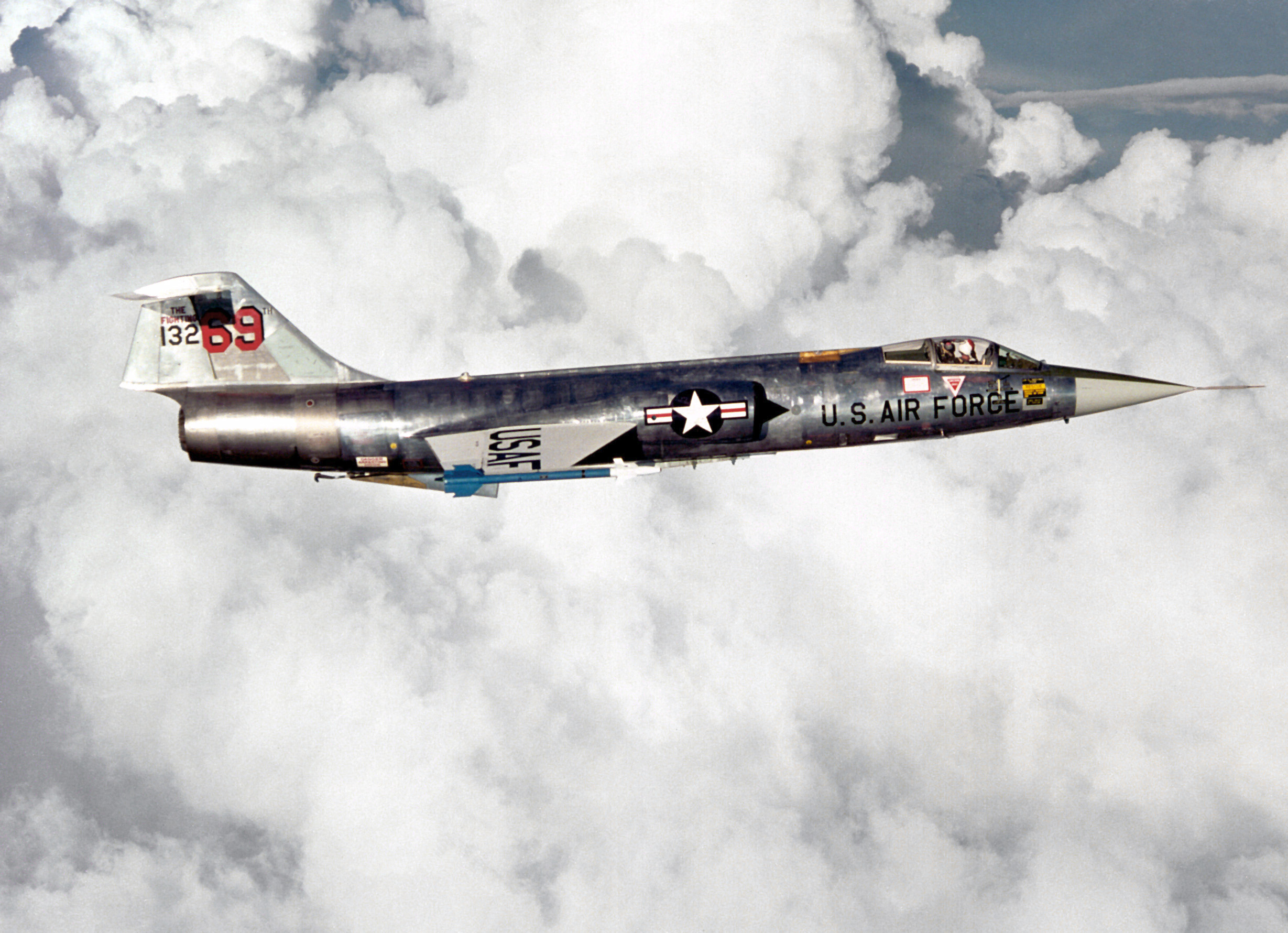
Physics of flight
What did the phrase "banking with intent to turn" mean among F-104 pilots?
It was a joke among Canadian F-104 pilots: banking the aircraft "with intent to turn" referred to its poor low-speed turning. Its sustained turn capability… more…
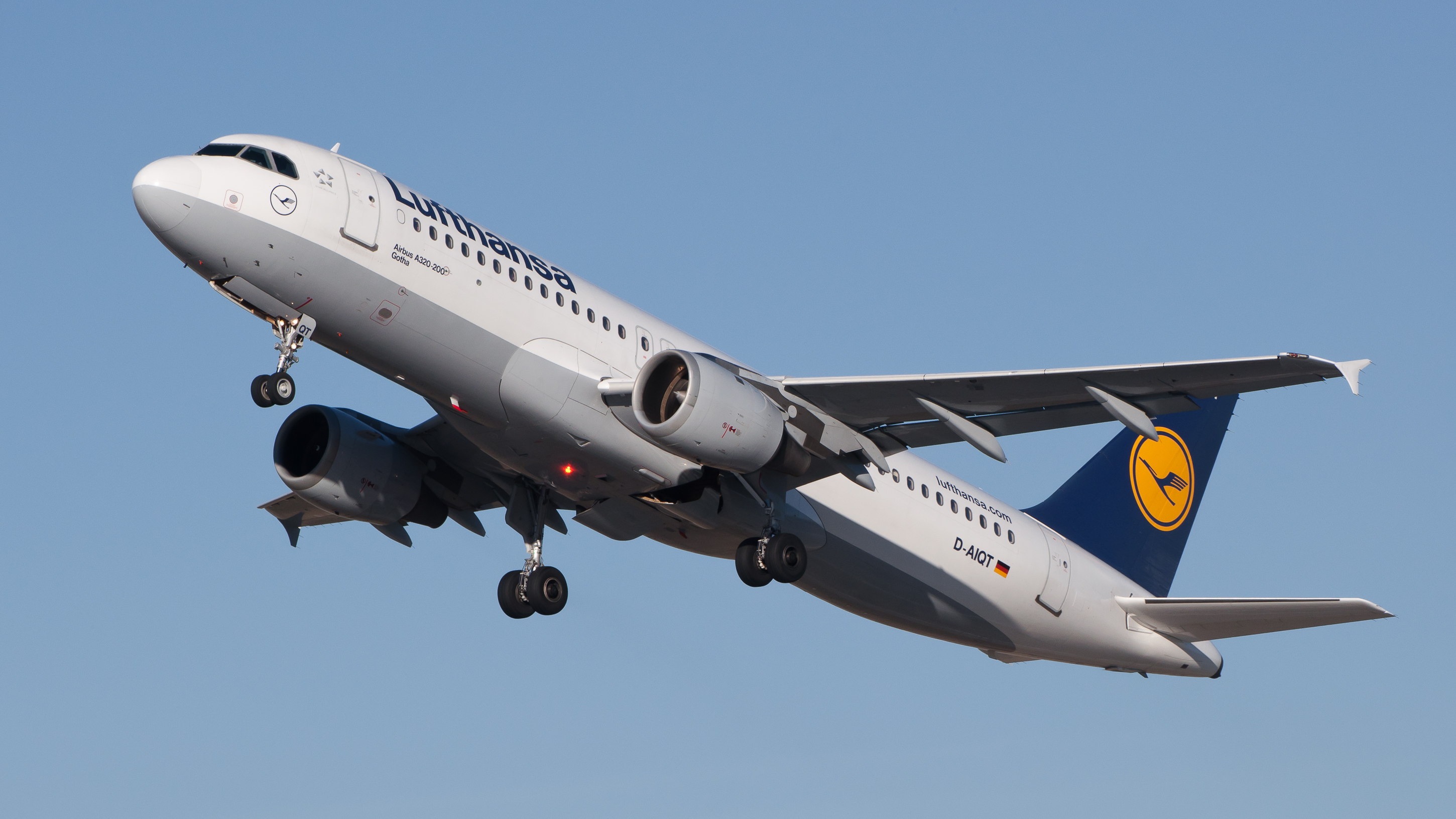
Julian Herzog (Website) (CC BY), vía commons Physics of flight
What is "flight envelope protection," which the A320 pioneered?
A set of limits embedded in the flight control software: it calculates the flight envelope, adds a safety margin, and blocks pilot inputs that would take the… more…
Julian Herzog (Website) (CC BY), vía commons Physics of flight
What is the A320's SHARP package for?
SHARP (SHort AiRfield Package) improves takeoff and landing performance on short runways and is designed to increase low-speed lift. It combines aerodynamic… more…
Physics of flight
What flaw sank Vought's all-metal V-141 fighter?
It wasn't a single flaw: tests showed the V-141 still flew poorly, was prone to spinning, and also suffered tail flutter, which is why it was rejected. It… more…
Physics of flight
What wind tunnel did NACA use to study the Corsair, and how big was it?
The full-scale 30- by 60-Foot Tunnel at the Langley Research Center, in Hampton, Virginia. NACA dedicated the facility on 27 May 1931 and used it to test the… more…


