Did you know…
How many G.IVs did AEG build?
Short answer
AEG built 320 G.IV. The twin-engined bomber entered service with the German air force in late 1916 and remained in operational use until the armistice of 11 November 1918; around 50 are believed to have still been active at one point. It was derived from the AEG G.III and doubled the bomb load of the G.II.
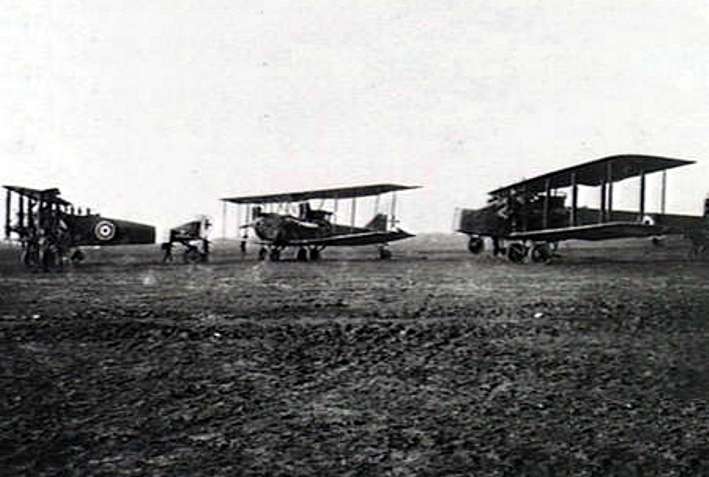
Three hundred and twenty aircraft
AEG G.IV production is put at 320 units. That is a considerable run for a First World War twin-engined bomber, and it explains why the type could stay on the front line for more than two years rather than remaining a handful of evaluation units. The G.IV was introduced into service in late 1916, when it entered the German air force, and from then on the type became a stable part of the bombing inventory.
A development of the G family
The G.IV was not a clean-sheet design but an evolution of the AEG G.III, which received improvements in power, bomb load and dimensions. The most significant advance over the earliest members of the family lies in offensive capability: the G.IV doubled the bomb load of the AEG G.II. That stepwise progression within a single line of bombers (G.II, G.III, G.IV) is what led AEG to an aircraft with performance sufficient to sustain operations for the rest of the war.
In service until the armistice
The G.IV continued to be used in operations by the German side until the armistice of 11 November 1918 that ended the conflict. It is also estimated that at one point around 50 aircraft were still active with the German air force, a fraction of the 320 built that gives an idea both of the wear accumulated through intensive use and of the relevance the type retained. Few bombers of its generation went through such a complete operational cycle, from late 1916 to the last day of hostilities.
More questions

Aviation history
Which was the most-produced American fighter of the Second World War?
The Republic P-47 Thunderbolt, of which 15,636 or 15,683 units were built, depending on the source. It was also one of the heaviest fighters of the conflict… more…

Aviation history
Who flew the E-66 at 2,149 km/h?
Konstantin or Vladimir Kokkinaki, depending on the source. Konstantin is credited with the absolute record on a closed 100 km circuit, at 2,148.66 km/h, set… more…

Fly-by-Owen (CC BY SA), vía commons Aviation history
How many I-11Bs were built?
Between 208 and around 450, depending on the source: one of the AISA I-11 reference sheets gives 208 examples built, while All-Aero speaks of around 400 built… more…

Aviation history
How many HH-53s could be converted to Pave Low III?
Eight HH-53C aircraft received an improved systems package and were redesignated HH-53H Pave Low III. The other figure in circulation, nine MH-53H and 32… more…

SCDBob (CC BY SA), vía commons Aviation history
What did the A129 Mangusta's armor protect?
The fuselage: the A129's airframe is armored and, according to All-Aero, designed to protect against 12.7 mm rounds, with partial protection against 23 mm… more…
Fly-by-Owen (CC BY SA), vía commons Aviation history
What landing gear and canopy did the AISA I-11B have?
According to one account, AISA reduced the cockpit canopy and fitted tailwheel gear on the production I-11B. All-Aero claims the opposite: the I-11B was… more…


