Did you know…
How many hours did a Vulcan fly with Conway engines during testing?
Short answer
A thousand hours. The Vulcan B.1 XA902 completed 1,000 flight hours with Rolls-Royce Conway engines, according to the Spanish Wikipedia, and was later used to develop the Rolls-Royce Spey turbofan: its two inboard Conways were replaced with Speys, which first flew on 12 October 1961.
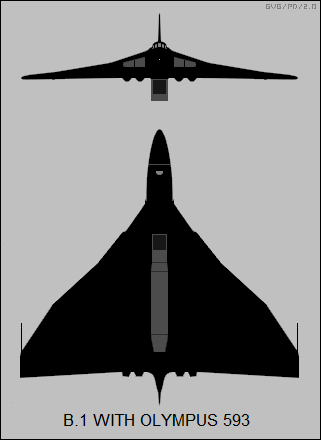
From crashed bomber to engine testbed
The XA902 was a production Vulcan B.1 withdrawn from RAF service after a landing accident in 1958. Rather than being written off, it was rebuilt and given a new job: replacing the first prototype, VX770, as the testbed for the Rolls-Royce Conway engine, after VX770 crashed in September 1958.
A thousand hours with the Conway
For that task, XA902 was fitted with four Conway RCo.11 engines. The Spanish Wikipedia records that it completed 1,000 flight hours with those engines. The Conway was of particular interest: it is considered the world's first turbofan. VX770 had already flown with the earlier RCo.7 version from 1957, and XA902 continued that work with the RCo.11 variant.
Then came the Spey
Once the Conway campaign ended, XA902 was used to develop a new turbofan, the Rolls-Royce Spey. The two inboard Conways were replaced with two Speys, and the aircraft first flew in that mixed configuration on 12 October 1961.
XA902 was not the only Vulcan devoted to engine work. The first production B.1, XA889, was used to flight-certify the Olympus 102 and 104 versions, and XA903 later tested the Olympus 593 used by Concorde and the RB.199 used by the Panavia Tornado.
The aircraft came from the British Ministry of Supply's B.35/46 specification. The first prototype flew on 30 August 1952, and the RAF received its first Vulcan B.1 in September 1956. Deliveries of the much-improved Vulcan B.2 began in 1960, and the last example reached the RAF in January 1965.
More questions
Aviation history
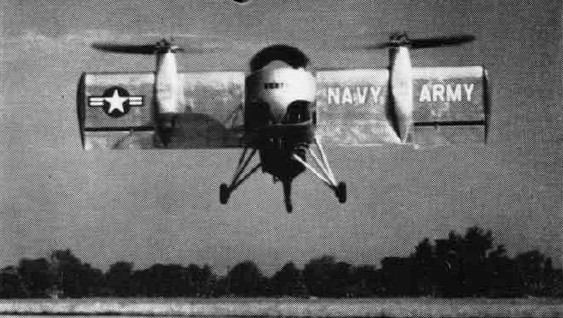
What was special about the Vertol 76?
Vertol's VZ-2 tested the tiltwing concept for vertical take-off and landing. After ground trials beginning in April 1957, it first took off on 13 August only… more…

Aviation history
Which was the most-produced American fighter of the Second World War?
The Republic P-47 Thunderbolt, of which 15,636 or 15,683 units were built, depending on the source. It was also one of the heaviest fighters of the conflict… more…

Aviation history
Who flew the E-66 at 2,149 km/h?
Konstantin or Vladimir Kokkinaki, depending on the source. Konstantin is credited with the absolute record on a closed 100 km circuit, at 2,148.66 km/h, set… more…

Fly-by-Owen (CC BY SA), vía commons Aviation history
How many I-11Bs were built?
Between 208 and around 450, depending on the source: one of the AISA I-11 reference sheets gives 208 examples built, while All-Aero speaks of around 400 built… more…

Aviation history
How many HH-53s could be converted to Pave Low III?
Eight HH-53C aircraft received an improved systems package and were redesignated HH-53H Pave Low III. The other figure in circulation, nine MH-53H and 32… more…

SCDBob (CC BY SA), vía commons Aviation history
What did the A129 Mangusta's armor protect?
The fuselage: the A129's airframe is armored and, according to All-Aero, designed to protect against 12.7 mm rounds, with partial protection against 23 mm… more…


