Did you know…
Until when were surplus D.H.9s kept in storage?
Short answer
Until the end of 1930: the British Aircraft Disposal Company still held large quantities of surplus wartime D.H.9s in its stores at that point, and over the following year they were scrapped and burned. Hundreds of aircraft with the 220 kW (300 hp) Hispano-Suiza engine remained in service, some as late as 1940.

The Aircraft Disposal Company's stock
At the end of 1930, the British Aircraft Disposal Company still held large quantities of surplus wartime D.H.9s in its stores, and over the following year they were scrapped and burned.
An international career
The type saw service in numerous countries: Afghanistan, Australia, Belgium, Canada, Chile, Estonia, Greece, India, the Irish Free State, Latvia, the Netherlands, New Zealand, Poland and South Africa. Nine served with the RNZAF between 1923 and 1930. The South African Air Force received a total of 48 D.H.9s and used them intensively, including against the 1922 Rand Revolt. Hundreds of aircraft fitted with the 220 kW (300 hp) Hispano-Suiza engine remained in service, some as late as 1940.
A variety of powerplants
A wide range of engines were fitted to the D.H.9: the 186 kW (250 hp) Fiat A-12, the 216 kW (290 hp) high-compression Siddeley Puma, the A.D.C. Nimbus and the 224 kW (300 hp) Hispano-Suiza 8Fg, the 321 kW (430 hp) Napier Lion and the 324 kW (435 hp) Liberty 12A.
More questions
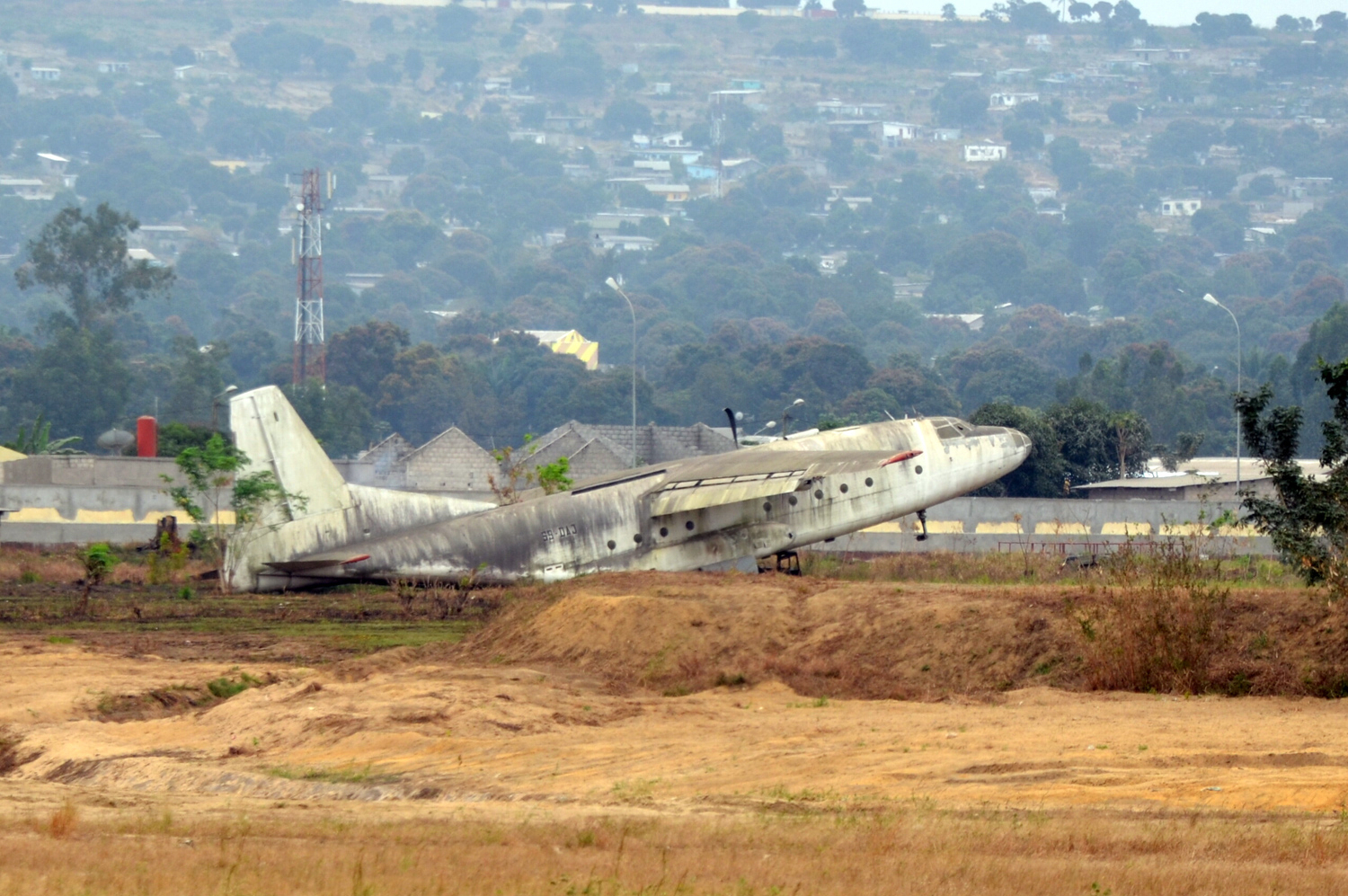
Vitaly Druchenok (CC BY SA), vía commons Aviation history
What "typically Russian" features did the An-8 have?
The An-8 was a Soviet light military transport with a high wing and two turboprops, featuring a glazed nose for the navigator, a chin radome for navigation… more…

RB7MRV (CC BY SA), vía commons Aviation history
Why is the E-25 called "Mirlo"?
Mirlo is the official nickname of the C-101 in Spain. The air force designated it the E.25 Mirlo, "Blackbird" in English, while CASA identified it as the… more…
RB7MRV (CC BY SA), vía commons Aviation history
What did CASA do with the C-101's first flight for safety?
CASA kept it deliberately simple: on 27 June 1977 the P1 only had to check the controls' response, and for extra safety its landing gear was not even… more…
RB7MRV (CC BY SA), vía commons Aviation history
What requirement made the C-101 fly inverted?
Among its requirements, the Aviojet had to be able to remain in inverted flight for 20 s and land at 100 knots (185 km/h). It also had to withstand load… more…

Aviation history
What was the An-2 called before it became an Antonov?
SKh-1. The letters stood for Sel'sko Khozyaystvennyi — pervoy, "agricultural, the first," and corresponded to the first design from Antonov's bureau, later… more…
Aviation history
At what altitude did the weather-research An-4 biplane fly?
Up to 10,000 m: the An-4 — the design-bureau designation for the meteorological An-2ZA, intended for high-altitude weather research — could maintain power up… more…


