Did you know…
How fast does Mars rotate?
Short answer
Mars rotates on its axis in 24.6229 hours relative to the stars; its solar day, the Martian sol, lasts 24.6597 hours, slightly longer than Earth's. Its axis is tilted 25 degrees. Around the Sun it moves at an average of 24.08 km/s and takes 686.980 Earth days to complete one orbit.

An almost Earth-like day
Mars completes a spin on its axis in 24.6229 hours measured against the stars, and its solar day —the interval between two middays, which mission teams call a sol— lasts 24.6597 hours; NASA's outreach fact sheets round it to one rotation every 24.6 hours. That difference of just over half an hour compared to the Earth day seems small, but it forces rover mission controllers to shift their work schedule every day to stay in phase with the Martian surface.
Axis and seasons
Mars's rotation axis is tilted 25 degrees relative to the plane of its orbit, very close to Earth's 23.4 degrees. That's why the planet has clearly recognizable seasons, with polar caps that advance and retreat. What changes compared to our calendar is the duration, because the Martian year lasts 686.980 Earth days, equivalent to 669.6 sols or, in the agency's outreach figures, to 687 Earth days.
The other speed: orbital
Around the Sun, Mars moves at an average orbital speed of 24.08 km/s, slower than Earth's because it's farther from the Sun: its semi-major axis is 227.956 million kilometers, with an average distance of 228 million kilometers (142 million miles). Its orbit is also notably eccentric for an inner planet (0.0935), so the distance to the Sun varies noticeably over the Martian year, and with it the light and heat the surface receives.
More questions
Moon and Mars
How does neil armstrong look like?
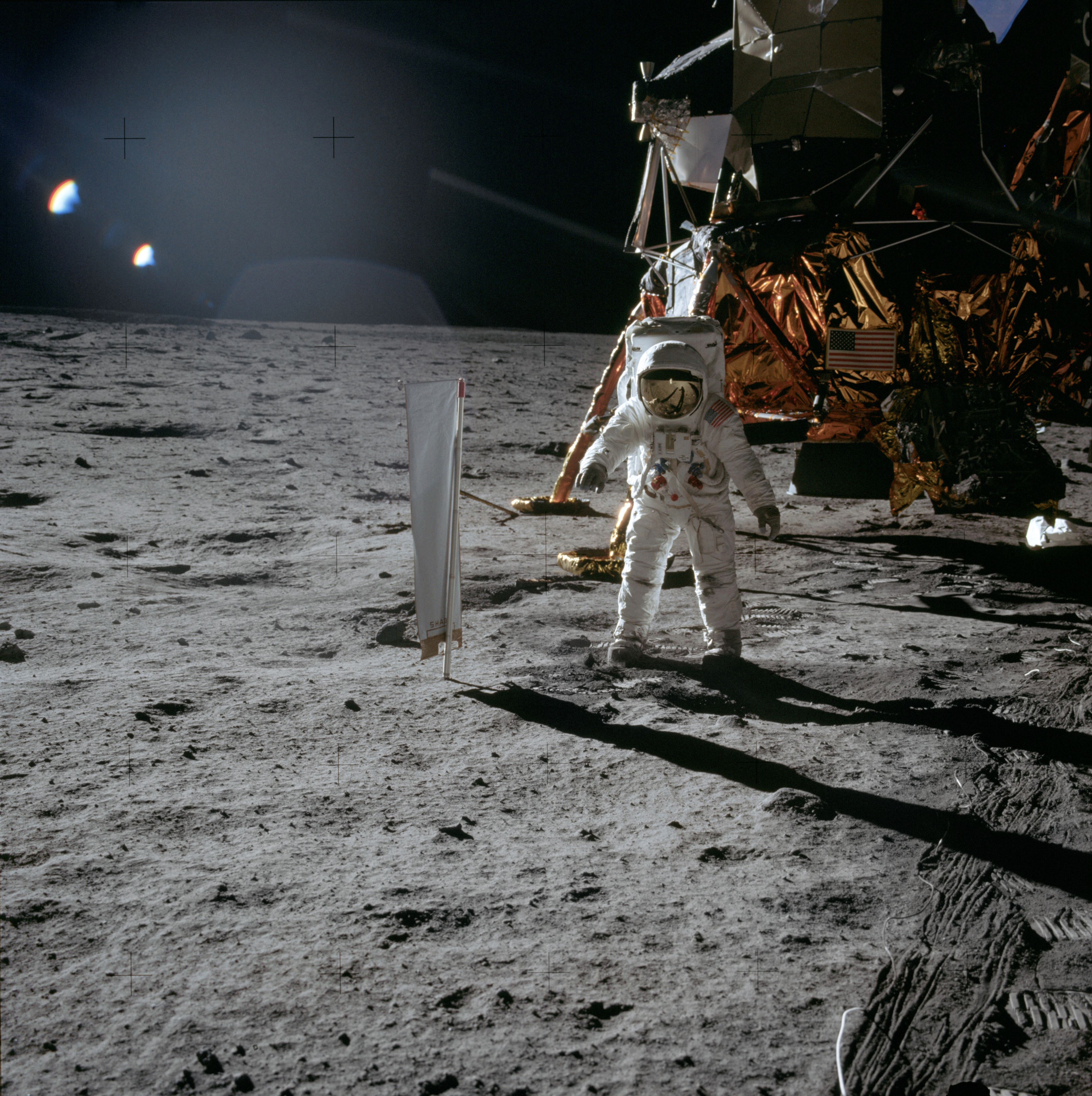
The face most people picture is not his: the gold-visored astronaut in the famous Apollo 11 photograph is Buzz Aldrin, shot by Armstrong. Armstrong himself is… more…

Richard Dorrell (CC BY SA), vía commons Moon and Mars
How does the moon affect the tides?
By pulling unevenly on it. Tidal forces vary inversely as the cube of the distance, so the near side of the Earth is tugged harder than the far side: one… more…
Moon and Mars
Why does neil armstrong have a hollywood star?
Strictly he does not have a star. Armstrong, Aldrin and Collins share four circular monuments resembling the Moon, one at each corner of Hollywood and Vine… more…
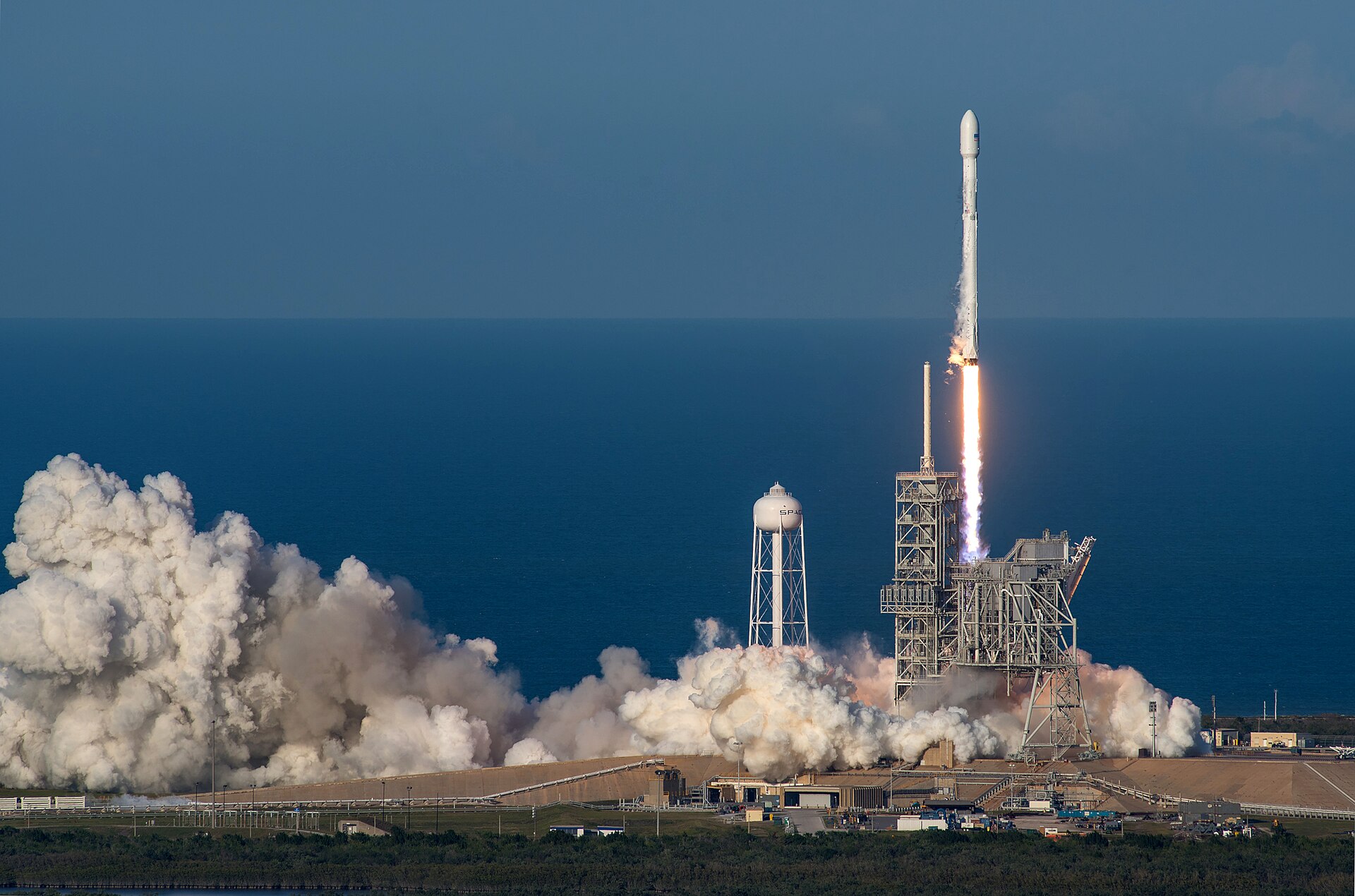
Foto: SpaceX (CC0) Moon and Mars
Why did falcon 9 hit the moon?
Because a spent upper stage on a lunar trajectory has no mission and no way to steer. A Falcon 9 upper stage from the January 2025 Firefly Blue Ghost 1 launch… more…
Moon and Mars
How much apollo 11 cost?
NASA never published a price for Apollo 11 on its own; what is documented is the program. The United States spent $25.8 billion on Project Apollo between 1960… more…
Moon and Mars
How much time neil armstrong spent on moon?
Armstrong and Aldrin spent 21 hours, 36 minutes on the Moon's surface, almost all of it inside the lunar module Eagle. Armstrong stepped onto the surface… more…

