Tupolev Tu-95
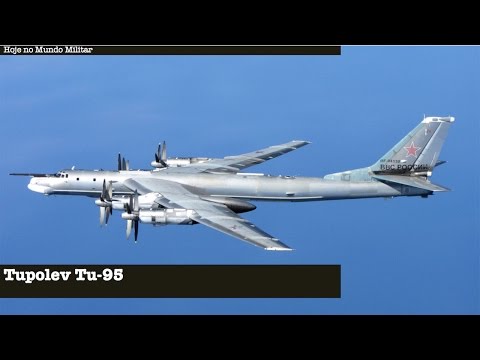
Video from the channel Hoje no Mundo Militar about Tupolev Tu-95, linked on its Above Ten Thousand entry. Duration: 9:40. Language: Portuguese. Video type: Documentary.
What it's about
First episode of a series on heavy bombers from a Portuguese channel focused on military subjects, dedicated to the Tupolev Tu-95. The video presents it as the ultimate symbol of Soviet nuclear power after the Second World War.
Historical background
In the late 1940s, the Soviet air force needed a heavy bomber with a range of at least 10,000 km capable of carrying the large atomic bombs of the time. Andrei Tupolev started from the Tu-4, a copy of the American B-29. Jet engines consumed too much fuel and piston engines didn't provide enough power, so the turboprop was chosen. The project officially began in July 1951 with the Kuznetsov NK-12 engine, developed with the involvement of German engineers. After difficult testing, including a fatal accident in 1953, it entered production in January 1956. In October 1961, the 50-megaton Tsar Bomba was dropped from a Tu-95. In 2007 Russia resumed its international patrols, fifteen years after suspending them, and its combat debut came on 17 November 2015, during the Russian intervention in Syria.
Key facts
It has 35° swept wings, contra-rotating propellers and a crew of up to seven. It measures 46.2 m in length, 50.10 m in wingspan and 12.12 m in height. It weighs 90 t empty and can take off at 188 t. It reaches 920 km/h, has a range of 15,000 km and a ceiling slightly above 13,500 m. It carries one or two 23 mm cannons and up to 15 t of armament, including Kh-55 cruise missiles with a range of 3,000 km. The version in service is the Tu-95MS, built in the 1980s and 1990s. It is estimated that more than 500 were built.