Deep Intel on the U-2 Spy Plane
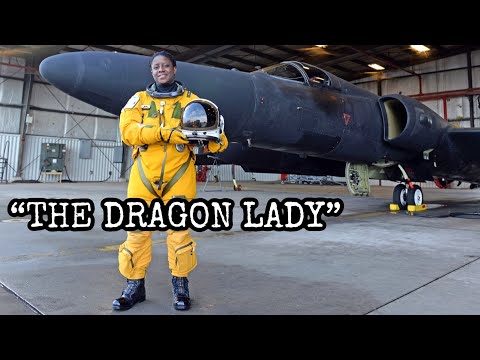
Video from the channel Ward Carroll about Lockheed U-2, linked on its Above Ten Thousand entry. Duration: 33:09. Language: English. Video type: News.
What this is about
An interview by Ward Carroll with retired U.S. Air Force Colonel Merryl Tengesdal, who looks back on an unusual career: she started out in Navy helicopters and ended up flying the U-2 reconnaissance aircraft. The conversation also serves to introduce her memoir.
Background
Raised in the Bronx, she wanted to be an astronaut since childhood and chose naval aviation as her path. After basic flight instruction on the T-34C, she moved to helicopters and flew the SH-60B out of Mayport, with anti-submarine weaponry, search-and-rescue missions, and a first deployment with the George Washington carrier strike group. She then became an instructor: she qualified on the T-34 and was one of four Navy instructors chosen for the joint T-6 Texan II program with the Air Force, through which she trained students from both services at Moody for three years. After finishing her Navy commitment, she applied for U-2 selection at Beale: two weeks of interviews and three test flights. As she explains, in 67 years only a little over 1,100 pilots have flown the aircraft. At Beale, pilots also train on the T-38, the U-2's companion trainer.
What it entails
The interviewee describes a subsonic aircraft, flying at about three-quarters of Mach, designed to stay at high altitude for long periods. Above 50,000 feet it is flown in a pressure suit, which keeps the body at an equivalent of about 35,000 feet; before takeoff, pilots breathe pure oxygen for an hour to purge nitrogen. Even so, there have been cases of decompression sickness with neurological aftereffects, and one study found abnormal brain lesions in young pilots. Landing, with tandem landing gear, requires touching down first on the tail wheel and relying on a ground crew member, the "mobile," who also prepares the aircraft. The pogos, auxiliary wheels under the wings, fall away on takeoff and are reinstalled once the aircraft stops. The controls use a steering wheel because, if the suit inflates, a low-mounted stick would be out of reach. During Operations Enduring Freedom and Iraqi Freedom, she flew eight-to-ten-hour missions out of the United Arab Emirates, with one flight every three days and deployments of about 60 days, gathering imagery and signals and looking for ground disturbances that might betray explosive devices. She retired as a colonel after 23 years of service.