Lockheed F-117. Идея малой заметности
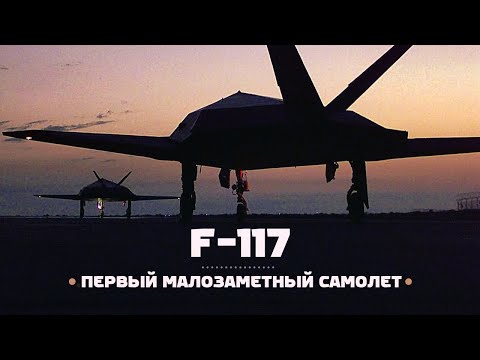
Video from the channel Авиасмотр about Lockheed F-117 Nighthawk, linked on its Above Ten Thousand entry. Duration: 21:33. Video type: Documentary.
What it's about
Russian-language documentary on the Lockheed F-117 Nighthawk and the idea of low observability that made it possible. It traces the birth of the concept at Skunk Works, the Have Blue demonstrator, the development and production of the F-117, its technical solutions, its combat record and its legacy, ten years after its retirement.
Historical context
In the mid-1970s Lockheed was going through serious financial and reputational problems: an international bribery scandal and the commercial failure of the L-1011 TriStar trijet, delayed by the bankruptcy of Rolls-Royce, supplier of its RB211 engines. In 1975 Ben Rich replaced Kelly Johnson at the head of Skunk Works and needed new contracts. Mathematician Denys Overholser proposed calculating the radar cross-section of shapes made of flat panels, the only geometry the computers of the time could analyze. The first design, nicknamed Hopeless Diamond, was met with skepticism, but tests with mock-ups confirmed the calculations. Lockheed entered a Pentagon research agency competition on its own initiative, beat Northrop, and in April 1976 won the order for two flying Have Blue prototypes. The first flew on 1 December 1977; both were lost in accidents, and their pilots ejected successfully.
Key facts
On 1 November 1978 five pre-production aircraft were contracted for 350 million dollars; the first flew on 18 June 1981, a year late, and 59 production aircraft were built by mid-1990. The F-117 retains the faceted shape and adds sawtooth edges on joints and doors, gold-coated cockpit glazing, grids on the air intakes and radar-absorbent materials in the form of paint, putty and sheeting. To reduce its infrared signature it uses flat, wide nozzles that mix cold air with the exhaust, and two non-afterburning General Electric F404 engines. Despite its fighter designation, it was a night tactical bomber that carried two 900 kg laser-guided bombs in its bay and operated in complete radio silence, aiming with two infrared sensors with a laser designator. It debuted in Panama in 1989 and stood out in the 1991 Desert Storm campaign. On 27 March 1999 one was shot down near Belgrade, according to the most widespread account by an S-125 system: it is the only acknowledged combat loss. It was retired in 2008, and the video concludes that its emergence marked a turning point in military aviation.