General aviation · Civil · United Kingdom
Britten-Norman Islander
- June 13, 1965
- First flight
- 1967
- Introduced
- In service
- Status
- 1,280
- Units built
_11-1600.webp)


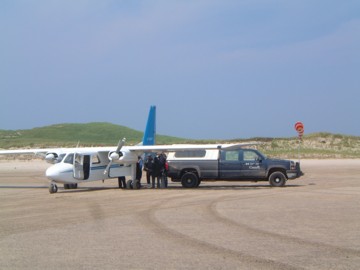
The Britten-Norman Islander is a British light utility twin carrying a pilot and up to nine passengers, designed in the 1960s for short-haul work between small and poorly prepared airstrips. It first flew on 13 June 1965, was certified in the United Kingdom in August 1967 and remains in production, with 1,280 aircraft built and a return to its original Bembridge factory announced in 2023.
Related events
Related sheets
Category
History
John Britten and Desmond Norman, then partners in converting agricultural aircraft, began work in 1963 on a simple and inexpensive piston twin. Their reading of the market was shrewd: the emerging commuter operators valued payload above range or cruising speed, so the new aeroplane traded performance for capacity. Wings and tail surfaces were given constant chord and thickness and every wing rib was made identical, choices taken purely to cut manufacturing cost. The prototype flew on 13 June 1965 behind a pair of Rolls-Royce/Continental IO-360B engines and appeared at the Paris Air Show only four days later; testing led to a greater span and to the more powerful Lycoming O-540-E engines that became standard. The first production aircraft flew on 24 April 1967, British type certification followed in August of that year and American approval in December.
The Islander is a shoulder-wing monoplane with a rectangular fuselage and fixed tricycle gear, and it has no centre aisle: its seat rows exploit every inch of a cabin barely over a metre wide, served by two doors on the left side and one on the right. That cabin can be rearranged quickly, which accounts for the type's range of trades — scheduled and charter flights, freight, air ambulance work, agriculture, aerial surveillance, para-dropping and law enforcement. A military version first flew in 1970 as the Defender, adding underwing hardpoints, while the Maritime Defender was aimed at coastal patrol and search and rescue. From 1980 the aircraft could be ordered with Allison 250 turboprops as the BN-2T, the first of which entered service in 1981.
Demand quickly outran the Bembridge factory on the Isle of Wight. Production spread across Europe — assembly in Romania, finishing in Belgium after Fairey bought the company in 1972 — and a Philippine licence followed in 1975; more than 500 airframes came off the Romanian line. In 1974 sales passed the 548-order record then held by Britain's best-selling multi-engine commercial aircraft, and in 1982 the 1,000th Islander was delivered. Sales then declined, partly because the aircraft already sold lasted so long: by 2016 the manufacturer counted roughly 500 operators in more than 120 countries, and in October 2019 some 800 examples remained in service. The type also holds an unusual record, flying Loganair's Westray to Papa Westray service, the shortest scheduled flight in the world at 2.7 km and about two minutes in the air.
Variants
| BN-2 (prototipo) | BN-2A-10 | BN-2A-2 | BN-2A-20 | BN-2A-21 | BN-2A-23 | BN-2A-24 | BN-2A-25 | BN-2A-26 | BN-2A-27 | BN-2A-3 | BN-2A-30 (hidroavión con flotadores) | BN-2A-41 Turbo Islander | BN-2A-6 | BN-2A-7 | BN-2A-8 | BN-2A-9 | BN-2A Islander | BN-2B-20 | BN-2B-21 | BN-2B-26 | BN-2B-27 | BN-2B Defender | BN-2B Islander II | BN-2 con fanes entubados (banco de pruebas) | BN-2E Islander Super | BN-2T-4R AEW Defender | BN-2T-4S Defender 4000 | BN-2T Turbine Islander | Defender AL Mk 1 | Defender AL Mk 2 / R2 | Defender T Mk 3 | Islander AL1 / R1 | Islander CC2 / CC2A | Maritime Defender | Project Fresson (Islander eléctrico) | |
|---|---|---|---|---|---|---|---|---|---|---|---|---|---|---|---|---|---|---|---|---|---|---|---|---|---|---|---|---|---|---|---|---|---|---|---|---|
| First flight | June 13, 1965 | — | — | — | — | — | — | — | — | — | — | — | — | — | — | — | — | — | — | — | — | — | — | — | — | — | — | — | — | — | — | — | — | — | — | — |
| Aircraft type | Light utility aircraft | Light utility aircraft | Light utility aircraft | Light utility aircraft | Light utility aircraft | Light utility aircraft | Light utility aircraft | Light utility aircraft | Light utility aircraft | Light utility aircraft | Light utility aircraft | Light utility aircraft | Light utility aircraft | Light utility aircraft | Light utility aircraft | Light utility aircraft | Light utility aircraft | Light utility aircraft | Light utility aircraft | Light utility aircraft | Light utility aircraft | Light utility aircraft | Armed light patrol and surveillance aircraft | Light utility aircraft | Light utility aircraft | Light utility aircraft | Light military surveillance aircraft | Armed light patrol and surveillance aircraft | Light utility aircraft | Light military surveillance aircraft | Light military surveillance aircraft | Light military training aircraft | Light military liaison and reconnaissance aircraft | Light military liaison aircraft | Armed light maritime patrol aircraft | Light utility aircraft |
| Powerplant | 2 × Rolls-Royce/Continental IO-360-B piston engines of 157 kW (210 hp) each; the prototype was soon re-engined with 194 kW Lycoming O-540-E4C5 units. | 2 × turbocharged, fuel-injected Lycoming TIO-540-H1A piston engines of 201 kW (270 hp) each, on the BN-2A-8 airframe with raised take-off weight. | 2 × fuel-injected Lycoming IO-540-K1B5 piston engines of 224 kW (300 hp) each. | 2 × fuel-injected Lycoming IO-540-K1B5 piston engines of 224 kW (300 hp) each. | 2 × fuel-injected Lycoming IO-540-K1B5 piston engines of 224 kW (300 hp) each. | 2 × fuel-injected Lycoming IO-540-K1B5 piston engines of 224 kW (300 hp) each: a single BN-2A-24 re-engined and fitted with wingtip tanks. | 2 × Lycoming O-540-E4C5 piston engines of 194 kW (260 hp) each, as on the BN-2A-27 it derives from. | 2 × Lycoming O-540-E4C5 piston engines of 194 kW (260 hp) each: essentially a BN-2A-26 with the BN-2A-8S long nose, built by Fairey at Gosselies as the donor airframe for the BN-2A-41 prototype. | 2 × Lycoming O-540-E4C5 piston engines of 194 kW (260 hp) each. | 2 × Lycoming O-540-E4C5 piston engines of 194 kW (260 hp) each. | 2 × fuel-injected Lycoming IO-540-K1B5 piston engines of 224 kW (300 hp) each. | 2 × Lycoming O-540-E4C5 piston engines of 194 kW (260 hp) each; the BN-2A-3x family covered the floatplane and amphibian projects, the even-numbered designations taking the 224 kW engine instead. | 2 × Lycoming LTP 101 turboprops with auto-feathering propellers, mounted about 15 cm further outboard than the standard piston installation. | 2 × Lycoming O-540-E4C5 piston engines of 194 kW (260 hp) each. | 2 × Lycoming O-540-E4C5 piston engines of 194 kW (260 hp) each. | 2 × Lycoming O-540-E4C5 piston engines of 194 kW (260 hp) each. | 2 × Lycoming O-540-E4C5 piston engines of 194 kW (260 hp) each. | 2 × Lycoming O-540-E4C5 piston engines of 194 kW (260 hp) each. | 2 × fuel-injected Lycoming IO-540-K1B5 piston engines of 224 kW (300 hp) each, with two- or three-blade Hartzell propellers depending on modification. | 2 × fuel-injected Lycoming IO-540-K1B5 piston engines of 224 kW (300 hp) each. | 2 × Lycoming O-540-E4C5 piston engines of 194 kW (260 hp) each; some aircraft carry the three-blade Hartzell propeller of modification NB-M-1361. | 2 × Lycoming O-540-E4C5 piston engines of 194 kW (260 hp) each. | 2 × fuel-injected Lycoming IO-540-K1B5 piston engines of 224 kW (300 hp) each. | 2 × Lycoming O-540-E4C5 piston engines of 194 kW (260 hp) each, driving two-blade Hartzell constant-speed propellers of 1.98 m diameter. | 2 × Lycoming O-540-E4C5 piston engines of 194 kW (260 hp) each driving Dowty Rotol ducted fans, tested in 1977 to cut noise against the conventional propeller; the installation called for local strengthening of the main wing spar at the root. | 2 × Lycoming O-540-E4C5 piston engines of 194 kW (260 hp) each, unchanged from the BN-2 it was converted from. | 2 × Allison 250-B17F/1 turboprops of 298 kW (400 shp) each, with 1.98 m three-blade Hartzell propellers. | 2 × Allison 250-B17F/1 turboprops of 298 kW (400 shp) each, with three-blade Hartzell propellers. | 2 × Allison 250-B17C turboprops flat-rated at 239 kW (320 shp) each, governed to a maximum of 2030 propeller rpm, with 1.98 m three-blade Hartzell propellers. | 2 × Allison 250-B17F/1 turboprops of 298 kW (400 shp) each. | 2 × Allison 250-B17F/1 turboprops of 298 kW (400 shp) each. | 2 × Allison 250-B17F/1 turboprops of 298 kW (400 shp) each. | 2 × Allison 250-B17C turboprops flat-rated at 239 kW (320 shp) each. | 2 × Allison 250-B17C turboprops flat-rated at 239 kW (320 shp) each. | 2 × fuel-injected Lycoming IO-540-K1B5 piston engines of 224 kW (300 hp) each. | Hydrogen fuel-cell electric powertrain (HFCPS) by Cranfield Aerospace Solutions: 240 kW of electrical power yielding up to 220 kW at the motor. The demonstrator replaces one of the Islander's two piston engines. |
| Powerplant | 2 × Rolls-Royce/Continental IO-360-B | 2 × Lycoming TIO-540-H1A | 2 × Lycoming IO-540-K1B5 | 2 × Lycoming IO-540-K1B5 | 2 × Lycoming IO-540-K1B5 | 2 × Lycoming IO-540-K1B5 | 2 × Lycoming O-540-E4C5 | 2 × Lycoming O-540-E4C5 | 2 × Lycoming O-540-E4C5 | 2 × Lycoming O-540-E4C5 | 2 × Lycoming IO-540-K1B5 | 2 × Lycoming O-540-E4C5 | 2 × Lycoming LTP 101 | 2 × Lycoming O-540-E4C5 | 2 × Lycoming O-540-E4C5 | 2 × Lycoming O-540-E4C5 | 2 × Lycoming O-540-E4C5 | 2 × Lycoming O-540-E4C5 | 2 × Lycoming IO-540-K1B5 | 2 × Lycoming IO-540-K1B5 | 2 × Lycoming O-540-E4C5 | 2 × Lycoming O-540-E4C5 | 2 × Lycoming IO-540-K1B5 | 2 × Lycoming O-540-E4C5 | 2 × Lycoming O-540-E4C5 | 2 × Lycoming O-540-E4C5 | 2 × Allison 250-B17F/1 | 2 × Allison 250-B17F/1 | 2 × Allison 250-B17C | 2 × Allison 250-B17F/1 | 2 × Allison 250-B17F/1 | 2 × Allison 250-B17F/1 | 2 × Allison 250-B17C | 2 × Allison 250-B17C | 2 × Lycoming IO-540-K1B5 | Cranfield Aerospace Solutions HFCPS (pila de combustible de hidrógeno) |
| Power per engine | 211 hp | 270 hp | 300 hp | 300 hp | 300 hp | 300 hp | 260 hp | 260 hp | 260 hp | 260 hp | 300 hp | 260 hp | — | 260 hp | 260 hp | 260 hp | 260 hp | 260 hp | 300 hp | 300 hp | 260 hp | 260 hp | 300 hp | 260 hp | 260 hp | 260 hp | 400 hp Best value in this row | 400 hp Best value in this row | 321 hp | 400 hp Best value in this row | 400 hp Best value in this row | 400 hp Best value in this row | 321 hp | 321 hp | 300 hp | 220 kW |
| Length | 10.9 m | — | — | — | — | — | — | — | — | — | — | — | — | — | — | — | — | 10.9 m | — | — | — | — | — | 10.9 m | — | — | 12.4 m Best value in this row | 12.2 m | 10.9 m | — | — | — | — | — | — | — |
| Wingspan | — | — | — | — | — | — | — | — | — | — | — | — | — | — | — | — | — | — | — | — | — | — | — | 14.9 m | — | — | 16.2 m Best value in this row | 16.2 m Best value in this row | — | — | — | — | — | — | — | — |
| Height | 4.2 m | — | — | — | — | — | — | — | — | — | — | — | — | — | — | — | — | 4.2 m | — | — | — | — | — | 4.2 m | — | — | 4.2 m | 4.4 m | 4.5 m Best value in this row | — | — | — | — | — | — | — |
| Wing area | 30.2 m² | — | 30.2 m² | — | — | — | — | — | — | — | — | — | — | 30.2 m² | — | — | — | 30.2 m² | 30.2 m² | — | 30.2 m² | — | — | 30.2 m² | — | — | 32.7 m² Best value in this row | 32.7 m² Best value in this row | 30.2 m² | 32.7 m² Best value in this row | 32.7 m² Best value in this row | 32.7 m² Best value in this row | 30.2 m² | 30.2 m² | — | — |
| Empty weight | — | — | — | — | — | — | — | — | — | — | — | — | — | — | — | — | — | — | — | — | — | — | — | 1,866 kg Best value in this row | — | — | — | 2,223 kg | — | — | — | — | — | — | — | — |
| MTOW | 2,585 kg | — | 2,858 kg | 2,994 kg | 2,994 kg | — | — | — | 2,994 kg | 2,994 kg | 2,858 kg | — | — | 2,858 kg | — | 2,858 kg | 2,858 kg | 2,722 kg | 2,994 kg | 2,994 kg | 2,994 kg | 2,994 kg | 2,994 kg | 2,994 kg | — | — | 3,855 kg | 3,856 kg Best value in this row | 3,175 kg | 3,855 kg | 3,855 kg | 3,855 kg | 3,175 kg | 3,175 kg | 2,994 kg | — |
| Top speed | — | — | — | — | — | — | — | — | — | — | — | — | — | — | — | — | — | — | — | — | — | — | — | 274 km/h | — | — | — | 326 km/h Best value in this row | — | — | — | — | — | — | — | — |
| Max speed altitude | — | — | — | — | — | — | — | — | — | — | — | — | — | — | — | — | — | — | — | — | — | — | — | 0 m | — | — | — | — | — | — | — | — | — | — | — | — |
| Cruise speed | — | — | — | — | — | — | — | — | — | — | — | — | — | — | — | — | — | — | — | — | — | — | — | 240 km/h | — | — | — | 280 km/h Best value in this row | — | — | — | — | — | — | — | — |
| Cruise altitude | — | — | — | — | — | — | — | — | — | — | — | — | — | — | — | — | — | — | — | — | — | — | — | 3,700 m | — | — | — | — | — | — | — | — | — | — | — | — |
| Service ceiling | — | — | — | — | — | — | — | — | — | — | — | — | — | — | — | — | — | — | — | — | — | — | — | 4,000 m | — | — | — | 7,600 m Best value in this row | — | — | — | — | — | — | — | — |
| Initial climb rate | — | — | — | — | — | — | — | — | — | — | — | — | — | — | — | — | — | — | — | — | — | — | — | 4.4 m/s | — | — | — | — | — | — | — | — | — | — | — | — |
| Range | — | — | — | — | — | — | — | — | — | — | — | — | — | — | — | — | — | — | — | — | — | — | — | 1,398 km | — | — | — | 1,863 km Best value in this row | — | — | — | — | — | — | — | — |
| Combat radius | 0 km Best value in this row | 0 km Best value in this row | 0 km Best value in this row | 0 km Best value in this row | 0 km Best value in this row | 0 km Best value in this row | 0 km Best value in this row | 0 km Best value in this row | 0 km Best value in this row | 0 km Best value in this row | 0 km Best value in this row | 0 km Best value in this row | 0 km Best value in this row | 0 km Best value in this row | 0 km Best value in this row | 0 km Best value in this row | 0 km Best value in this row | 0 km Best value in this row | 0 km Best value in this row | 0 km Best value in this row | 0 km Best value in this row | 0 km Best value in this row | — | 0 km Best value in this row | 0 km Best value in this row | 0 km Best value in this row | — | — | 0 km Best value in this row | — | — | — | — | — | — | 0 km Best value in this row |
| Endurance | — | — | — | — | — | — | — | — | — | — | — | — | — | — | — | — | — | — | — | — | — | — | — | — | — | — | — | 510 min | — | — | — | — | — | — | — | — |
| Range conditions | — | — | — | — | — | — | — | — | — | — | — | — | — | — | — | — | — | — | — | — | — | — | — | 1,398 km with reserves at 240 km/h and 3,700 m, at 59% power; service ceiling 4,000 m. | — | — | — | 1,863 km on VFR reserves and eight and a half hours of endurance; service ceiling 7,600 m. | — | — | — | — | — | — | — | — |
| Armament | None: civil prototype with no weapons capability. | None: civil variant with no weapons capability. | None: civil variant with no weapons capability. | None: civil variant with no weapons capability. | None in civil guise; the production Defender was armed on this airframe. | None: civil variant with no weapons capability. | None: civil variant with no weapons capability. | None: civil variant with no weapons capability. | None: civil variant with no weapons capability. | None: civil variant with no weapons capability. | None: civil variant with no weapons capability. | None: civil project with no weapons capability. | None: civil prototype with no weapons capability. | None: civil variant with no weapons capability. | None: civil variant with no weapons capability. | None: civil variant with no weapons capability. | None: civil variant with no weapons capability. | None: civil variant with no weapons capability. | None: civil variant with no weapons capability. | None in civil guise; the airframe underpinned the BN-2B-21 Defender and the Maritime Defender. | None: civil variant with no weapons capability. | None: civil variant with no weapons capability. | Four underwing hardpoints for up to 1,134 kg of drop tanks, bombs, missiles, 7.62 mm machine-gun pods, rocket pods, flares and sensors; the wing carries dedicated strengthening for the pylons. | None: civil transport variant, with neither hardpoints nor combat systems. | None: civil flying testbed. | None: civil prototype with no weapons capability. | No weapons of its own: the payload is the early-warning radar in the nose radome and its mission consoles. | Four underwing hardpoints for up to 1,134 kg of bombs, missiles, machine-gun pods, rocket pods, drop tanks or sensors. | None on the civil transport version. | No offensive weapons as standard: a low-light-level television camera in an under-nose turret, cabin-mounted cameras or COMINT equipment, and infrared jammers in underwing pods against surface-to-air missiles. | No offensive weapons: as the Defender AL.1 but with a different sensor fit. Redesignated Defender R.2 in 2019. | None: training version of the Defender AL.1. | Only two underwing pylons, half the Defender's; in British Army service they carry mission equipment rather than weapons. | None: RAF communications and liaison aircraft. | Bendix/King search radar, forward-looking infrared, sonobuoys, a magnetic anomaly detector and acoustic processors; on the four underwing hardpoints, two Sting Ray torpedoes, four Sea Skua anti-ship missiles or other stores, up to 1,134 kg. | None: civil propulsion demonstrator. |
| Max weapons load | 0 kg | 0 kg | 0 kg | 0 kg | 0 kg | 0 kg | 0 kg | 0 kg | 0 kg | 0 kg | 0 kg | 0 kg | 0 kg | 0 kg | 0 kg | 0 kg | 0 kg | 0 kg | 0 kg | 0 kg | 0 kg | 0 kg | 1,134 kg Best value in this row | 0 kg | 0 kg | 0 kg | — | 1,134 kg Best value in this row | 0 kg | — | — | — | — | — | 1,134 kg Best value in this row | 0 kg |
| Payload | — | — | — | — | — | — | — | — | — | — | — | — | — | — | — | — | — | — | — | — | — | — | — | 929 kg | — | — | — | — | — | — | — | — | — | — | — | — |
| Cargo capacity | Cabin for up to ten occupants: pilot plus nine passengers. | Cabin for up to ten occupants: pilot plus nine passengers. | Cabin for up to ten occupants: pilot plus nine passengers. | Cabin for up to ten occupants: pilot plus nine passengers. | Cabin for up to ten occupants, with increased span and wingtip tanks. | BN-2A-8S long nose; cabin for up to ten occupants. | Identical to the BN-2A-27 apart from the BN-2A-8S long nose; cabin for up to ten occupants. | Cabin for up to ten occupants, long-nose configuration. | Cabin for up to ten occupants; the agricultural and firefighting Islanders came from this version. | Cabin for up to ten occupants, with increased span and wingtip tanks. | Cabin for up to ten occupants: pilot plus nine passengers. | Projected float configuration; never went beyond mock-up. | The intended production aircraft seated a pilot and eleven passengers; the sole prototype kept the standard cabin with the BN-2A-8S long nose. | Cabin for up to ten occupants: pilot plus nine passengers. | Cabin for up to ten occupants: pilot plus nine passengers. | Lengthened nose with extra baggage bay; cabin for up to ten occupants. | Cabin for up to ten occupants: pilot plus nine passengers. | Cabin for up to ten occupants — pilot plus nine passengers — reached through individual side doors. | Cabin for up to ten occupants, with better soundproofing and interior than the BN-2A. | Cabin for up to ten occupants, with increased span and wingtip tanks. | Cabin for up to ten occupants; the most numerous piston version of the B series. | Cabin for up to ten occupants, with increased span and wingtip tanks. | Cabin for up to ten occupants, adaptable to troop transport, logistic support and casualty evacuation. | Ten seats — pilot plus nine passengers — in a cabin served by individual side doors and no aisle; maximum payload 929 kg, with 620 litres of fuel. | Standard Islander airframe, cabin unchanged. | Fuselage stretched by an 84 cm plug ahead of the wing and the internal baggage step removed: two more double seats, up to thirteen passengers besides the pilot, with a new starboard rear door. | Stretched fuselage and the Trislander's larger-span wing; the ten-seat cabin is given over to operator stations. | Stretched fuselage with the Trislander's strengthened wing and undercarriage; up to sixteen troops in the transport role, with two flight crew. | Cabin for up to ten occupants; the turbine raises maximum take-off weight to 3,175 kg. | Defender 4000 configured for reconnaissance; the cabin houses the mission equipment and its operators. | Cabin taken up by mission consoles and sensors. | Cabin arranged for crew training on the Defender mission system. | Built as Defenders though designated Islanders; no sliding door, but provision for a wide range of mission equipment. | Transport cabin for up to ten occupants; the CC.2A is a civil BN-2T brought up to CC.2 standard. | Cabin reworked as a sensor-operator station for long-range patrol and reconnaissance. | Keeps the Islander's nine-passenger cabin; hydrogen is carried in SHyFT tanks. |
| Crew | 1 Best value in this row | 1 Best value in this row | 1 Best value in this row | 1 Best value in this row | 1 Best value in this row | 1 Best value in this row | 1 Best value in this row | 1 Best value in this row | 1 Best value in this row | 1 Best value in this row | 1 Best value in this row | — | — | 1 Best value in this row | 1 Best value in this row | 1 Best value in this row | 1 Best value in this row | 1 Best value in this row | 1 Best value in this row | 1 Best value in this row | 1 Best value in this row | 1 Best value in this row | 1 Best value in this row | 1 Best value in this row | — | 1 Best value in this row | 1 Best value in this row | 2 | 1 Best value in this row | 2 | 2 | 2 | — | 1 Best value in this row | 2 | — |
| Passengers | 9 | 9 | 9 | 9 | 9 | 9 | 9 | 9 | 9 | 9 | 9 | 9 | — | 9 | 9 | 9 | 9 | 9 | 9 | 9 | 9 | 9 | 9 | 9 | — | 13 Best value in this row | 9 | 9 | 9 | — | — | — | — | 9 | — | 9 |
| Units built | — | — | — | — | — | 1 | — | — | — | — | — | — | 1 | — | — | — | — | — | — | — | — | — | — | — | 1 | 1 | — | — | — | 4 | — | 1 | 7 Best value in this row | 3 | — | — |
Images