Long March 2F (LM-2F)
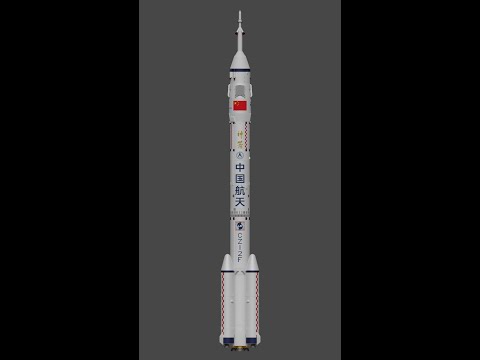
Video from the channel Dmitry Shulgin about Long March 2F/G, linked on its Above Ten Thousand entry. Duration: 15:31. Language: English. Video type: Documentary.
What it's about
A narrated explainer piece covering the history, architecture and versions of the Long March 2F (CZ-2F), the Chinese launcher certified for crewed flights. It is a two-stage version of the Long March 2E, which in turn derived from the Long March 2C.
Historical context
Development began with China's crewed space programme in 1992. The rocket flew for the first time in November 1999 with Shenzhou 1, and on 15 October 2003 it launched Shenzhou 5, China's first crewed flight. The basic model made its final flight with Shenzhou 7 in 2008. The upgraded Long March 2F/G version debuted with Tiangong 1 on 29 September 2011 and remains in service. The vibrations suffered by Yang Liwei on Shenzhou 5 led to modifications of the engine ducts and pressure accumulators. The video ends with a kerosene/liquid-oxygen variant studied since 2008, renamed Long March 7 in 2010.
Key facts
It has two stages, four liquid-propellant strap-on boosters, a payload fairing and an escape tower. With the tower it measures 58.34 m and lifts off at 479.8 t. The version for Shenzhou spacecraft places 8.15 t into low orbit, while the tower-less version, used for modules such as Tiangong 1, reaches 8.6 t. The escape system combines the 8.35 m tower with engines in the fairing and protects the crew until the fairing is jettisoned. Declared reliability is 0.97 for the basic model and 0.9894 for the upgraded one. Since Shenzhou 12, a second backup rocket has been kept ready for a possible rescue.