Did you know…
How did C-130s deliver cargo in Vietnam without landing?
Short answer
With LAPES, the low-altitude parachute extraction system: the aircraft doesn't land, but flies with its wheels one to two meters off the ground and then releases the parachutes. A pilot parachute pulls out larger extraction parachutes, which pull the load out of the aircraft. This avoided exposing it to enemy fire.

A Chain of Parachutes
The procedure relies on a sequence of parachutes: a pilot parachute extracts a set of larger extraction parachutes, which pull the load until it comes out of the aircraft. The force of those parachutes overcomes the cargo floor restraints and drags the pallet down the ramp and out of the aircraft. The pilot parachute releases when the pilot raises the aircraft's nose and reaches a wheel height of one to two meters above the ground.
Why It Didn't Land
LAPES allows large loads to be deployed quickly instead of having to land and take off, maneuvers that expose the aircraft to enemy fire.
Khe Sanh
In May 1965, a detachment of the 109th was formed as the 383rd Quartermaster (Aerial Supply) Detachment and sent to Vietnam. Both units provided airdrop and LAPES support during the Battle of Khe Sanh, in the Vietnam War, where the system was used to deliver heavy loads that could not be effectively supplied by conventional parachute drop.
More questions
Aviation history
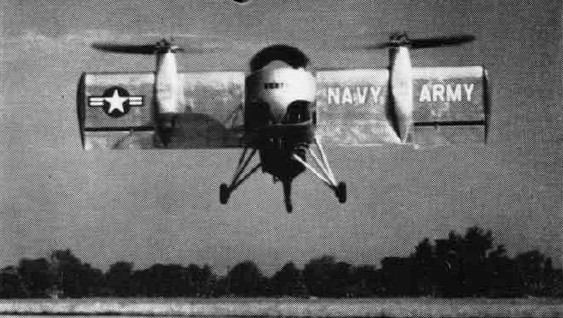
What was special about the Vertol 76?
Vertol's VZ-2 tested the tiltwing concept for vertical take-off and landing. After ground trials beginning in April 1957, it first took off on 13 August only… more…

Aviation history
Which was the most-produced American fighter of the Second World War?
The Republic P-47 Thunderbolt, of which 15,636 or 15,683 units were built, depending on the source. It was also one of the heaviest fighters of the conflict… more…

Aviation history
Who flew the E-66 at 2,149 km/h?
Konstantin or Vladimir Kokkinaki, depending on the source. Konstantin is credited with the absolute record on a closed 100 km circuit, at 2,148.66 km/h, set… more…

Fly-by-Owen (CC BY SA), vía commons Aviation history
How many I-11Bs were built?
Between 208 and around 450, depending on the source: one of the AISA I-11 reference sheets gives 208 examples built, while All-Aero speaks of around 400 built… more…

Aviation history
How many HH-53s could be converted to Pave Low III?
Eight HH-53C aircraft received an improved systems package and were redesignated HH-53H Pave Low III. The other figure in circulation, nine MH-53H and 32… more…

SCDBob (CC BY SA), vía commons Aviation history
What did the A129 Mangusta's armor protect?
The fuselage: the A129's airframe is armored and, according to All-Aero, designed to protect against 12.7 mm rounds, with partial protection against 23 mm… more…


