Did you know…
Why isn't the Moon out?
Short answer
The Moon rises every day, but not always at night: the time it rises shifts throughout the roughly 29.5-day phase cycle. At new moon it rises and sets almost together with the Sun and shows us its unlit face, making it invisible; the full moon, by contrast, rises at dusk.

It comes out every day, but not always at night
The question hides a false assumption: that the Moon should be in the night sky every night. It doesn't work that way. As it moves along its orbit, the time at which it appears over the horizon keeps shifting. The full cycle of phases repeats roughly every 29.5 days, while one orbital revolution around Earth takes 27.322 days; the difference exists because, during that time, Earth has also moved along its path around the Sun.
The schedule for each phase
Each phase has its own schedule. The full moon rises at sunset and sets at dawn: it's the only one that accompanies the entire night. The first quarter rises at midday and sets around the middle of the night, so by three in the morning it's no longer there. The waning gibbous rises well into the night and sets in the morning. The last quarter rises in the middle of the night and sets at midday. The thinnest waning crescent appears shortly before dawn and sets in the afternoon. If you go out to look at ten at night and find nothing, it's most likely that the Moon hasn't risen yet or has already set hours ago.
The invisible phase
The extreme case is the new moon. Then the illuminated face points toward the Sun and the night face is oriented toward us, so there is nothing to see. It also coincides with the Sun in the sky: it rises and sets with it and is washed out by daylight. During the new moon and the thinnest crescent phases, all or nearly all of the disk is in shadow. Finally, it's worth remembering that the Moon is also frequently visible during the day: it isn't an exclusively nocturnal body, and much of its nighttime absence is made up for by daytime appearances.
More questions
Moon and Mars
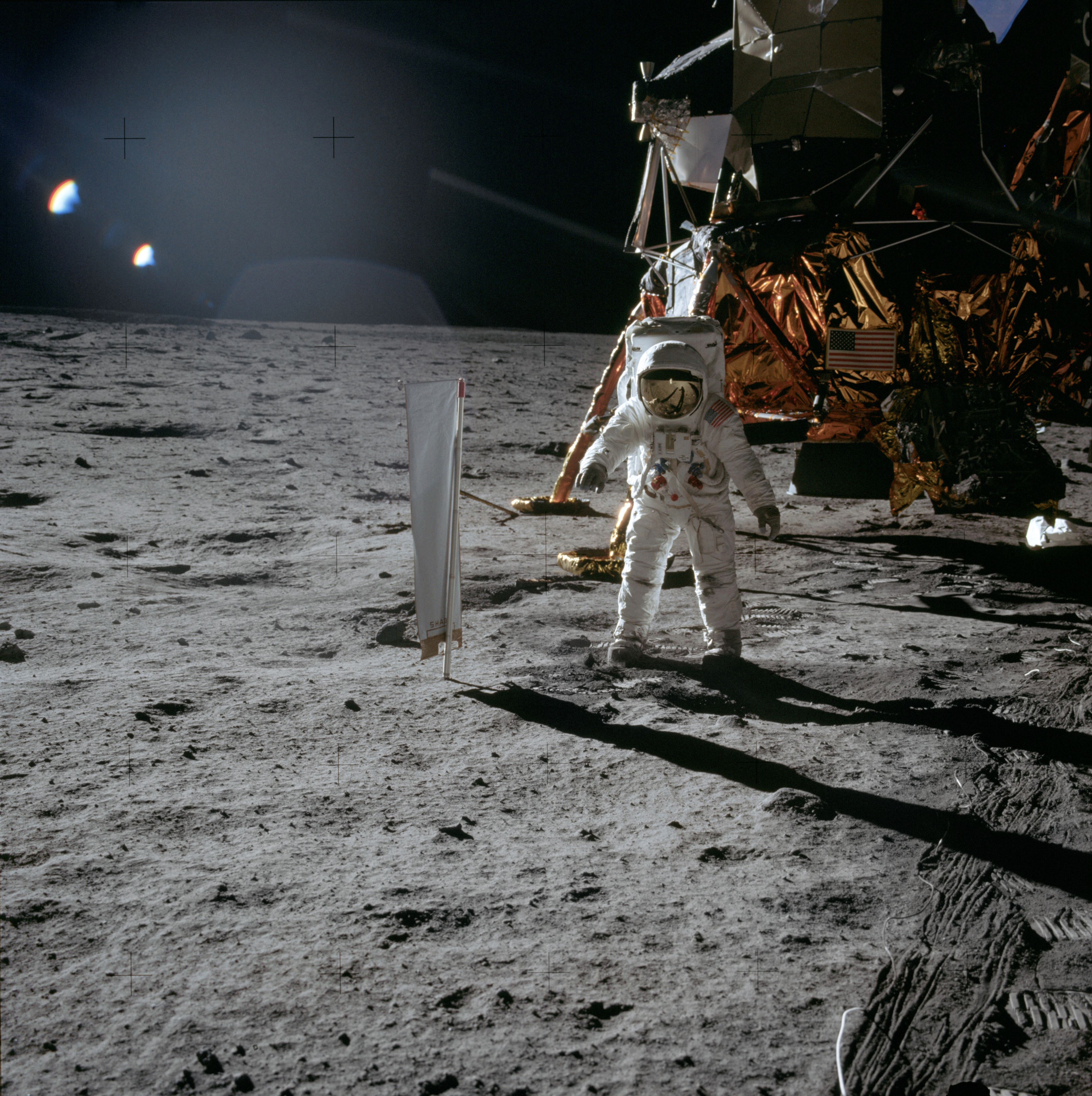
How does neil armstrong look like?
The face most people picture is not his: the gold-visored astronaut in the famous Apollo 11 photograph is Buzz Aldrin, shot by Armstrong. Armstrong himself is… more…

Richard Dorrell (CC BY SA), vía commons Moon and Mars
How does the moon affect the tides?
By pulling unevenly on it. Tidal forces vary inversely as the cube of the distance, so the near side of the Earth is tugged harder than the far side: one… more…
Moon and Mars
Why does neil armstrong have a hollywood star?
Strictly he does not have a star. Armstrong, Aldrin and Collins share four circular monuments resembling the Moon, one at each corner of Hollywood and Vine… more…
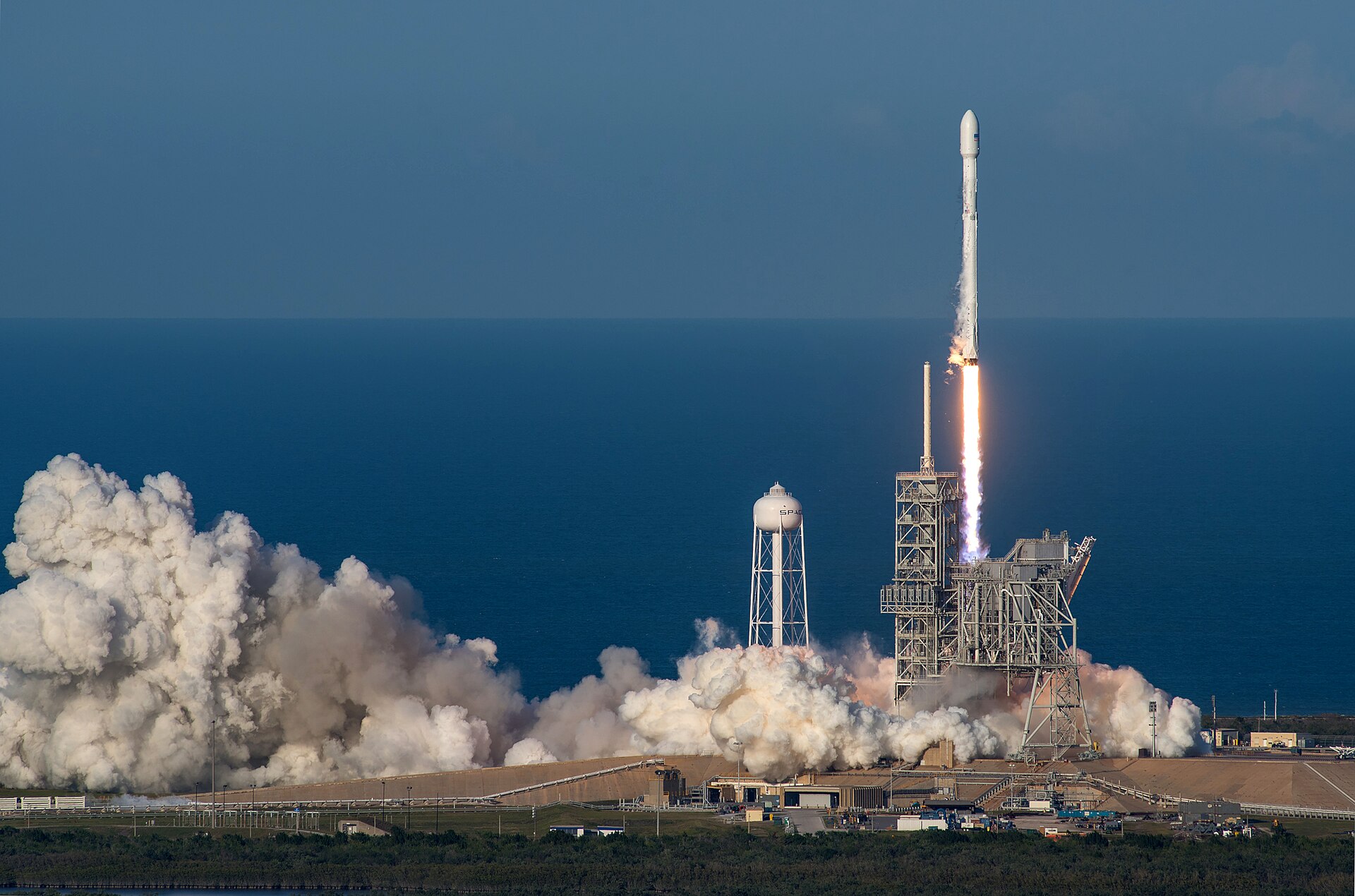
Foto: SpaceX (CC0) Moon and Mars
Why did falcon 9 hit the moon?
Because a spent upper stage on a lunar trajectory has no mission and no way to steer. A Falcon 9 upper stage from the January 2025 Firefly Blue Ghost 1 launch… more…
Moon and Mars
How much apollo 11 cost?
NASA never published a price for Apollo 11 on its own; what is documented is the program. The United States spent $25.8 billion on Project Apollo between 1960… more…
Moon and Mars
How much time neil armstrong spent on moon?
Armstrong and Aldrin spent 21 hours, 36 minutes on the Moon's surface, almost all of it inside the lunar module Eagle. Armstrong stepped onto the surface… more…

