Did you know…
Why is gravity in space?
Short answer
Gravity is everywhere in space, and that is exactly why orbits exist. At the International Space Station's altitude of about 400 km, Earth's pull is still roughly 90 percent of its surface value. Astronauts float not because gravity vanished but because they and their vehicle are falling together, continuously, around the planet.
The pull does not switch off
Gravity weakens with the square of the distance from the centre of a body, not from its surface. Earth's radius is about 6,371 km, so a station orbiting 400 km up sits at roughly 6,771 km from the centre — only about six percent farther out. Squaring that ratio gives an acceleration near 8.7 m/s² instead of the familiar 9.81 m/s² at the ground. That is close to 90 percent of surface gravity, hardly the absence of weight that the word "zero-g" suggests.
The same reasoning explains the Moon. It sits some 384,400 km away on average and remains firmly bound to Earth, held by a pull that has thinned out but never stopped. Gravity is unlimited in range; it simply becomes faint.
Free fall, not emptiness
What astronauts experience is free fall. A spacecraft in low Earth orbit travels sideways at roughly 7.7 km/s. Gravity bends its path downward exactly as fast as the curved surface of the planet falls away beneath it, so the vehicle keeps missing the ground. Everything inside accelerates identically — crew, tools, water droplets — and nothing pushes on anything else. Weight, in the sense of a floor pressing on your feet, disappears; mass and inertia do not.
Engineers prefer the term microgravity because the condition is imperfect. Atmospheric drag, tidal differences across the length of a large station and crew movement produce residual accelerations on the order of a millionth of Earth gravity, which matters for delicate materials and fluid-physics experiments.
Where gravity genuinely fades
Far from any large body, in interstellar space, the local gravitational field really does become negligible, though never precisely zero: the combined pull of distant galaxies still acts. Near a planet or a star, by contrast, gravity dominates every trajectory a spacecraft can follow, which is why mission designers spend their effort exploiting it rather than escaping it.
More questions
- Image pending
Astronauts and life in space
Why does astronauts float in space?
Because they are in free fall, not because gravity is absent. At the International Space Station's altitude of about 400 km, Earth still pulls almost as hard… more…
- Image pending
Astronauts and life in space
Why did yuri gagarin die?
Gagarin died in an aircraft crash, not in a spacecraft. On 27 March 1968 the MiG-15UTI trainer he was flying with instructor Vladimir Seryogin went down in… more…
- Image pending
Astronauts and life in space
How much an astronaut is paid?
NASA's civilian astronauts are ordinary federal employees, paid on the General Schedule grade-and-step scale with no bonus per flight, per spacewalk or per… more…
.png)
Astronauts and life in space
Why is blue origin so slow?
Blue Origin was built on deliberate, owner-funded incrementalism: its motto is Gradatim Ferociter, step by step, and it spent its first two decades on… more…
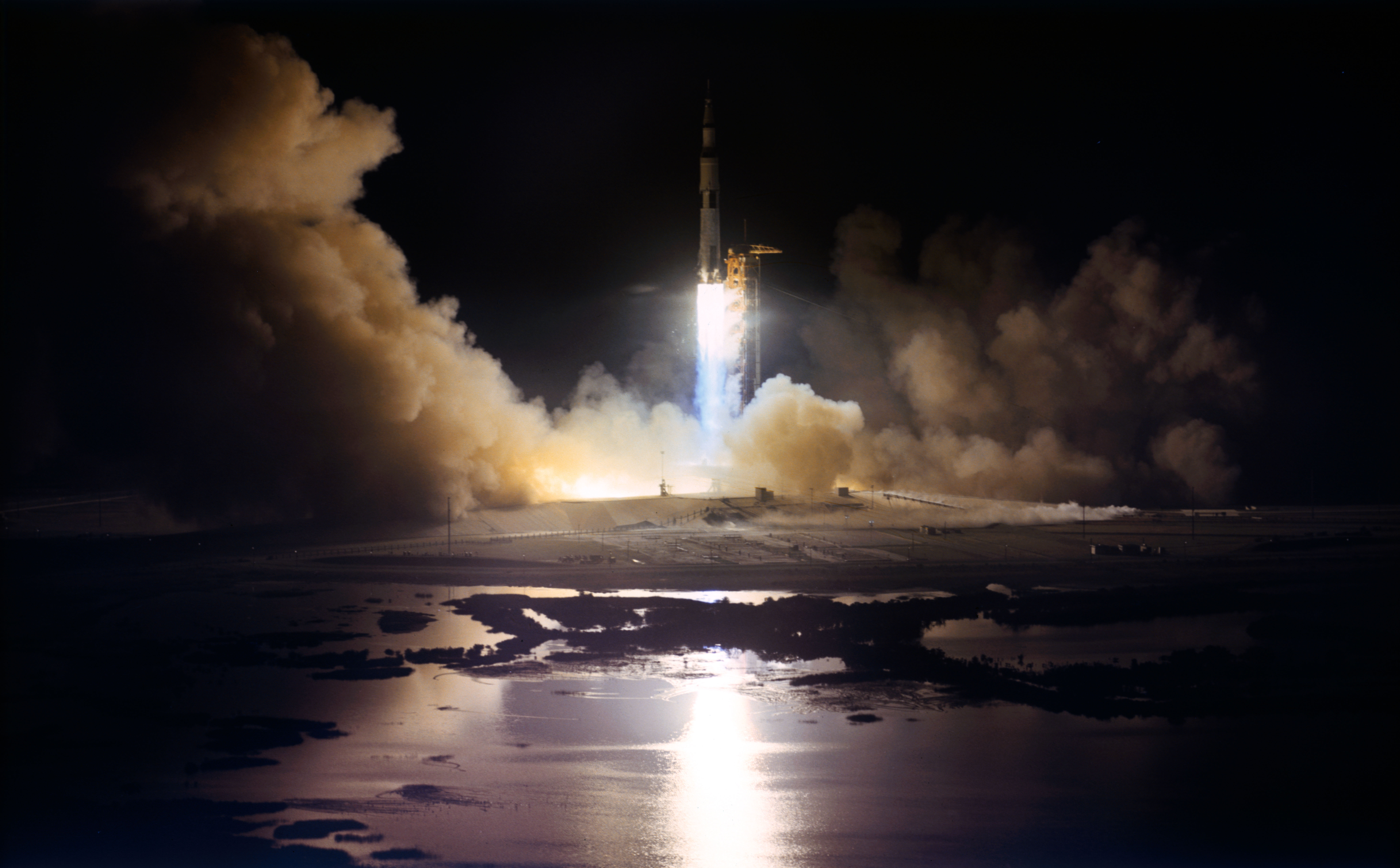
Astronauts and life in space
When did astronauts last walk on the moon?
Apollo 17, in December 1972. Eugene Cernan and Harrison Schmitt landed in the Taurus-Littrow valley on 11 December 1972, worked on the surface for three days… more…
- Image pending
Astronauts and life in space
How high do astronauts orbit the earth?
Crewed spaceflight today happens a few hundred kilometres up. The International Space Station orbits at about 400 km, lapping the planet roughly every 90… more…
