Did you know…
Why is gravity important in space?
Short answer
Because gravity is what organises space. It holds the ISS, the Moon and the planets in their orbits, builds stars and planets out of clouds of gas, and lets probes steal speed from planets in flyby manoeuvres. Astronauts float not because gravity is gone but because they are falling freely around Earth.
_---_NASA_astronaut_and_Expedition_72_Flight_Engineer_Matthew_Dominick_points_his_camera_out_a_window_on_the_cupola_as_the_International_Space_Statio-1600.webp)
Orbit is gravity doing its job
Without gravity there would be no orbits, and without orbits there would be no space stations, no communications satellites and no Moon. A spacecraft in orbit is not escaping Earth's pull; it is held by it while moving sideways fast enough to keep missing the ground. Raise or lower that speed and the orbit changes shape, which is how every rendezvous, docking and re-entry is planned. The same arithmetic governs the Moon around Earth, the planets around the Sun and the Sun around the centre of the galaxy.
Gravity as a propulsion resource
Mission designers treat gravity as fuel. A flyby of a planet bends a probe's path and transfers a sliver of that planet's orbital energy to the spacecraft, which is how modest launchers send instruments to the outer Solar System. Gravity also creates useful places: the Lagrange points, where the pulls of two bodies and the motion of the system balance, park observatories in stable, low-cost stations. None of these tricks exists in a universe where mass does not attract mass.
The part that hurts: too little of it
The problem for crews is not gravity but its apparent absence in free fall. Bones and muscles, built to resist weight, weaken when nothing pushes back. Fluids migrate upwards, faces puff, vision changes. Tools drift, liquids form spheres, flames burn as blue balls instead of teardrops. That last set of effects is precisely why the station is valuable: a laboratory where gravity does not mask convection, sedimentation or surface tension. Crews exercise daily on treadmills and resistance machines to compensate, and every serious proposal for long voyages to Mars returns to the same idea, which is to spin the ship and put some weight back. Engineers have studied spinning habitats for decades without ever building one.
More questions
- Image pending
Astronauts and life in space
Why does astronauts float in space?
Because they are in free fall, not because gravity is absent. At the International Space Station's altitude of about 400 km, Earth still pulls almost as hard… more…
- Image pending
Astronauts and life in space
Why did yuri gagarin die?
Gagarin died in an aircraft crash, not in a spacecraft. On 27 March 1968 the MiG-15UTI trainer he was flying with instructor Vladimir Seryogin went down in… more…
- Image pending
Astronauts and life in space
How much an astronaut is paid?
NASA's civilian astronauts are ordinary federal employees, paid on the General Schedule grade-and-step scale with no bonus per flight, per spacewalk or per… more…
.png)
Astronauts and life in space
Why is blue origin so slow?
Blue Origin was built on deliberate, owner-funded incrementalism: its motto is Gradatim Ferociter, step by step, and it spent its first two decades on… more…
Astronauts and life in space
When did astronauts last walk on the moon?
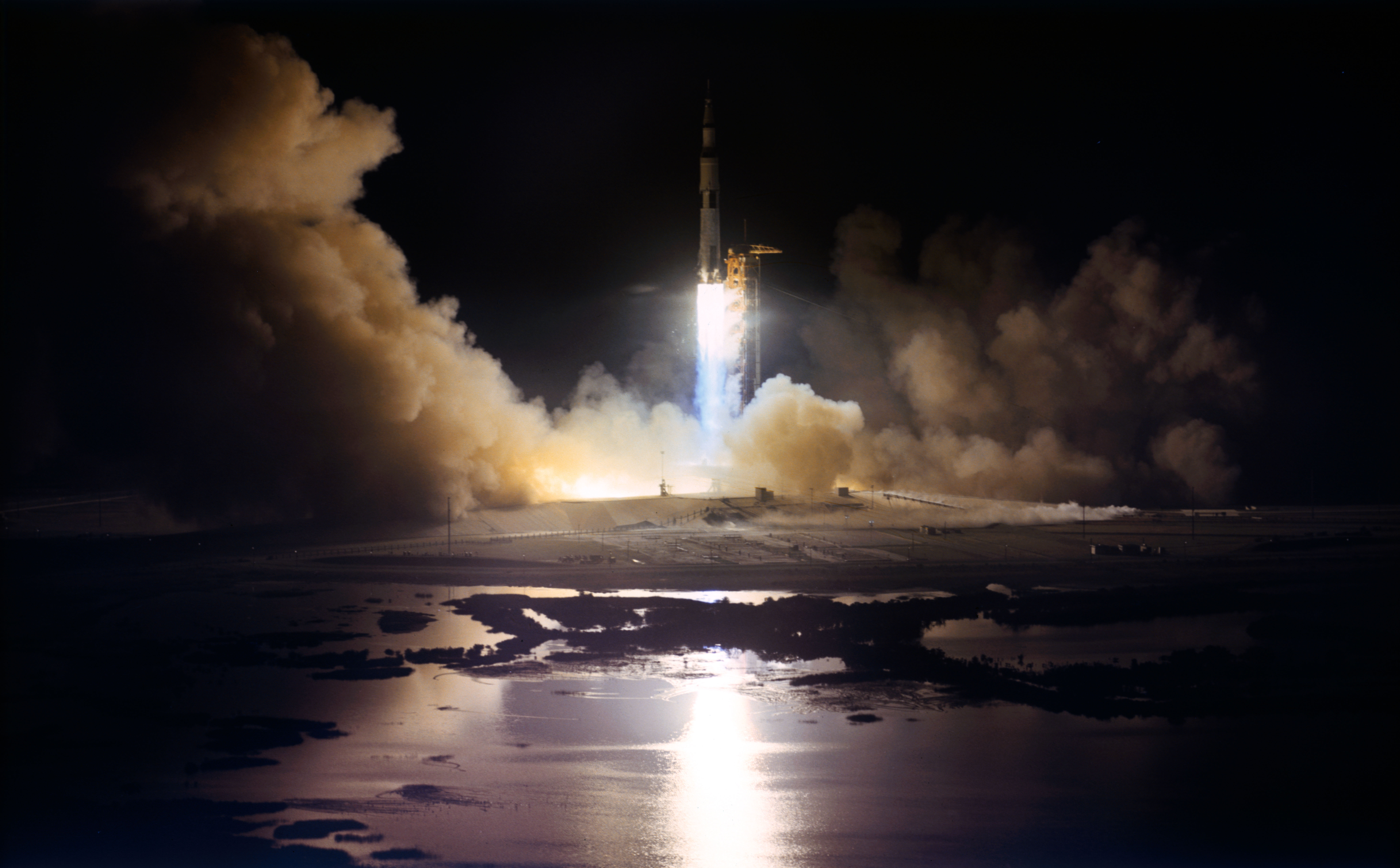
Apollo 17, in December 1972. Eugene Cernan and Harrison Schmitt landed in the Taurus-Littrow valley on 11 December 1972, worked on the surface for three days… more…
- Image pending
Astronauts and life in space
How high do astronauts orbit the earth?
Crewed spaceflight today happens a few hundred kilometres up. The International Space Station orbits at about 400 km, lapping the planet roughly every 90… more…
