Did you know…
Why does astronauts wear diapers?
Short answer
Because there are stretches of a mission when leaving the suit is impossible. During launch, re-entry and spacewalks an astronaut may be sealed in for many hours, so an absorbent garment goes on underneath, what NASA calls a maximum absorbency garment. Inside the cabin, crews use a normal suction toilet instead.
Hours with no way out
A spacesuit is a sealed pressure vessel. Once the helmet is locked and the suit is at working pressure, the person inside is committed for as long as the task takes: strapped in for a launch that may sit on the pad through delays, or working outside the station on a spacewalk that runs most of a working day. Depressurising to visit a lavatory is not an option, so the absorbent garment goes on beforehand, under the water-cooled undersuit.
From Freedom 7 to the MAG
The lesson was learned awkwardly. Alan Shepard's Freedom 7 flight in May 1961 was planned to last about fifteen minutes and carried no provision at all; delays on the pad left him with no dignified choice, and he relieved himself inside the suit. Apollo crews used a collection device with a condom-like cuff and a bag, a design that excluded half the human race and leaked with some regularity. The Shuttle era replaced it with a high-capacity absorbent garment, and today's maximum absorbency garment uses essentially the superabsorbent polymer found in babies' nappies, worn by everyone regardless of sex.
The rest of the time, there is a toilet
Nobody wears one all day. The station has a proper lavatory that works by suction rather than gravity: a fan draws air, and with it waste, into a sealed container, with a separate funnel and hose for urine. That urine is not thrown away. It goes into the station's water recovery system and comes back as drinking water, a loop the crews describe with the line that yesterday's coffee becomes tomorrow's coffee.
More questions
- Image pending
Astronauts and life in space
Why does astronauts float in space?
Because they are in free fall, not because gravity is absent. At the International Space Station's altitude of about 400 km, Earth still pulls almost as hard… more…
- Image pending
Astronauts and life in space
Why did yuri gagarin die?
Gagarin died in an aircraft crash, not in a spacecraft. On 27 March 1968 the MiG-15UTI trainer he was flying with instructor Vladimir Seryogin went down in… more…
- Image pending
Astronauts and life in space
How much an astronaut is paid?
NASA's civilian astronauts are ordinary federal employees, paid on the General Schedule grade-and-step scale with no bonus per flight, per spacewalk or per… more…
.png)
Astronauts and life in space
Why is blue origin so slow?
Blue Origin was built on deliberate, owner-funded incrementalism: its motto is Gradatim Ferociter, step by step, and it spent its first two decades on… more…
Astronauts and life in space
When did astronauts last walk on the moon?
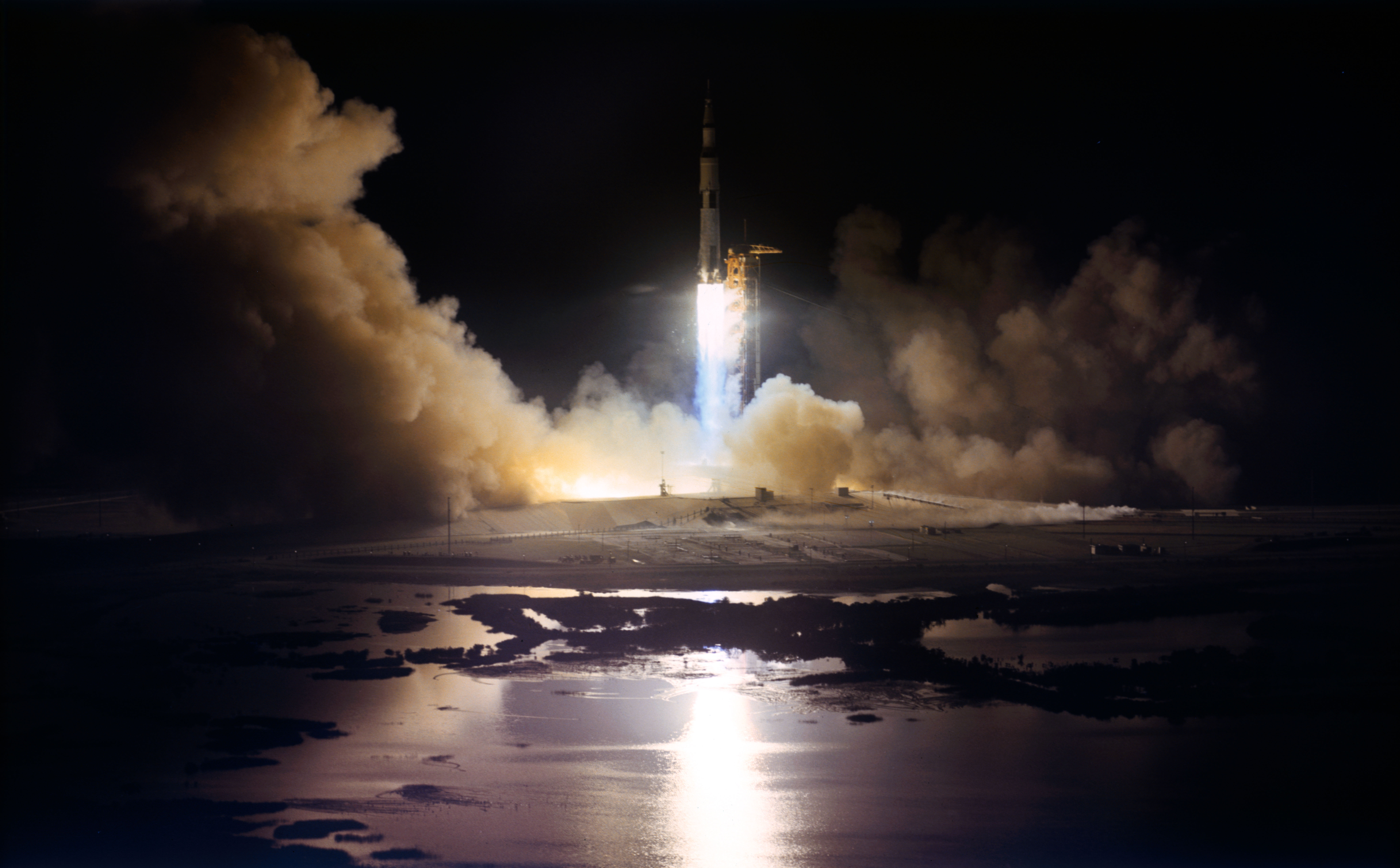
Apollo 17, in December 1972. Eugene Cernan and Harrison Schmitt landed in the Taurus-Littrow valley on 11 December 1972, worked on the surface for three days… more…
- Image pending
Astronauts and life in space
How high do astronauts orbit the earth?
Crewed spaceflight today happens a few hundred kilometres up. The International Space Station orbits at about 400 km, lapping the planet roughly every 90… more…
