Did you know…
Why do astronauts wear space suits?
Short answer
Because vacuum kills in seconds and the suit is a one-person spacecraft: it holds pressure around the body and supplies breathable oxygen, temperature control, carbon-dioxide removal and shielding against micrometeoroids and glare. NASA's spacewalking suit runs on pure oxygen at about 29.6 kPa (4.3 psi).
What the vacuum actually does
Above roughly 19 km (63,000 ft) — the Armstrong limit — ambient pressure is so low that body fluids begin to boil at normal body temperature. In orbit there is no ambient pressure at all. Unprotected exposure brings unconsciousness within seconds from oxygen starvation, along with swelling and ebullism; the body does not explode, as films like to suggest, but the outcome is fatal just as fast. Holding a survivable pressure around the crew member is therefore the suit's first and non-negotiable job.
A spacecraft with arms
An extravehicular suit is built in layers: a liquid-cooling garment threaded with water tubes, a pressure bladder with a restraint layer that stops it ballooning, and an outer thermal micrometeoroid garment of more than a dozen laminated layers. A backpack carries oxygen, carbon-dioxide scrubbing, cooling water, power and radio, while a gold-coated visor cuts unfiltered sunlight. The suit is kept at about 29.6 kPa (4.3 psi) of pure oxygen rather than cabin pressure, because a higher internal pressure would make the joints too stiff to work in. The price of that choice is a pre-breathe protocol to purge nitrogen from the blood and avoid decompression sickness.
Two very different garments
The orange or white suits worn during launch and re-entry are not spacewalking suits. They are lighter, plugged into the seat for air and cooling, and normally unpressurised — insurance against a cabin leak rather than tools for working outside. Extravehicular suits are self-contained and far heavier, designed for hours of autonomy at the end of a tether. For the return to the Moon, new designs focus on abrasive dust, a wider range of motion and the ability to kneel and walk across terrain rather than drift along a handrail.
More questions
- Image pending
Astronauts and life in space
Why does astronauts float in space?
Because they are in free fall, not because gravity is absent. At the International Space Station's altitude of about 400 km, Earth still pulls almost as hard… more…
- Image pending
Astronauts and life in space
Why did yuri gagarin die?
Gagarin died in an aircraft crash, not in a spacecraft. On 27 March 1968 the MiG-15UTI trainer he was flying with instructor Vladimir Seryogin went down in… more…
- Image pending
Astronauts and life in space
How much an astronaut is paid?
NASA's civilian astronauts are ordinary federal employees, paid on the General Schedule grade-and-step scale with no bonus per flight, per spacewalk or per… more…
.png)
Astronauts and life in space
Why is blue origin so slow?
Blue Origin was built on deliberate, owner-funded incrementalism: its motto is Gradatim Ferociter, step by step, and it spent its first two decades on… more…
Astronauts and life in space
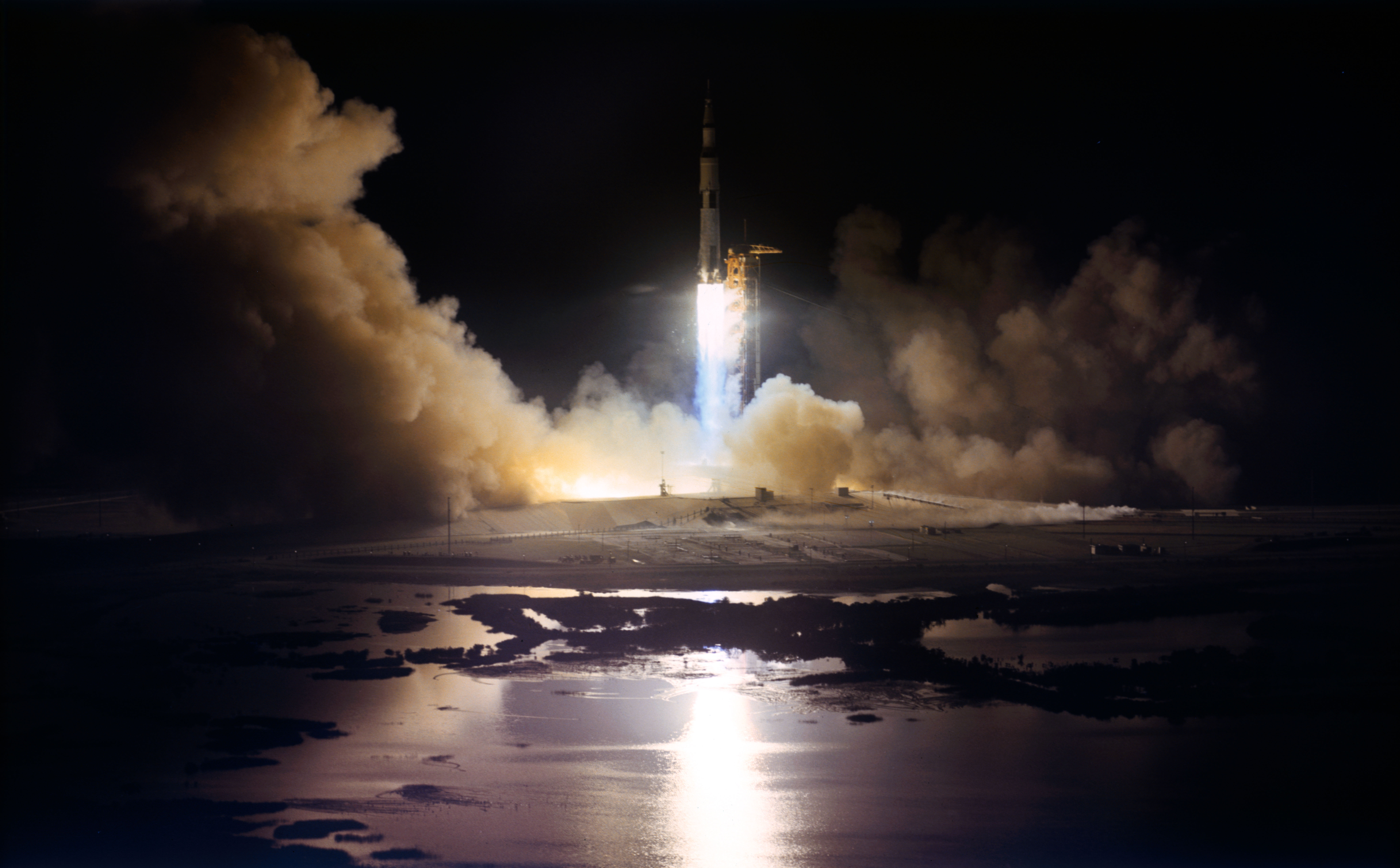
When did astronauts last walk on the moon?
Apollo 17, in December 1972. Eugene Cernan and Harrison Schmitt landed in the Taurus-Littrow valley on 11 December 1972, worked on the surface for three days… more…
- Image pending
Astronauts and life in space
How high do astronauts orbit the earth?
Crewed spaceflight today happens a few hundred kilometres up. The International Space Station orbits at about 400 km, lapping the planet roughly every 90… more…
