Did you know…
Why do astronauts land in water?
Short answer
Because water absorbs an impact that would otherwise be punishing. A capsule under parachutes still arrives hard, and the sea spreads that blow across the whole heat shield without the retrorockets or airbags a ground landing demands. The United States also had oceans and a navy; the Soviet Union had a steppe.
Water as a brake
A capsule under parachutes is not gently floating down; it descends fast enough that arrival is a genuine impact. Something has to absorb that energy. Water gives way, spreading the deceleration over a longer moment and over the curved base of the heat shield, which behaves rather like a hull. Coming down on ground instead demands extra hardware — retrorockets, airbags or crushable structure — and every kilogram spent on that is a kilogram not spent on the mission.
Oceans, navies and geography
The American choice was also geographical. Launches from Florida head east over the Atlantic, so the natural abort and return zones are open water, and in the 1960s the US Navy could place recovery ships almost anywhere. A wide, empty ocean is forgiving about aim, and early guidance was not precise. The Soviet Union launched from the middle of a continent, over land, and built its capsules accordingly: Soyuz descends onto the Kazakh steppe, its fall broken by solid rockets that fire in the final metres and by a seat that collapses under the shock.
Who lands where today
There is no single answer any more. Soyuz and China's Shenzhou come down on land; the Space Shuttle landed on a runway like an aircraft, a capability nothing in service has replaced. Crew Dragon returns by parachute to the sea and is lifted aboard a recovery vessel. Boeing's Starliner touches down on desert ground at White Sands, cushioned by airbags. Orion, built to survive the far higher speed of a return from the Moon, splashed down in the Pacific to end the uncrewed Artemis I flight in December 2022, and will do the same with crews aboard.
More questions
- Image pending
Astronauts and life in space
Why does astronauts float in space?
Because they are in free fall, not because gravity is absent. At the International Space Station's altitude of about 400 km, Earth still pulls almost as hard… more…
- Image pending
Astronauts and life in space
Why did yuri gagarin die?
Gagarin died in an aircraft crash, not in a spacecraft. On 27 March 1968 the MiG-15UTI trainer he was flying with instructor Vladimir Seryogin went down in… more…
- Image pending
Astronauts and life in space
How much an astronaut is paid?
NASA's civilian astronauts are ordinary federal employees, paid on the General Schedule grade-and-step scale with no bonus per flight, per spacewalk or per… more…
.png)
Astronauts and life in space
Why is blue origin so slow?
Blue Origin was built on deliberate, owner-funded incrementalism: its motto is Gradatim Ferociter, step by step, and it spent its first two decades on… more…
Astronauts and life in space
When did astronauts last walk on the moon?
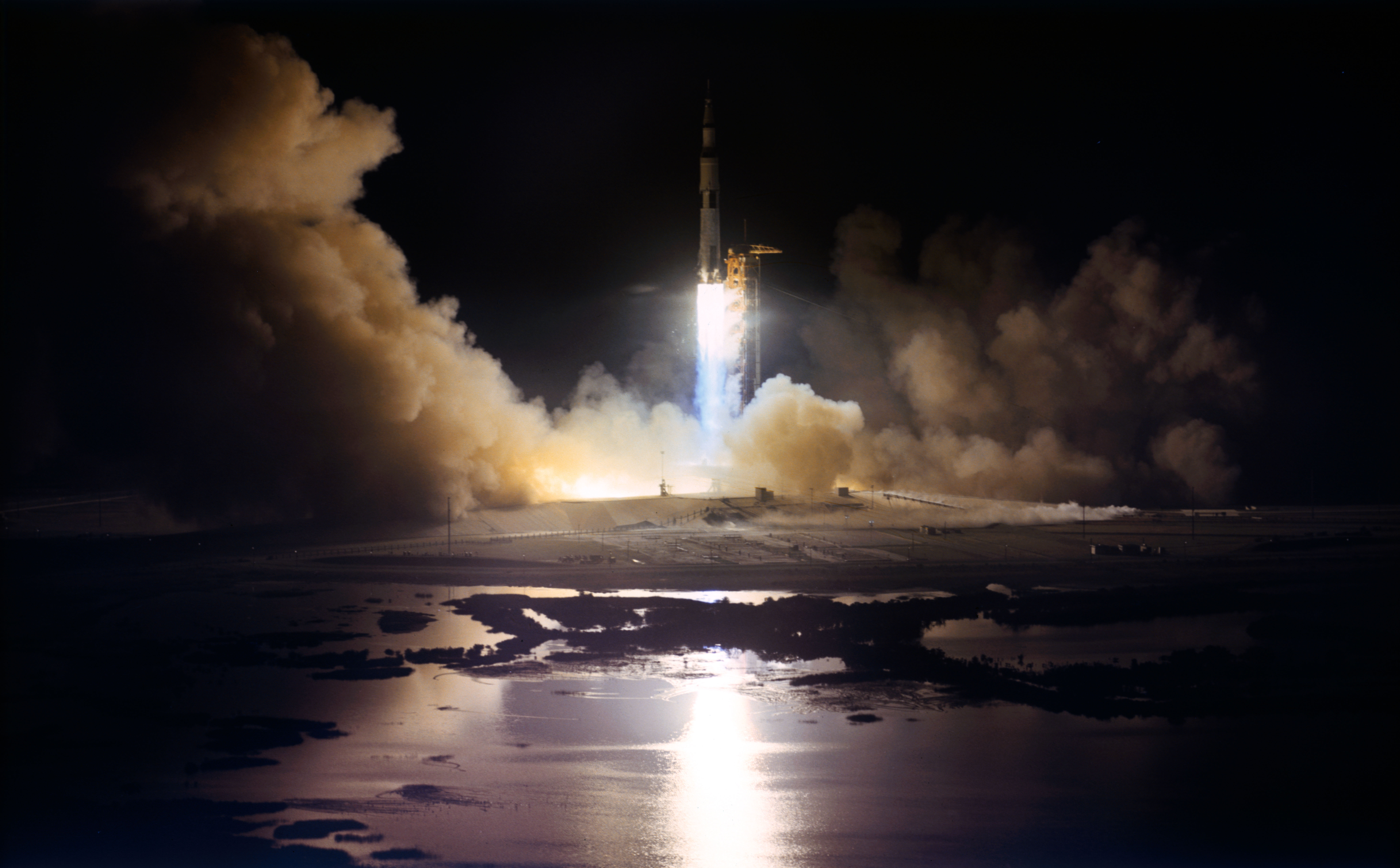
Apollo 17, in December 1972. Eugene Cernan and Harrison Schmitt landed in the Taurus-Littrow valley on 11 December 1972, worked on the surface for three days… more…
- Image pending
Astronauts and life in space
How high do astronauts orbit the earth?
Crewed spaceflight today happens a few hundred kilometres up. The International Space Station orbits at about 400 km, lapping the planet roughly every 90… more…
