Did you know…
Which German aircraft did the Japanese D1A dive bomber derive from?
Short answer
From the Heinkel He 66. Aichi drew on its technical agreements with Ernst Heinkel Flugzeugwerke to have a He 66 shipped to Japan and modified there to meet the requested specifications. Changes included reinforced landing gear for carrier operations and a locally built radial engine.
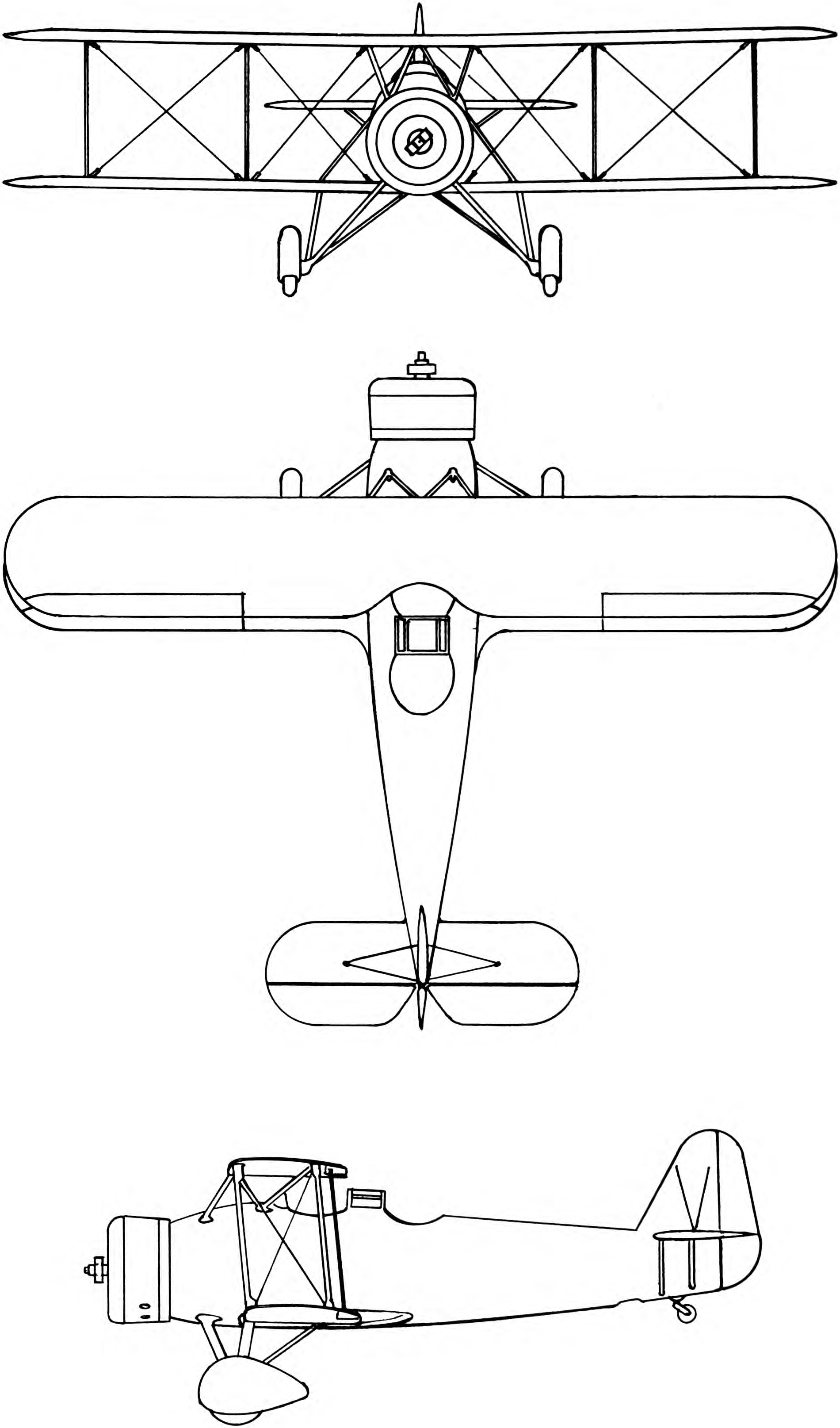
A Heinkel taken to Japan
Aichi already had a partnership under way with Heinkel and in 1931 asked the German firm to develop a dive bomber. To meet the requirement, Aichi drew on its technical agreements with Ernst Heinkel Flugzeugwerke and arranged for an He 66 to be shipped to Japan, where the company made several modifications to it to meet the specific demands of the programme.
The Japanese modifications
The work included redesigning and strengthening the landing gear to withstand carrier landings, adopting a locally produced radial engine, and adding a second seat right behind the pilot. A Townend ring was also added around the engine cylinders, along with a slight sweep to the wing and a modified rudder, and the tailskid was replaced by a fixed tailwheel.
From the Yangtze to international fame
The D1A was deployed in the Second Sino-Japanese War and was among the first aircraft to see action in the opening phase of the conflict. The D1A2 had a somewhat longer career than the initial version of the D1A and in 1937 became notorious around the world when the type was used to sink the American gunboat Panay on the Yangtze River on 12 December 1937. Several aircraft took part in that incident, in which the United States Navy gunboat and three oil tankers were sunk.
More questions

Aviation history
What was special about the Vertol 76?
Vertol's VZ-2 tested the tiltwing concept for vertical take-off and landing. After ground trials beginning in April 1957, it first took off on 13 August only… more…

Aviation history
Which was the most-produced American fighter of the Second World War?
The Republic P-47 Thunderbolt, of which 15,636 or 15,683 units were built, depending on the source. It was also one of the heaviest fighters of the conflict… more…

Aviation history
Who flew the E-66 at 2,149 km/h?
Konstantin or Vladimir Kokkinaki, depending on the source. Konstantin is credited with the absolute record on a closed 100 km circuit, at 2,148.66 km/h, set… more…

Fly-by-Owen (CC BY SA), vía commons Aviation history
How many I-11Bs were built?
Between 208 and around 450, depending on the source: one of the AISA I-11 reference sheets gives 208 examples built, while All-Aero speaks of around 400 built… more…

Aviation history
How many HH-53s could be converted to Pave Low III?
Eight HH-53C aircraft received an improved systems package and were redesignated HH-53H Pave Low III. The other figure in circulation, nine MH-53H and 32… more…

SCDBob (CC BY SA), vía commons Aviation history
What did the A129 Mangusta's armor protect?
The fuselage: the A129's airframe is armored and, according to All-Aero, designed to protect against 12.7 mm rounds, with partial protection against 23 mm… more…


