Did you know…
Where does the Moon never get light?
Short answer
At the bottom of some polar craters, especially at the lunar south pole: these are permanently shadowed regions, covering about 3% of the south pole, and some have gone up to two billion years without sunlight. There's no "dark side," though: the far side gets just as much Sun as the near side.

Craters that never see the Sun
The Moon's rotation axis is nearly perpendicular to the direction sunlight arrives from. That has a curious geometric consequence: in the polar regions the Sun never climbs high above the horizon, and the floors of the deepest craters are never oriented toward it. These are the permanently shadowed regions. They cover around 3% of the lunar south pole, and some crater floors have gone without a single direct solar photon for up to two billion years. In the same landscape the opposite happens just a few kilometers away: some peaks and crater rims stay lit almost continuously.
Cold traps, and that's why they matter
Perpetual darkness means perpetual cold, and cold turns those floors into traps: any volatile molecule that arrives there, carried by a comet or released from the ground itself, can stay locked in the regolith for eons instead of escaping into the vacuum. Hence the interest in water ice at the lunar poles, which would be both a record of the solar system's history and a resource for a future base. Mapping these zones isn't simple: since they don't reflect sunlight, they had to be measured by bouncing laser pulses off them from an orbiting probe to reconstruct their shape and terrain.
The "far side" isn't the "dark side"
It's worth clearing up a common mix-up. The hemisphere we never see from Earth gets exactly as much sunlight as the near side: it has its own days and nights just like the other one, it simply never faces us because the Moon's rotation is tidally locked to its orbit. What truly never gets lit isn't an entire hemisphere, but small, scattered patches inside polar craters, the only places on the Moon where night never ends.
More questions
Moon and Mars
How does neil armstrong look like?
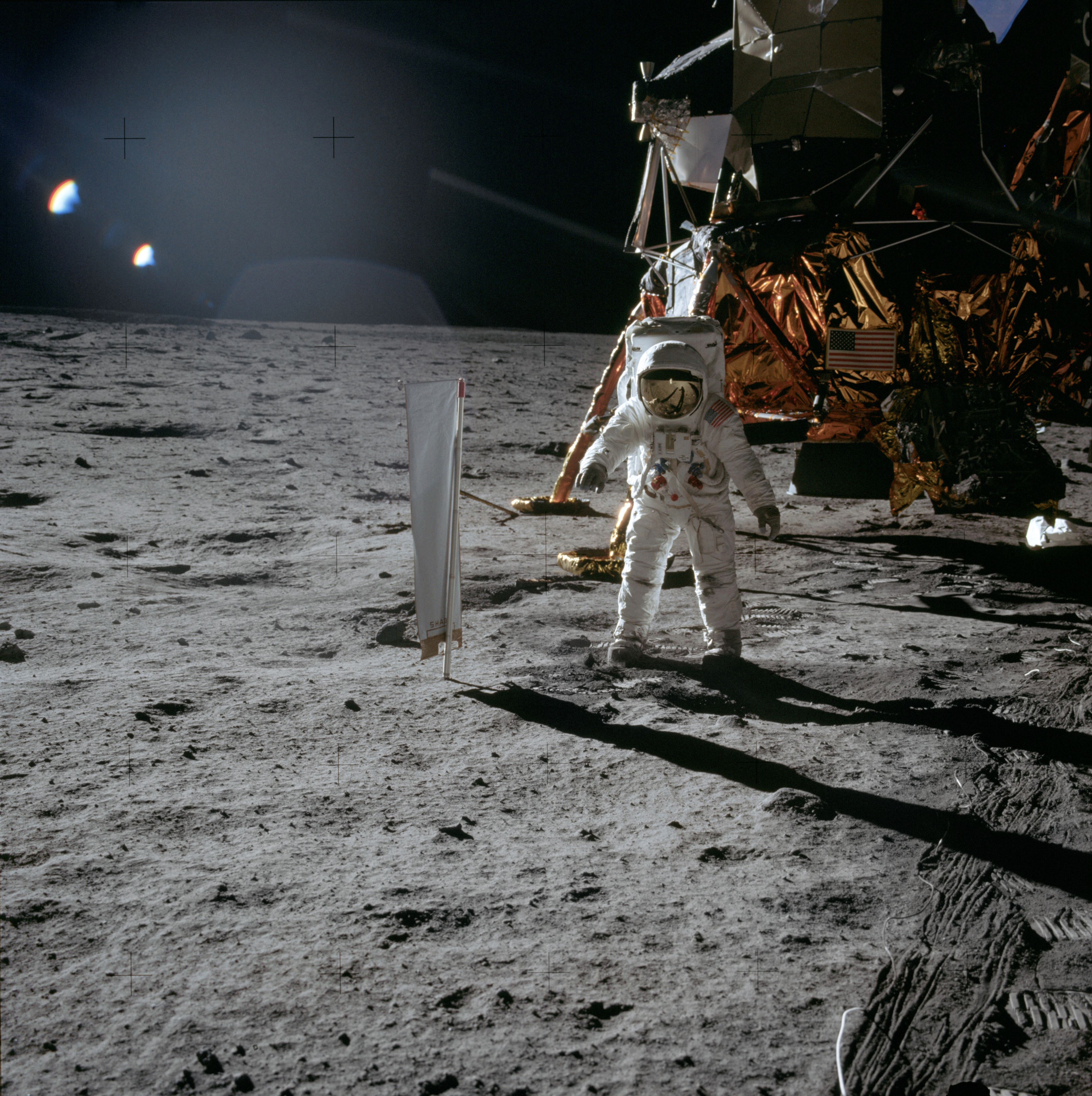
The face most people picture is not his: the gold-visored astronaut in the famous Apollo 11 photograph is Buzz Aldrin, shot by Armstrong. Armstrong himself is… more…

Richard Dorrell (CC BY SA), vía commons Moon and Mars
How does the moon affect the tides?
By pulling unevenly on it. Tidal forces vary inversely as the cube of the distance, so the near side of the Earth is tugged harder than the far side: one… more…
Moon and Mars
Why does neil armstrong have a hollywood star?
Strictly he does not have a star. Armstrong, Aldrin and Collins share four circular monuments resembling the Moon, one at each corner of Hollywood and Vine… more…
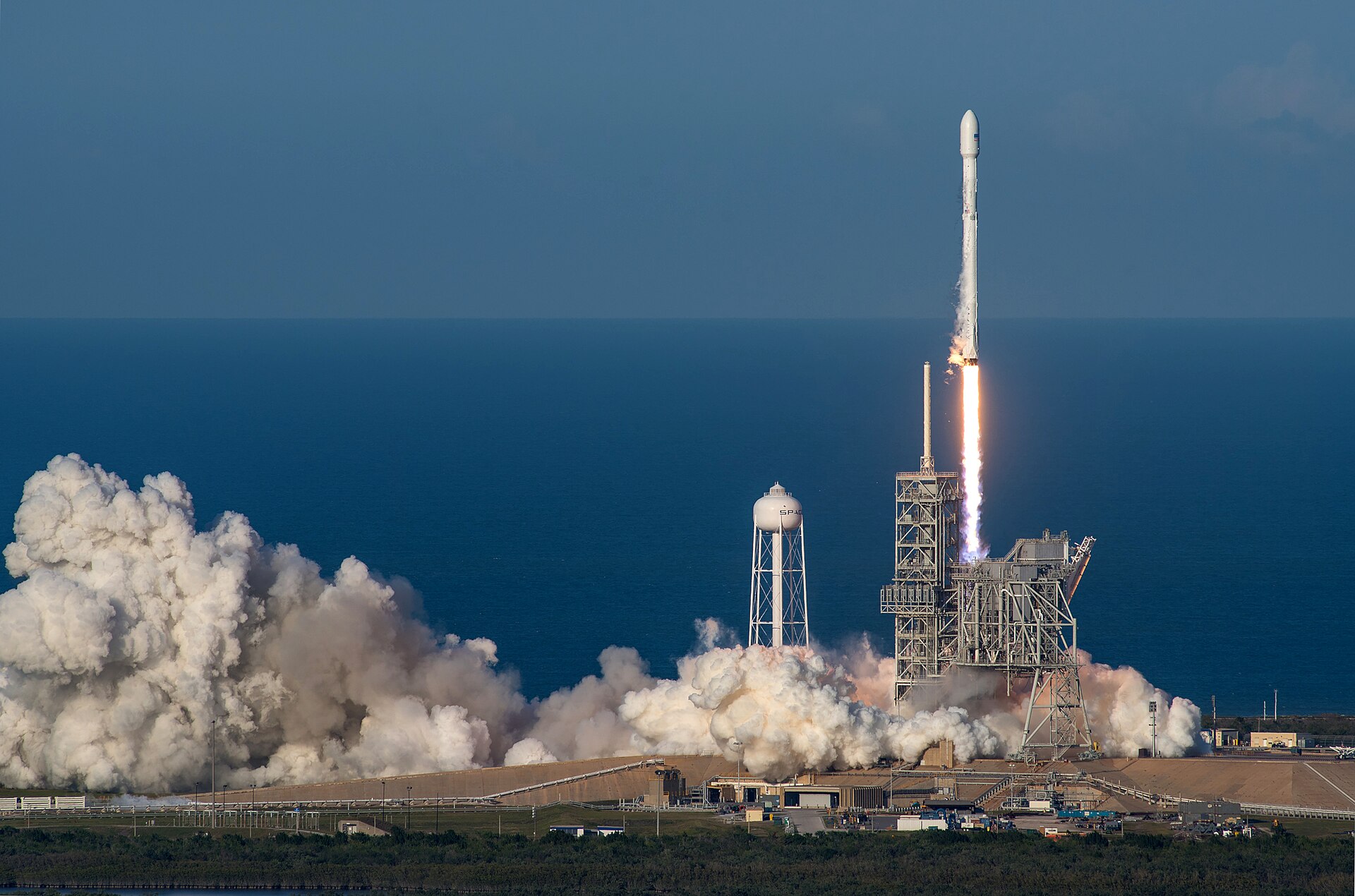
Foto: SpaceX (CC0) Moon and Mars
Why did falcon 9 hit the moon?
Because a spent upper stage on a lunar trajectory has no mission and no way to steer. A Falcon 9 upper stage from the January 2025 Firefly Blue Ghost 1 launch… more…
Moon and Mars
How much apollo 11 cost?
NASA never published a price for Apollo 11 on its own; what is documented is the program. The United States spent $25.8 billion on Project Apollo between 1960… more…
Moon and Mars
How much time neil armstrong spent on moon?
Armstrong and Aldrin spent 21 hours, 36 minutes on the Moon's surface, almost all of it inside the lunar module Eagle. Armstrong stepped onto the surface… more…

