Did you know…
When was no gravity in space discovered?
Short answer
There was no such discovery, because there is no absence of gravity in space. Astronauts float because they and their vehicle fall around the Earth together, a state Newton already explained in the Principia in 1687. The first person to experience it in orbit was Yuri Gagarin, on 12 April 1961.

A premise worth correcting
Nothing was ever found to be gravity-free. Gravity has no edge: it weakens with distance but never switches off, and at the altitude where the International Space Station flies it is only slightly weaker than at ground level. If it really disappeared there, the station would not be in orbit at all — it would leave in a straight line. The correct term for what crews experience is microgravity, or plainly weightlessness: the absence of felt weight, not of the force.
Falling around the planet
Newton set out the explanation in 1687 in the Principia, with the thought experiment of a cannon fired from an impossibly high mountain: give the ball enough speed and it falls all the way round instead of coming down. Everything in orbit is doing exactly that. Crew, spacecraft, tools and the coffee inside its bag all follow the same falling path, so nothing presses on anything else and objects simply hang in mid-air. Einstein sharpened the idea in 1907 with the realisation that a falling observer feels no gravity at all — the thought that grew into general relativity.
Who felt it first
The sensation was manufactured in laboratories long before anyone flew. Drop towers deliver a few seconds of it; aircraft flying parabolic arcs stretch it to a few tens of seconds at a time, which is how crews and experiments are still rehearsed today. Animals rode rockets into brief weightlessness through the 1950s. The first human to spend a sustained period in it was Yuri Gagarin, who completed a single orbit on 12 April 1961 and reported that he could eat, write and work normally, settling a real medical argument about whether a pilot would be incapacitated.
More questions
- Image pending
Astronauts and life in space
Why does astronauts float in space?
Because they are in free fall, not because gravity is absent. At the International Space Station's altitude of about 400 km, Earth still pulls almost as hard… more…
- Image pending
Astronauts and life in space
Why did yuri gagarin die?
Gagarin died in an aircraft crash, not in a spacecraft. On 27 March 1968 the MiG-15UTI trainer he was flying with instructor Vladimir Seryogin went down in… more…
- Image pending
Astronauts and life in space
How much an astronaut is paid?
NASA's civilian astronauts are ordinary federal employees, paid on the General Schedule grade-and-step scale with no bonus per flight, per spacewalk or per… more…
.png)
Astronauts and life in space
Why is blue origin so slow?
Blue Origin was built on deliberate, owner-funded incrementalism: its motto is Gradatim Ferociter, step by step, and it spent its first two decades on… more…
Astronauts and life in space
When did astronauts last walk on the moon?
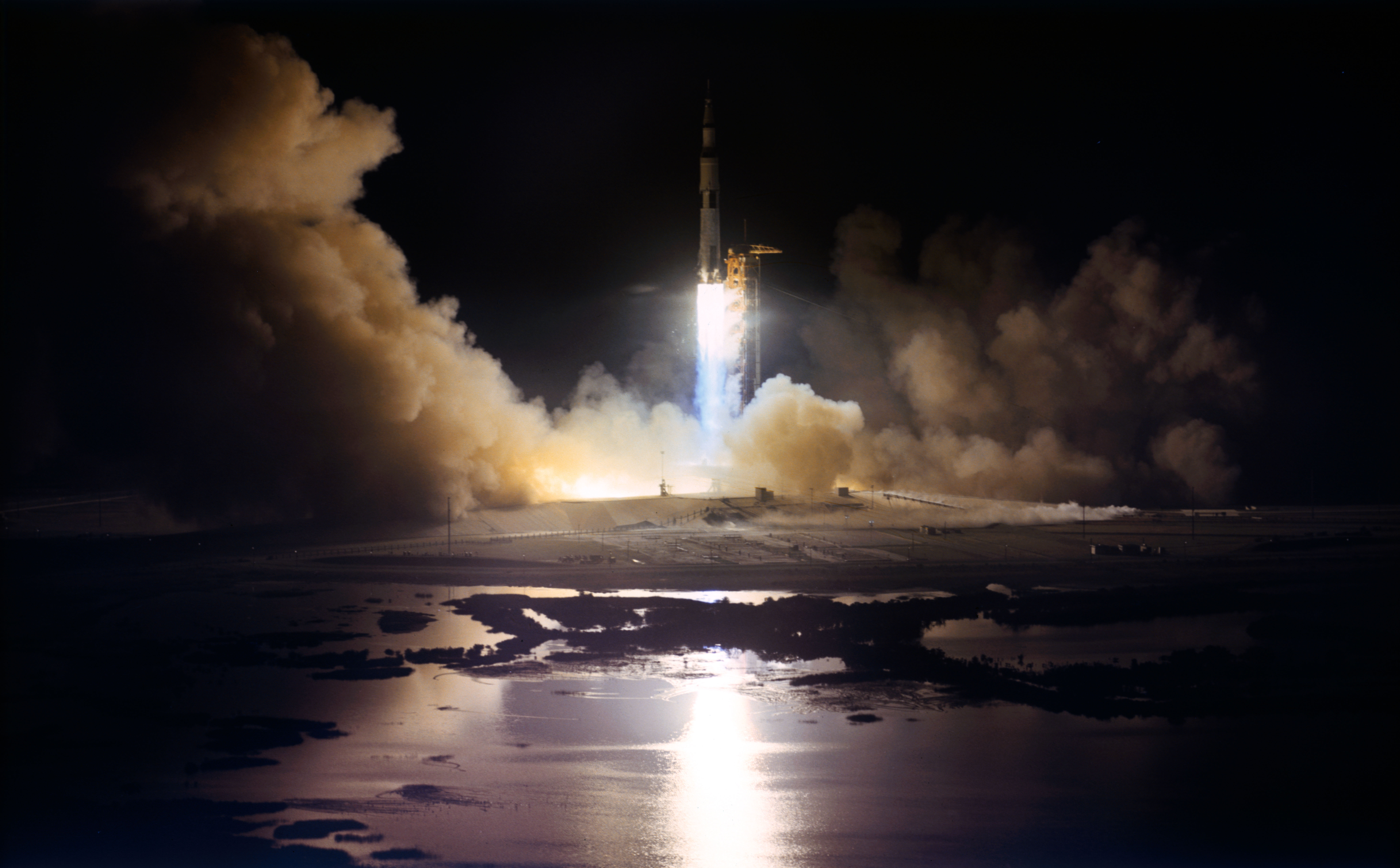
Apollo 17, in December 1972. Eugene Cernan and Harrison Schmitt landed in the Taurus-Littrow valley on 11 December 1972, worked on the surface for three days… more…
- Image pending
Astronauts and life in space
How high do astronauts orbit the earth?
Crewed spaceflight today happens a few hundred kilometres up. The International Space Station orbits at about 400 km, lapping the planet roughly every 90… more…
