Did you know…
What was special about the B-26 Invader rebuilt by On Mark Engineering (YB-26K)?
Short answer
It was no simple touch-up: On Mark rebuilt the fuselage and tail, fitted a larger rudder and reinforced the wing with steel straps from tip to root; its proposal also called for 2,500 hp R-2800-103W engines with water injection. The YB-26K prototype flew on 28 January 1963 and led to a run of forty B-26K Counter-Invaders.

A Van Nuys workshop dedicated to rebuilding aircraft
On Mark Engineering was a US aircraft remanufacturing company established in 1954 at Van Nuys airport (California). Its work on the Invader did not stop at the surface: the fuselage and tail were rebuilt, the rudder was replaced with a larger version and removable dual controls were fitted as standard equipment. The wing was reinforced with steel straps laid from tip to root.
Engines, fuel and armament
On Mark's proposal called for Pratt & Whitney R-2800-103W engines of 2,500 hp with water injection, more powerful, with which the aim was to maintain the aircraft's maximum speed. Wingtip tanks of 165 gallons were added and the aircraft received a full package of updated onboard electronics. The armament included .50-calibre SUU-12 machine-gun pods and bombs of up to 1,000 lb.
From the YB-26K prototype to the bases in Thailand
On Mark converted a single B-26 into the YB-26K prototype, which first flew on 28 January 1963. Once the tests were passed, that same aircraft was reconfigured along with 39 other aircraft and, in November 1963, the company received a contract to bring forty B-26s to the new standard; in total forty B-26K Counter-Invaders were produced, designed for counterinsurgency missions with the US Air Force and later redesignated A-26A. The type entered combat with the 609th Special Operations Squadron from bases in Thailand. The presence there was not free of friction: the Thai government was unwilling to allow the Americans to operate bomber aircraft from its air bases.
More questions
Aviation history
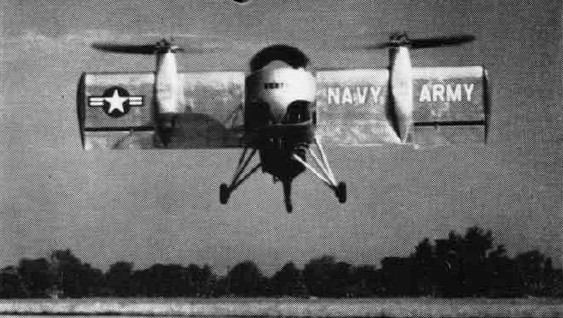
What was special about the Vertol 76?
Vertol's VZ-2 tested the tiltwing concept for vertical take-off and landing. After ground trials beginning in April 1957, it first took off on 13 August only… more…

Aviation history
Which was the most-produced American fighter of the Second World War?
The Republic P-47 Thunderbolt, of which 15,636 or 15,683 units were built, depending on the source. It was also one of the heaviest fighters of the conflict… more…

Aviation history
Who flew the E-66 at 2,149 km/h?
Konstantin or Vladimir Kokkinaki, depending on the source. Konstantin is credited with the absolute record on a closed 100 km circuit, at 2,148.66 km/h, set… more…

Fly-by-Owen (CC BY SA), vía commons Aviation history
How many I-11Bs were built?
Between 208 and around 450, depending on the source: one of the AISA I-11 reference sheets gives 208 examples built, while All-Aero speaks of around 400 built… more…

Aviation history
How many HH-53s could be converted to Pave Low III?
Eight HH-53C aircraft received an improved systems package and were redesignated HH-53H Pave Low III. The other figure in circulation, nine MH-53H and 32… more…

SCDBob (CC BY SA), vía commons Aviation history
What did the A129 Mangusta's armor protect?
The fuselage: the A129's airframe is armored and, according to All-Aero, designed to protect against 12.7 mm rounds, with partial protection against 23 mm… more…


