Did you know…
What can a modern radar tell about a plane 400 km away?
Short answer
At that distance the Boeing E-3 Sentry's pulse-Doppler radar reaches over 250 mi (400 km) against low-flying targets at its operating altitude. Its look-down capability lets it detect, identify and track low-altitude aircraft by filtering out ground clutter. Mission computers correlate tracks and interrogate IFF.

How far it reaches
The E-3 Sentry's pulse-Doppler radar has a range of more than 250 mi (400 km) against low-flying targets when the aircraft is at its operating altitude, while the pulse (BTH) radar reaches about 400 mi (650 km) against aircraft at medium and high altitude. A mission crew of controllers tracks fighter-sized targets and vectors friendly aircraft to intercept.
What it pulls from the return
The E-3's look-down capability serves to detect, identify and track low-flying aircraft while eliminating ground returns. The radar operates in pulse-Doppler mode, which lets it detect and track moving targets against ground clutter. The onboard mission computers correlate radar tracks, identify friend or foe by interrogating the IFF transponder, and present the air picture to the mission crew on tactical displays.
The program that put it in the air
The E-3s are commonly known as AWACS. In 1963 the USAF requested proposals for an airborne warning and control system (AWACS) to replace its EC-121 Warning Star aircraft, which had served in the airborne early-warning role for more than a decade. Contracts were awarded to Boeing, Douglas and Lockheed, with the latter eliminated in July 1966; in 1967 a parallel program was launched to develop the radar, with Westinghouse Electric and Hughes Aircraft competing for the system. In July 1970 Boeing was selected over McDonnell Douglas's DC-8-based proposal.
More questions
Aviation history
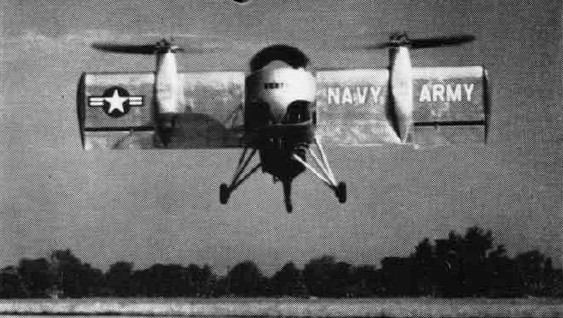
What was special about the Vertol 76?
Vertol's VZ-2 tested the tiltwing concept for vertical take-off and landing. After ground trials beginning in April 1957, it first took off on 13 August only… more…

Aviation history
Which was the most-produced American fighter of the Second World War?
The Republic P-47 Thunderbolt, of which 15,636 or 15,683 units were built, depending on the source. It was also one of the heaviest fighters of the conflict… more…

Aviation history
Who flew the E-66 at 2,149 km/h?
Konstantin or Vladimir Kokkinaki, depending on the source. Konstantin is credited with the absolute record on a closed 100 km circuit, at 2,148.66 km/h, set… more…

Fly-by-Owen (CC BY SA), vía commons Aviation history
How many I-11Bs were built?
Between 208 and around 450, depending on the source: one of the AISA I-11 reference sheets gives 208 examples built, while All-Aero speaks of around 400 built… more…

Aviation history
How many HH-53s could be converted to Pave Low III?
Eight HH-53C aircraft received an improved systems package and were redesignated HH-53H Pave Low III. The other figure in circulation, nine MH-53H and 32… more…

SCDBob (CC BY SA), vía commons Aviation history
What did the A129 Mangusta's armor protect?
The fuselage: the A129's airframe is armored and, according to All-Aero, designed to protect against 12.7 mm rounds, with partial protection against 23 mm… more…


