Did you know…
What bombers were derived from the Camel and the Snipe in the First World War?
Short answer
Neither the Camel nor the Snipe produced bombers, but two armoured trench-fighter aircraft: the TF.1, a modified Camel that flew on 15 February 1918, and the Sopwith Salamander, conceived in early 1918 as an armoured version of the Snipe. 1,400 Salamanders were ordered.

From the Camel to the TF.1
The modified Camel, known as the "TF.1" (trench fighter 1), flew on 15 February 1918. It carried two fixed Lewis guns firing downward and forward at a 45-degree angle, plus a third mounted on the upper wing. The downward-firing guns proved of little use, since they were almost impossible to aim. The TF.1 did not enter production, but the information gained from its trials was used in the design of the Salamander.
The Salamander, an armoured Snipe
Work on a more advanced armoured fighter, conceived as an armoured version of the Sopwith Snipe, began in early 1918. The front part of the fuselage was a box of 605 lb (275 kg) armour plate that formed an integral part of the aircraft's structure and protected the pilot and the fuel system. The new aircraft used the same Bentley BR2 rotary engine as the Snipe, covered by an unarmoured cowling. The armament was changed to a conventional pair of synchronised Vickers guns in front of the cockpit, as on the Snipe, before the first prototype was completed.
Trials and production
The first prototype began flight trials at Brooklands aerodrome on 27 April 1918. A total of 1,400 Salamanders were ordered. Production continued for several months after the Armistice, with at least 497 aircraft completed.
More questions
Aviation history
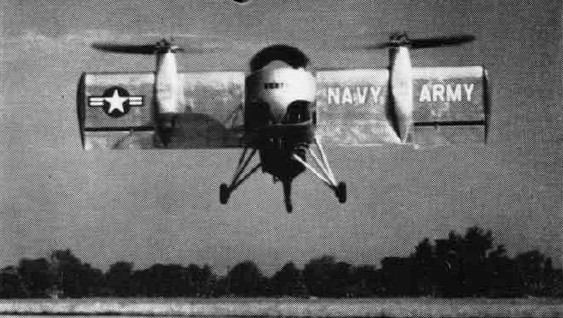
What was special about the Vertol 76?
Vertol's VZ-2 tested the tiltwing concept for vertical take-off and landing. After ground trials beginning in April 1957, it first took off on 13 August only… more…

Aviation history
Which was the most-produced American fighter of the Second World War?
The Republic P-47 Thunderbolt, of which 15,636 or 15,683 units were built, depending on the source. It was also one of the heaviest fighters of the conflict… more…

Aviation history
Who flew the E-66 at 2,149 km/h?
Konstantin or Vladimir Kokkinaki, depending on the source. Konstantin is credited with the absolute record on a closed 100 km circuit, at 2,148.66 km/h, set… more…

Fly-by-Owen (CC BY SA), vía commons Aviation history
How many I-11Bs were built?
Between 208 and around 450, depending on the source: one of the AISA I-11 reference sheets gives 208 examples built, while All-Aero speaks of around 400 built… more…

Aviation history
How many HH-53s could be converted to Pave Low III?
Eight HH-53C aircraft received an improved systems package and were redesignated HH-53H Pave Low III. The other figure in circulation, nine MH-53H and 32… more…

SCDBob (CC BY SA), vía commons Aviation history
What did the A129 Mangusta's armor protect?
The fuselage: the A129's airframe is armored and, according to All-Aero, designed to protect against 12.7 mm rounds, with partial protection against 23 mm… more…


