Did you know…
Why does NASA want to leave Earth?
Short answer
NASA does not want to leave Earth: its Earth Science division operates more than 20 satellites whose data is freely available. Exploring beyond Earth is driven by science, technology, and Mars prep — not emigration.

NASA Is Not Leaving Earth
NASA's Earth Science division operates more than 20 satellites in orbit and funds hundreds of programs and research efforts. Its data sets cover even the most remote regions of the planet and are freely and openly available to anyone. Its stated goal is to understand how our planet works, for the benefit of humanity, and to gain the knowledge needed to explore other moons and planets. None of its programs mention emigration, and there is no official document that sets relocating humanity as a goal. The founding law of 1958 calls for aeronautical and space research activities and names, as its first objective, expanding knowledge of phenomena in the atmosphere and in space.
Why It Still Flies Outward
NASA itself explains the reasons. Its Moon to Mars architecture aims at long-term, human-led scientific discovery in deep space. With the Artemis missions, the agency explores the Moon in search of scientific discoveries and technological advances, while also learning to live and work on another world as preparation for crewed missions to Mars. The architecture is presented as a roadmap for long-term exploration of the lunar surface, the first steps on the red planet, and the journey beyond, drawn up together with partners from industry, science, and the international community. At no point is a relocation of humanity mentioned.
Where the Myth Comes From
The idea that Earth will stop being safe in the long run does not come from NASA's programs. In popular perception it gets mixed up with government Moon programs, which are meant as preparation for Mars missions, not emigration. Anyone comparing priorities will see the opposite of a flight: part of the scientific fleet is constantly looking down.
More questions
Moon and Mars
How does neil armstrong look like?
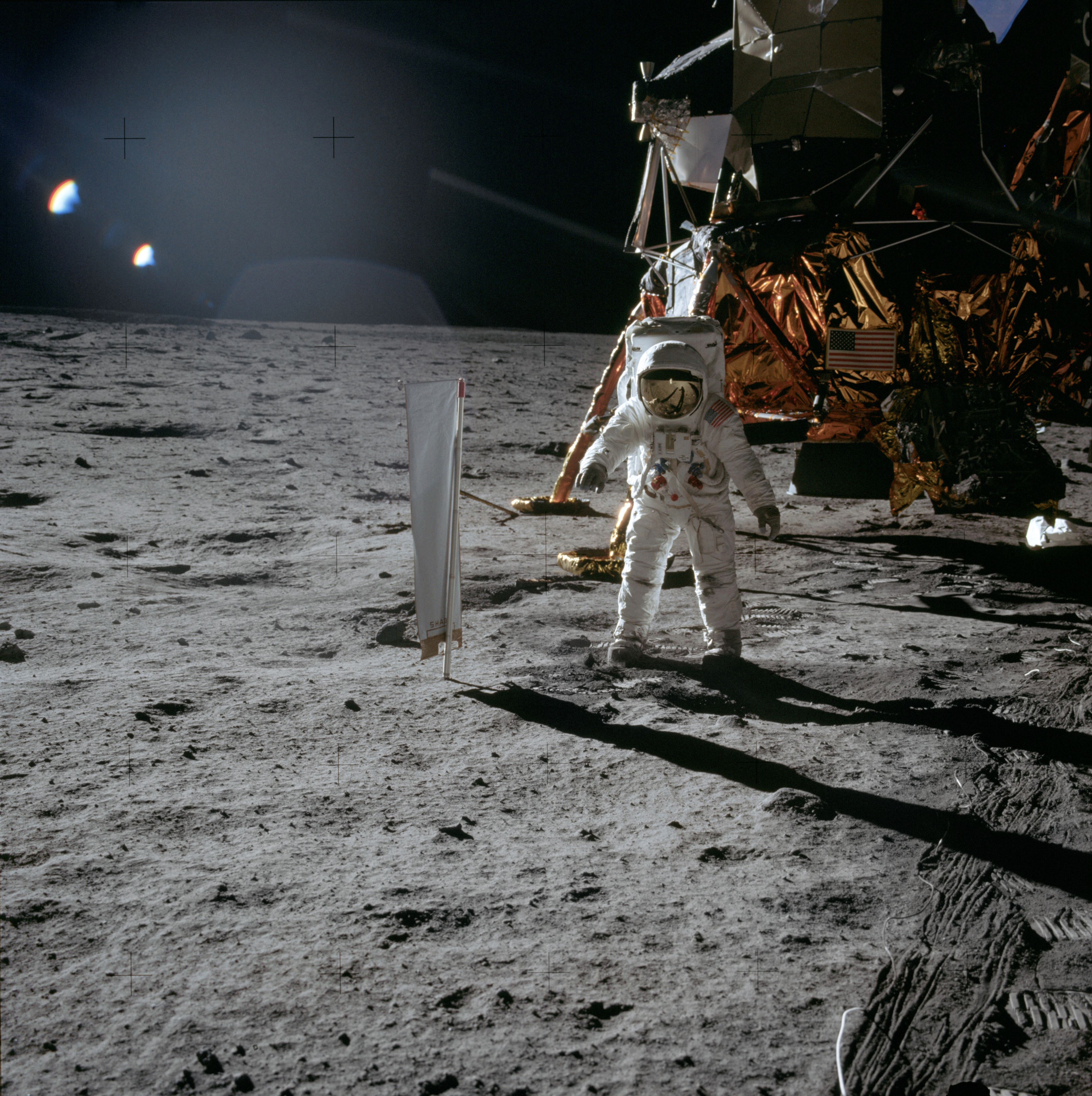
The face most people picture is not his: the gold-visored astronaut in the famous Apollo 11 photograph is Buzz Aldrin, shot by Armstrong. Armstrong himself is… more…

Richard Dorrell (CC BY SA), vía commons Moon and Mars
How does the moon affect the tides?
By pulling unevenly on it. Tidal forces vary inversely as the cube of the distance, so the near side of the Earth is tugged harder than the far side: one… more…
Moon and Mars
Why does neil armstrong have a hollywood star?
Strictly he does not have a star. Armstrong, Aldrin and Collins share four circular monuments resembling the Moon, one at each corner of Hollywood and Vine… more…
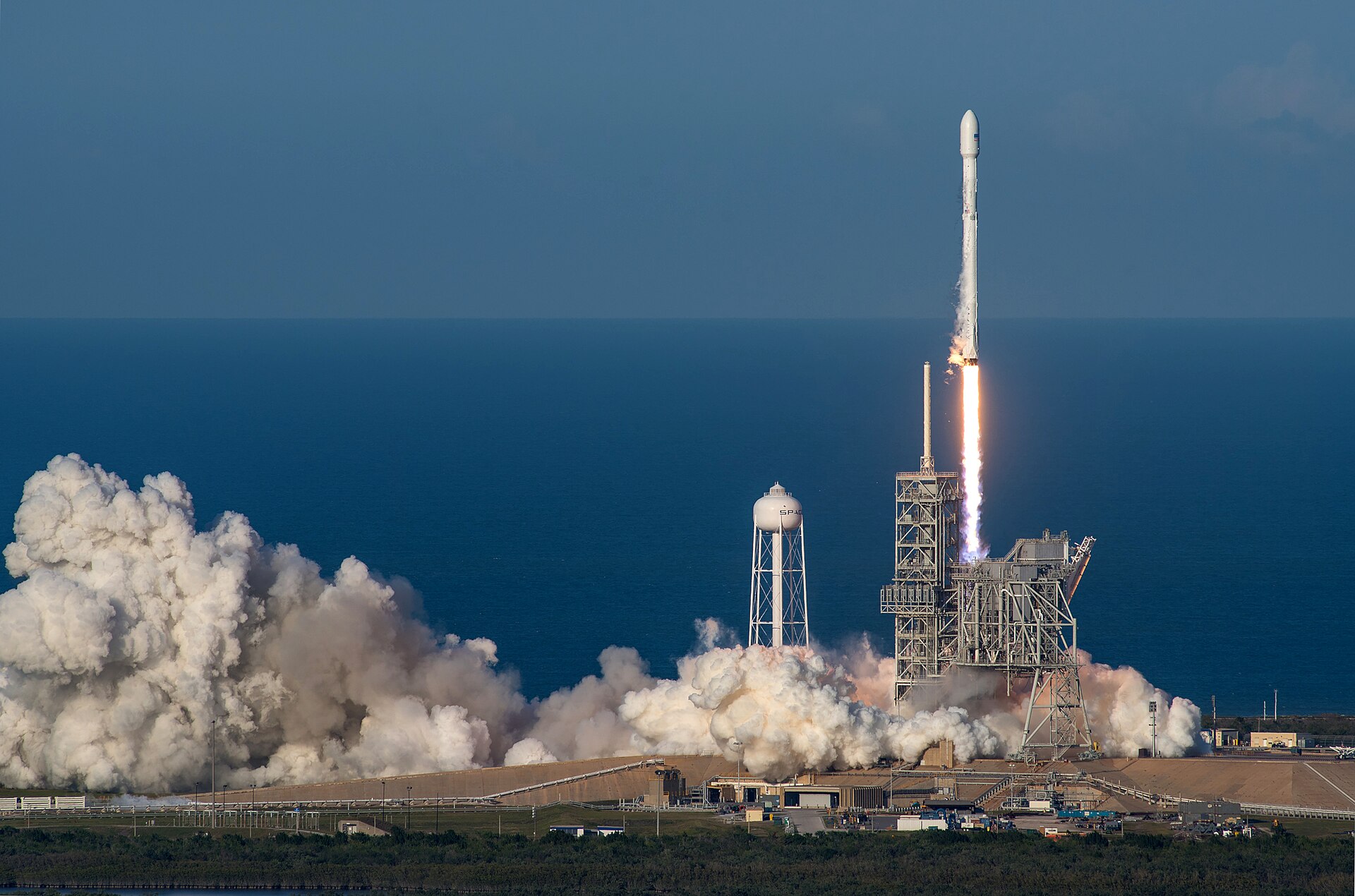
Foto: SpaceX (CC0) Moon and Mars
Why did falcon 9 hit the moon?
Because a spent upper stage on a lunar trajectory has no mission and no way to steer. A Falcon 9 upper stage from the January 2025 Firefly Blue Ghost 1 launch… more…
Moon and Mars
How much apollo 11 cost?
NASA never published a price for Apollo 11 on its own; what is documented is the program. The United States spent $25.8 billion on Project Apollo between 1960… more…
Moon and Mars
How much time neil armstrong spent on moon?
Armstrong and Aldrin spent 21 hours, 36 minutes on the Moon's surface, almost all of it inside the lunar module Eagle. Armstrong stepped onto the surface… more…

