Did you know…
Why is the Moon a satellite?
Short answer
Because it orbits a planet. For NASA, a satellite is any object that circles a planet, a star, or a moon, and the Moon circles Earth: it's its only natural satellite. It does so at an average distance of 384,400 km and completes one orbit in 27 Earth days, the same time it takes to rotate.

What it means to be a satellite
For NASA, a satellite is any object that orbits a planet, a star, or a moon. The word says nothing about size or origin: there are natural satellites, such as the Moon or Earth itself relative to the Sun, and thousands of artificial satellites circling our planet. What defines the status is the mechanics: a body stays in orbit when its velocity is balanced by the gravitational pull of the central object. Without that balance, it would either fly off in a straight line into space or fall onto it.
Earth's only moon
The Moon is Earth's only natural satellite. It orbits at an average distance of 384,400 km (238,855 miles) and has a radius of about 1,740 km. It completes one orbit in 27 Earth days, although from the surface its cycle appears to repeat every 29 days, because while the Moon orbits, Earth also moves around the Sun. That mismatch is what separates the orbital month from the month of phases.
One face, and no air
The Moon rotates in the same time it takes to orbit Earth once. This is synchronous rotation, a result of tidal locking between the two bodies, and the reason we always see the same hemisphere. It also lacks an atmosphere in the usual sense, having instead a very thin exosphere that isn't breathable, doesn't cushion impacts, and offers no protection against solar radiation. Its origin, according to NASA, lies in the collision of a Mars-sized body with Earth billions of years ago: the satellite formed from the debris of that impact, rather than being captured afterward.
More questions
Moon and Mars
How does neil armstrong look like?
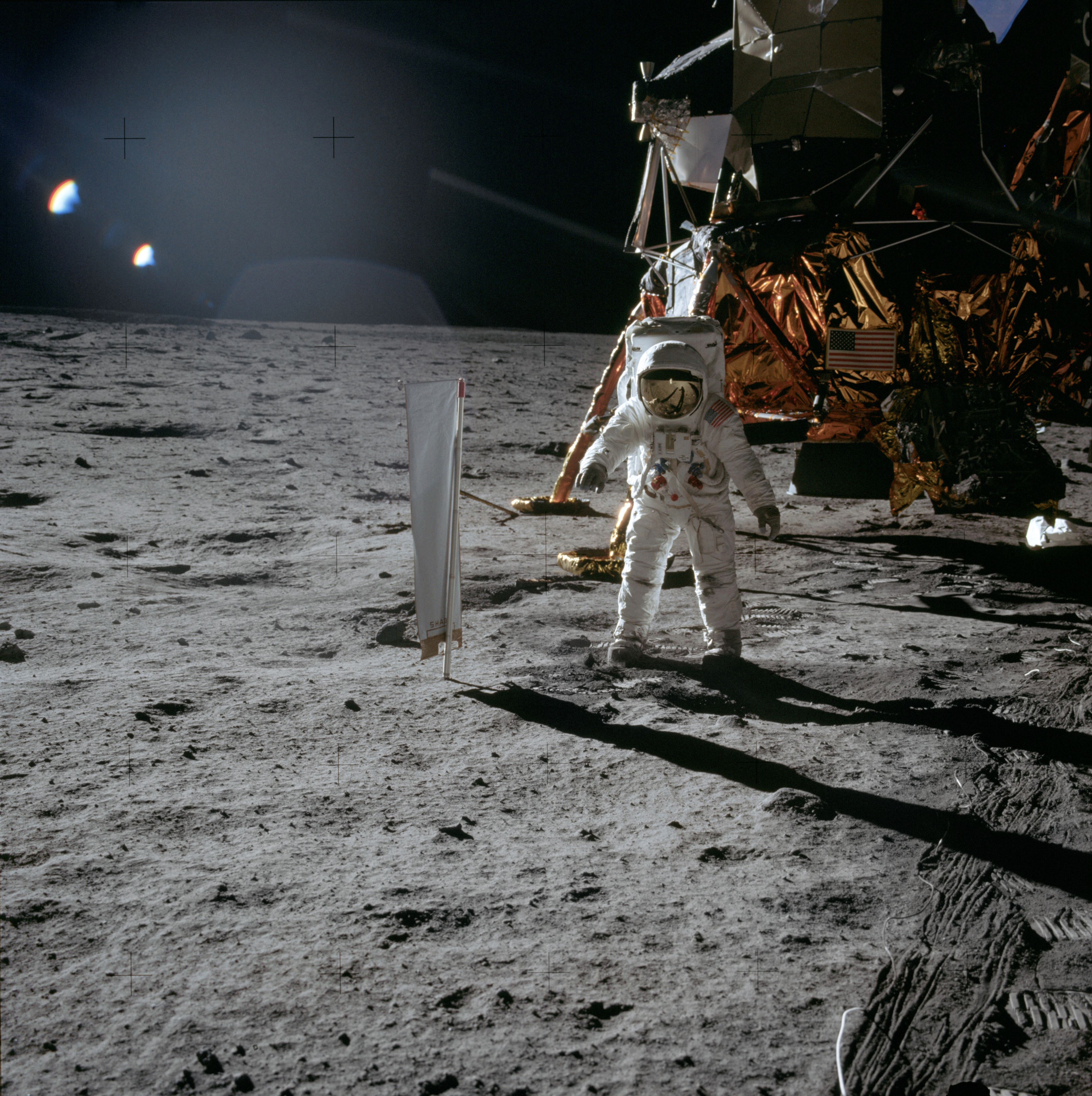
The face most people picture is not his: the gold-visored astronaut in the famous Apollo 11 photograph is Buzz Aldrin, shot by Armstrong. Armstrong himself is… more…

Richard Dorrell (CC BY SA), vía commons Moon and Mars
How does the moon affect the tides?
By pulling unevenly on it. Tidal forces vary inversely as the cube of the distance, so the near side of the Earth is tugged harder than the far side: one… more…
Moon and Mars
Why does neil armstrong have a hollywood star?
Strictly he does not have a star. Armstrong, Aldrin and Collins share four circular monuments resembling the Moon, one at each corner of Hollywood and Vine… more…
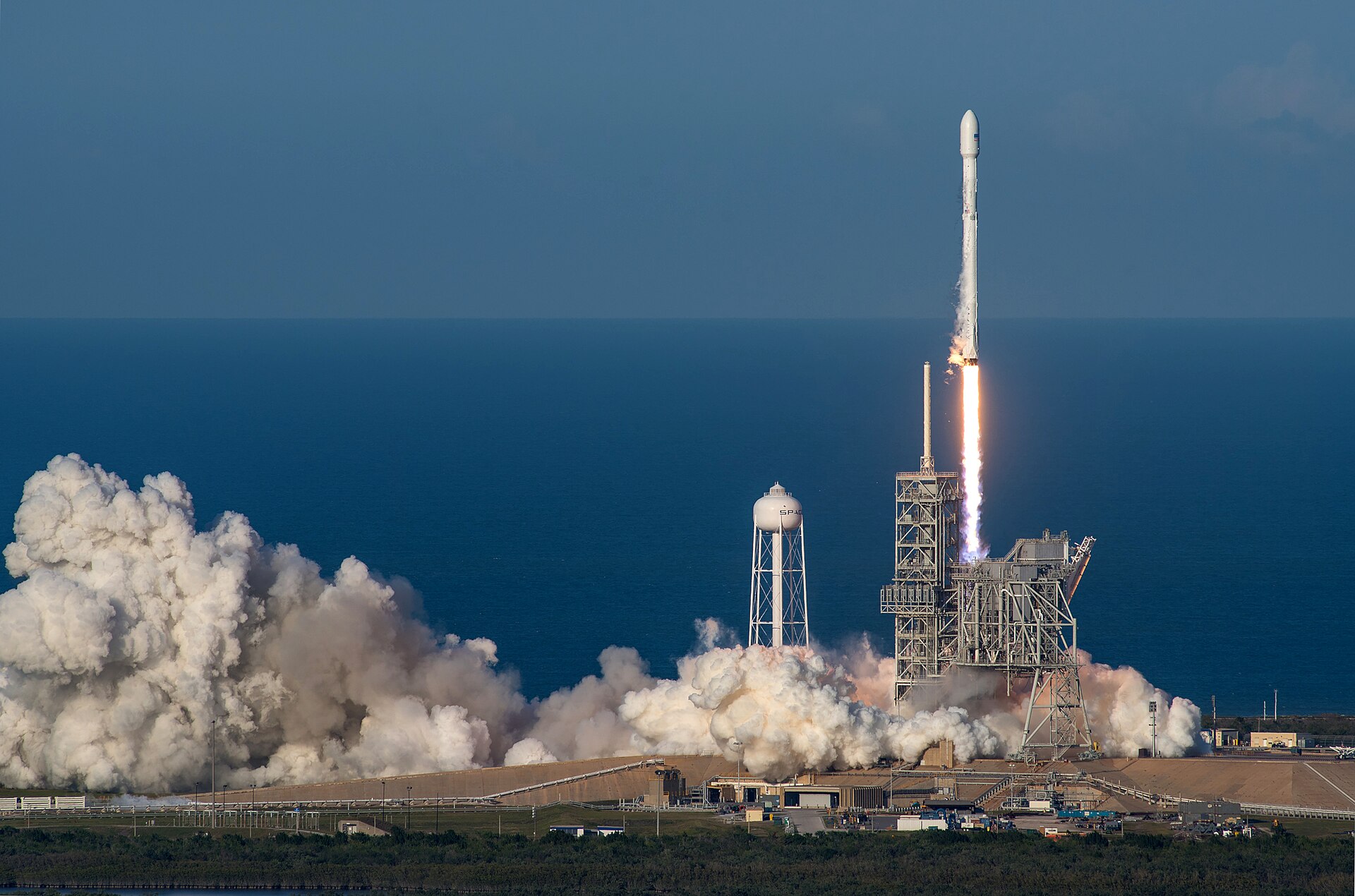
Foto: SpaceX (CC0) Moon and Mars
Why did falcon 9 hit the moon?
Because a spent upper stage on a lunar trajectory has no mission and no way to steer. A Falcon 9 upper stage from the January 2025 Firefly Blue Ghost 1 launch… more…
Moon and Mars
How much apollo 11 cost?
NASA never published a price for Apollo 11 on its own; what is documented is the program. The United States spent $25.8 billion on Project Apollo between 1960… more…
Moon and Mars
How much time neil armstrong spent on moon?
Armstrong and Aldrin spent 21 hours, 36 minutes on the Moon's surface, almost all of it inside the lunar module Eagle. Armstrong stepped onto the surface… more…

