Did you know…
Why was the Bristol 188 made of stainless steel?
Short answer
Because it had to exceed Mach 2 and withstand a considerable time with a skin temperature of around 300°C. Two special steels were chosen: a titanium-stabilised 18-8 austenitic steel and a 12% chromium gas-turbine steel, Firth-Vickers Rex 448, used unpainted on the outer skin.

A flying test bed to exceed Mach 2
Operational requirement ER.134T, issued in February 1953, called for a flying test bed capable of reaching speeds above Mach 2. The aircraft was also expected to operate for a considerable time with a skin temperature of around 300°C.
Two special steel grades
Several materials were studied, and two special steel grades were selected: a titanium-stabilised 18-8 austenitic steel and a 12% chromium steel used in gas turbines, Firth-Vickers Rex 448. The 12% chromium stainless steel, with a honeycomb core, was used in the construction of the outer skin, which was left unpainted. Obtaining stainless steel sheet in sufficient quantity was itself a problem, compounded by factors such as the strength and uniformity required.
From design to flight
The Type 188 was originally to have two Rolls-Royce Avon engines, but in June 1957 these were replaced by two De Havilland Gyron Junior engines, each half a tonne lighter. Over 51 flights, the Type 188 reached a maximum speed of Mach 1.88 at 36,000 ft.
More questions
Aviation history
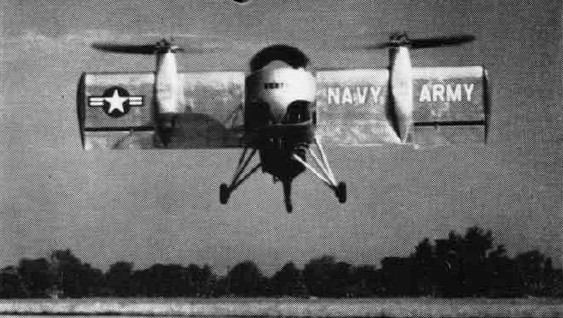
What was special about the Vertol 76?
Vertol's VZ-2 tested the tiltwing concept for vertical take-off and landing. After ground trials beginning in April 1957, it first took off on 13 August only… more…

Aviation history
Which was the most-produced American fighter of the Second World War?
The Republic P-47 Thunderbolt, of which 15,636 or 15,683 units were built, depending on the source. It was also one of the heaviest fighters of the conflict… more…

Aviation history
Who flew the E-66 at 2,149 km/h?
Konstantin or Vladimir Kokkinaki, depending on the source. Konstantin is credited with the absolute record on a closed 100 km circuit, at 2,148.66 km/h, set… more…

Fly-by-Owen (CC BY SA), vía commons Aviation history
How many I-11Bs were built?
Between 208 and around 450, depending on the source: one of the AISA I-11 reference sheets gives 208 examples built, while All-Aero speaks of around 400 built… more…

Aviation history
How many HH-53s could be converted to Pave Low III?
Eight HH-53C aircraft received an improved systems package and were redesignated HH-53H Pave Low III. The other figure in circulation, nine MH-53H and 32… more…

SCDBob (CC BY SA), vía commons Aviation history
What did the A129 Mangusta's armor protect?
The fuselage: the A129's airframe is armored and, according to All-Aero, designed to protect against 12.7 mm rounds, with partial protection against 23 mm… more…


