Did you know…
Which contest did the G91 win?
Short answer
The Fiat G.91 won the NBMR-1, the NATO contest launched in the 1950s to find a light tactical support aircraft. It competed against the Breguet Br.1001 Taon, the Dassault Mystère XXVI, the Northrop N-156, the Sud-Est Baroudeur and the Aerfer Sagittario 2, and in January 1958 it was officially declared the winner.

A requirement written for the whole Alliance
NBMR-1 stands for the first NATO Basic Military Requirement, a document drawn up in the 1950s by a committee of the North Atlantic Treaty Organisation that laid out the specification future fighter aircraft designs would have to meet. It therefore did not describe a specific aircraft, but the framework that industry proposals would have to fit. In December 1953, NATO's Supreme Command published the specifications for the aircraft it was looking for: a new light tactical support aircraft.
The contenders
The call for proposals drew entries from much of the Western aviation industry. Besides Fiat's G.91, the competition included the American Northrop N-156, the Dassault Mystère XXVI, the Sud-Est Baroudeur and the Breguet Br.1001 Taon on the French side, and the Aerfer Sagittario 2, the other Italian candidate on the list. Two of those names, the Taon and the Mystère XXVI, would later reappear in the ranking NATO made public, alongside the G.91 itself.
From the first ranking to the final decision
The selection of projects began on 18 March 1953 and lasted eighteen months, although the first result was not announced until 30 June 1955. That list of winning projects was ordered: in first place, the Breguet Br.1001 Taon; then the Fiat G.91; in third place, the Mystère XXVI. The Italian aircraft, therefore, did not top the contest's first ranking. The decision that ultimately counted came considerably later: in January 1958 the Fiat G.91 was officially declared the winner of the competition, and it is that ruling that is cited when identifying Fiat's light fighter as the winner of the NBMR-1.
More questions
Aviation history
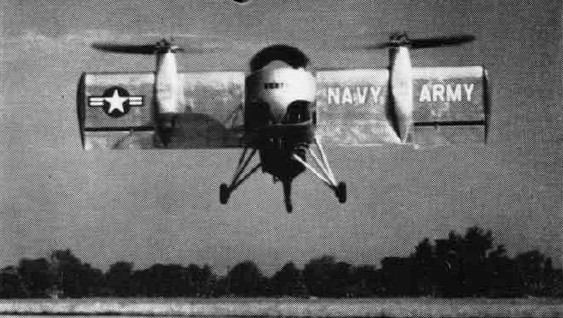
What was special about the Vertol 76?
Vertol's VZ-2 tested the tiltwing concept for vertical take-off and landing. After ground trials beginning in April 1957, it first took off on 13 August only… more…

Aviation history
Which was the most-produced American fighter of the Second World War?
The Republic P-47 Thunderbolt, of which 15,636 or 15,683 units were built, depending on the source. It was also one of the heaviest fighters of the conflict… more…

Aviation history
Who flew the E-66 at 2,149 km/h?
Konstantin or Vladimir Kokkinaki, depending on the source. Konstantin is credited with the absolute record on a closed 100 km circuit, at 2,148.66 km/h, set… more…

Fly-by-Owen (CC BY SA), vía commons Aviation history
How many I-11Bs were built?
Between 208 and around 450, depending on the source: one of the AISA I-11 reference sheets gives 208 examples built, while All-Aero speaks of around 400 built… more…

Aviation history
How many HH-53s could be converted to Pave Low III?
Eight HH-53C aircraft received an improved systems package and were redesignated HH-53H Pave Low III. The other figure in circulation, nine MH-53H and 32… more…

SCDBob (CC BY SA), vía commons Aviation history
What did the A129 Mangusta's armor protect?
The fuselage: the A129's airframe is armored and, according to All-Aero, designed to protect against 12.7 mm rounds, with partial protection against 23 mm… more…


