Did you know…
What quality does the SA 330J have in flight?
Short answer
Its "all-weather" capability: the SA.330J was designed to fly at night, in hostile flight conditions, and across a wide variety of climates. It shares with the SA.330H main rotor blades made of composite material, an advance over previous designs. The first Puma prototype flew on 15 April 1965.

Designed to fly in any condition
The SA.330J was designed to operate in "all-weather" conditions, which included night flying, hostile flight environments, and a wide variety of climates. The first Puma prototype had flown on 15 April 1965. In 1967, Aérospatiale and Westland Helicopters signed a landmark joint agreement on the program.
Composite blades on the H and J variants
The improved SA.330H and SA.330J variants introduced main rotor blades made of composite material, an advance over previous designs.
Payload and descendants
In standard military configuration, the Puma carried up to 16 seated soldiers, or six stretchers with four attendants for casualty evacuation. In transport use it is credited with a capacity of 16 to 20 passengers. The later Super Puma was developed from the outset with two alternative fuselage lengths, one shortened and one lengthened. The short-fuselage AS332 holds up to 15 passengers, and the lengthened-fuselage version reaches 20 in a comfortable configuration.
More questions
Aviation history
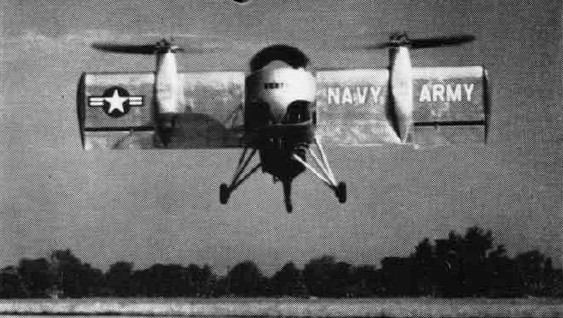
What was special about the Vertol 76?
Vertol's VZ-2 tested the tiltwing concept for vertical take-off and landing. After ground trials beginning in April 1957, it first took off on 13 August only… more…

Aviation history
Which was the most-produced American fighter of the Second World War?
The Republic P-47 Thunderbolt, of which 15,636 or 15,683 units were built, depending on the source. It was also one of the heaviest fighters of the conflict… more…

Aviation history
Who flew the E-66 at 2,149 km/h?
Konstantin or Vladimir Kokkinaki, depending on the source. Konstantin is credited with the absolute record on a closed 100 km circuit, at 2,148.66 km/h, set… more…

Fly-by-Owen (CC BY SA), vía commons Aviation history
How many I-11Bs were built?
Between 208 and around 450, depending on the source: one of the AISA I-11 reference sheets gives 208 examples built, while All-Aero speaks of around 400 built… more…

Aviation history
How many HH-53s could be converted to Pave Low III?
Eight HH-53C aircraft received an improved systems package and were redesignated HH-53H Pave Low III. The other figure in circulation, nine MH-53H and 32… more…

SCDBob (CC BY SA), vía commons Aviation history
What did the A129 Mangusta's armor protect?
The fuselage: the A129's airframe is armored and, according to All-Aero, designed to protect against 12.7 mm rounds, with partial protection against 23 mm… more…


