Did you know…
What did the Be.550 Bibi achieve with 37% less power?
Short answer
With a single 45 kW (60 hp) Walter Mikron II engine, this Czechoslovak two-seat touring aircraft reached 200 km/h (120 mph) at 100 m altitude and had a range of 780 km (480 mi). It was a light, small aircraft with side-by-side seating, derived from the Beta-Minor design.
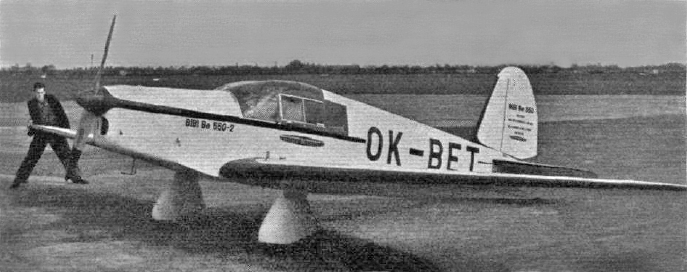
A Czechoslovak two-seat touring aircraft
The Beneš-Mráz Bibi was a Czechoslovak two-seat touring aircraft from the 1930s. It was designed and built by Beneš-Mráz, who developed it from the Beta-Minor design. It was a lighter, smaller aircraft, with side-by-side seating instead of tandem. Development of the Bibi began with the Be-501, a two-seat touring aircraft with an enclosed cabin, and culminated in the Be-555 Super Bibi.
What 45 kW could do
The powerplant was a Walter Mikron II, an air-cooled inverted inline four-cylinder engine producing 45 kW (60 hp). With that power, the top speed was 200 km/h (120 mph, 110 kn) at 100 m (330 ft) altitude. Range was 780 km (480 mi, 420 nmi).
Production and exported examples
The first production version was unveiled in 1936 and at least six units were built, including individual exports to Egypt and the United Kingdom. One Be-550 Bibi, registered OK-BET, was imported into the United Kingdom and remained in storage during the Second World War.
More questions
Aviation history
What was special about the Vertol 76?
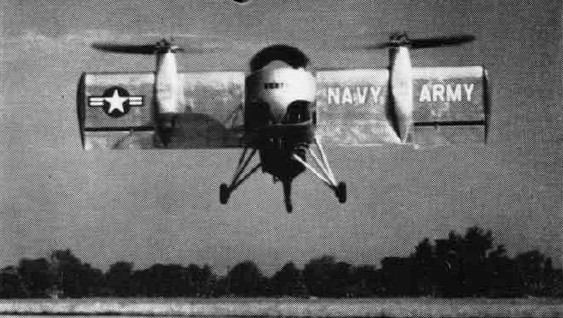
Vertol's VZ-2 tested the tiltwing concept for vertical take-off and landing. After ground trials beginning in April 1957, it first took off on 13 August only… more…

Aviation history
Which was the most-produced American fighter of the Second World War?
The Republic P-47 Thunderbolt, of which 15,636 or 15,683 units were built, depending on the source. It was also one of the heaviest fighters of the conflict… more…

Aviation history
Who flew the E-66 at 2,149 km/h?
Konstantin or Vladimir Kokkinaki, depending on the source. Konstantin is credited with the absolute record on a closed 100 km circuit, at 2,148.66 km/h, set… more…

Fly-by-Owen (CC BY SA), vía commons Aviation history
How many I-11Bs were built?
Between 208 and around 450, depending on the source: one of the AISA I-11 reference sheets gives 208 examples built, while All-Aero speaks of around 400 built… more…

Aviation history
How many HH-53s could be converted to Pave Low III?
Eight HH-53C aircraft received an improved systems package and were redesignated HH-53H Pave Low III. The other figure in circulation, nine MH-53H and 32… more…

SCDBob (CC BY SA), vía commons Aviation history
What did the A129 Mangusta's armor protect?
The fuselage: the A129's airframe is armored and, according to All-Aero, designed to protect against 12.7 mm rounds, with partial protection against 23 mm… more…


