Did you know…
Why isn't Mars habitable?
Short answer
Because its atmosphere is unbreathable and barely there: 95.1% carbon dioxide and an average surface pressure of just 6.36 mb. With so little atmosphere, liquid water can't persist on the surface, and temperatures drop to about -153 °C. Gravity, at 3.73 m/s², is 0.38 times Earth's.

Air that can't be breathed
Mars has an atmosphere, but barely. Average surface pressure is 6.36 mb, with seasonal variation between 4.0 and 8.7 mb — a tiny fraction of sea-level pressure on Earth. Its composition is no use to a human lung either: 95.1% carbon dioxide, 2.59% nitrogen, and 1.94% argon, with oxygen not among the main components. Bottled air alone wouldn't be enough there; what's needed above all is pressure, so any activity requires a pressurized suit or a sealed habitat.
Cold, and no stable liquid water
Martian temperatures range from about 20 °C at the best time of day and year down to about -153 °C, a range no Earth organism can survive unprotected. The added problem is water: the atmosphere is too thin for liquid water to persist on the surface for long, so it shows up as ice just beneath the ground in the polar regions and as brines that flow seasonally down some slopes and crater walls. With that pressure and without stable liquid water, the chemistry of life as we know it has little room to work, and scientists don't expect to find living organisms thriving on Mars today.
Not habitable doesn't mean unreachable
The distinction matters. Martian surface gravity is 3.73 m/s², 0.38 times Earth's, enough to walk and work in. There's accessible ice, carbon dioxide as a raw material, and sunlight. That's why crewed exploration plans don't talk about finding a habitable world, but about bringing habitability along: pressure, oxygen, water, and thermal protection manufactured and maintained by the mission itself.
More questions
Moon and Mars
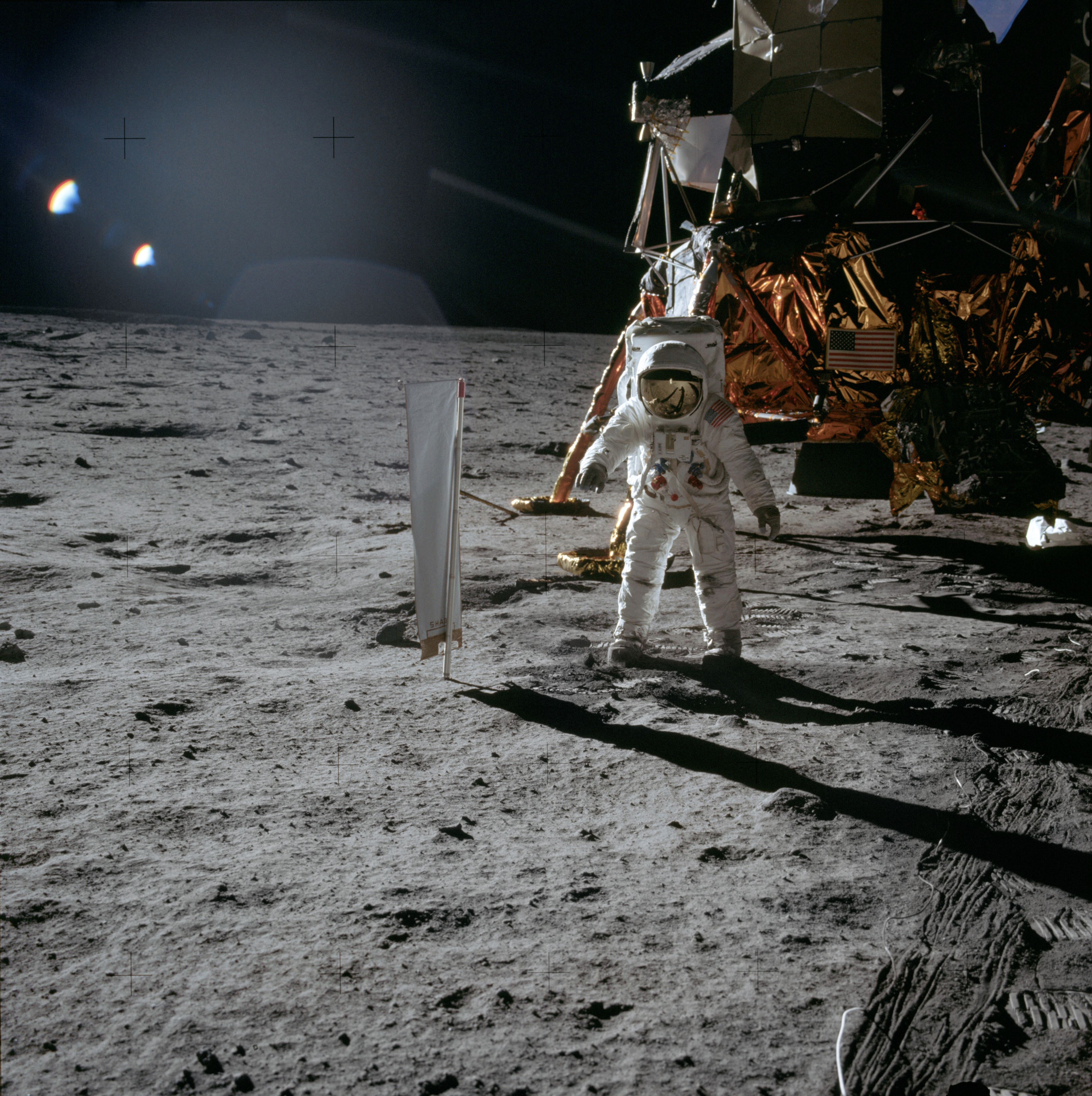
How does neil armstrong look like?
The face most people picture is not his: the gold-visored astronaut in the famous Apollo 11 photograph is Buzz Aldrin, shot by Armstrong. Armstrong himself is… more…

Richard Dorrell (CC BY SA), vía commons Moon and Mars
How does the moon affect the tides?
By pulling unevenly on it. Tidal forces vary inversely as the cube of the distance, so the near side of the Earth is tugged harder than the far side: one… more…
Moon and Mars
Why does neil armstrong have a hollywood star?
Strictly he does not have a star. Armstrong, Aldrin and Collins share four circular monuments resembling the Moon, one at each corner of Hollywood and Vine… more…
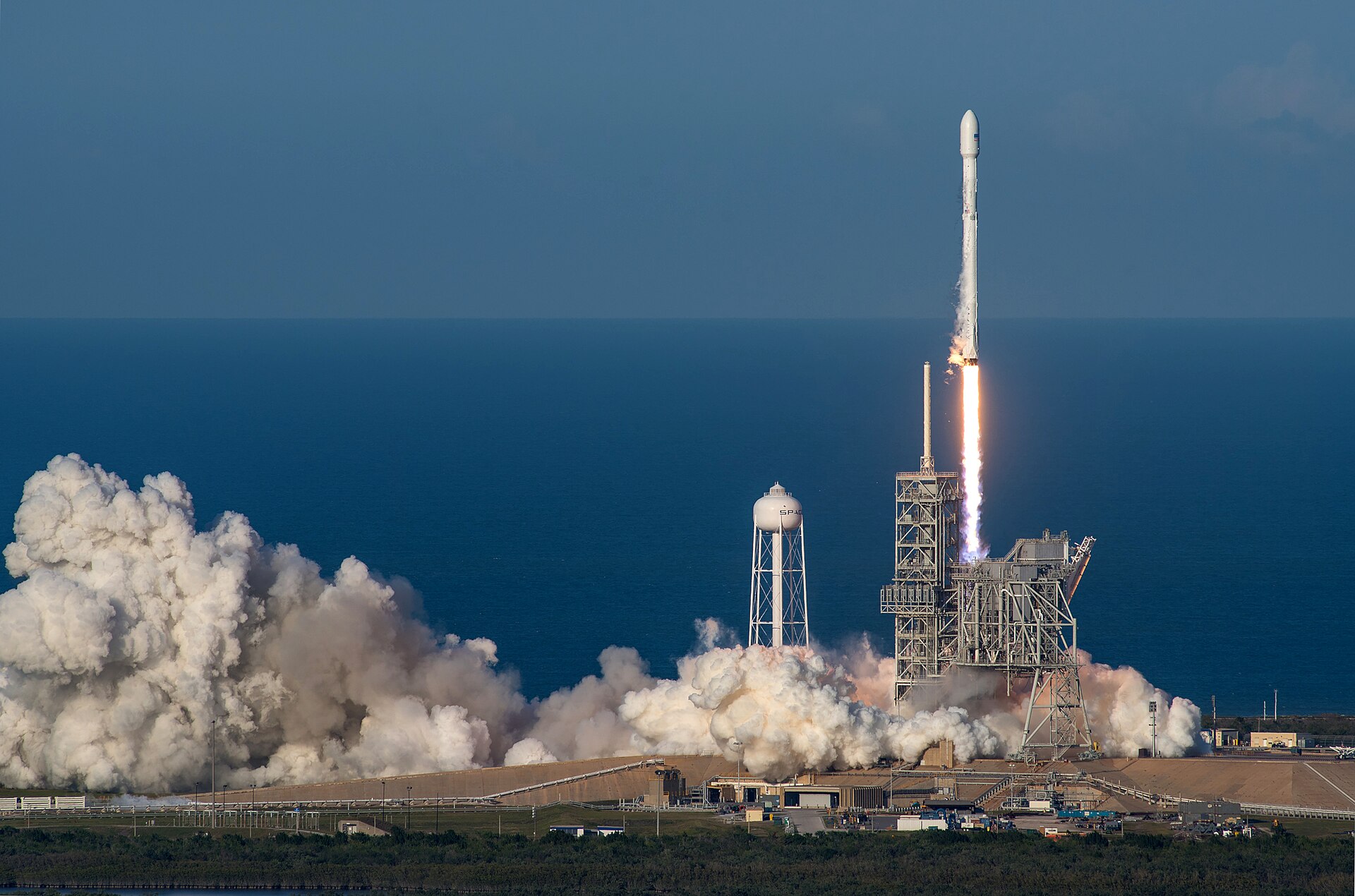
Foto: SpaceX (CC0) Moon and Mars
Why did falcon 9 hit the moon?
Because a spent upper stage on a lunar trajectory has no mission and no way to steer. A Falcon 9 upper stage from the January 2025 Firefly Blue Ghost 1 launch… more…
Moon and Mars
How much apollo 11 cost?
NASA never published a price for Apollo 11 on its own; what is documented is the program. The United States spent $25.8 billion on Project Apollo between 1960… more…
Moon and Mars
How much time neil armstrong spent on moon?
Armstrong and Aldrin spent 21 hours, 36 minutes on the Moon's surface, almost all of it inside the lunar module Eagle. Armstrong stepped onto the surface… more…

