Did you know…
Why did the Bf 110 struggle against the P.Z.L. P.11?
Short answer
The premise needs nuance: the P.11c was no match for the superior speed and firepower of the Bf 109 and 110. Where the Polish fighter had the edge was agility: the Bf 110's main weakness was its lack of manoeuvrability, and the P.11 manoeuvred better than its German rivals and gave a much better view from the cockpit.

A heavy twin-engine fighter against a nimble aircraft
The Messerschmitt Bf 110's main weakness was its lack of manoeuvrability, a flaw that, as noted, could be mitigated with better tactics. Opposite it, Polish fighters offered better manoeuvrability than their German counterparts and, as a bonus derived from their configuration, a much better view from the cockpit. That relative scarcity of armament and engine power which made the P.11c seem vulnerable was precisely what made it more manoeuvrable and able to stand up to the Germans. The Polish monoplane could also dive at up to 600 km/h without risk of the wings coming off.
What the German aircraft did have in its favour
In every other respect the comparison was reversed: the P.11c was no match for the superior speed and firepower of the Luftwaffe fleet, particularly the Messerschmitt Bf 109 and Bf 110. With those advantages, the Bf 110 served with considerable success in the opening campaigns in Poland, Norway and France.
The balance of the September campaign
According to Luftwaffe records, the Germans lost 285 aircraft, with at least 110 victories credited to the P.11 against about 100 of its own aircraft lost. The efforts of the P.11c pilots during that month-long war nonetheless ended in futility.
More questions
Aviation history
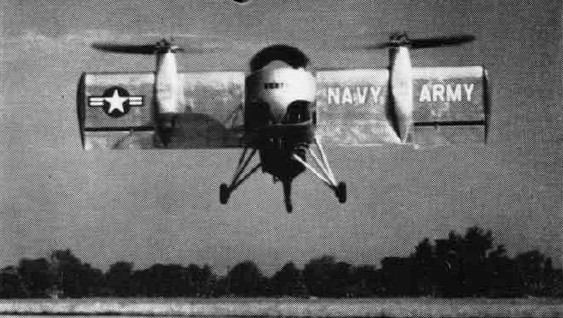
What was special about the Vertol 76?
Vertol's VZ-2 tested the tiltwing concept for vertical take-off and landing. After ground trials beginning in April 1957, it first took off on 13 August only… more…

Aviation history
Which was the most-produced American fighter of the Second World War?
The Republic P-47 Thunderbolt, of which 15,636 or 15,683 units were built, depending on the source. It was also one of the heaviest fighters of the conflict… more…

Aviation history
Who flew the E-66 at 2,149 km/h?
Konstantin or Vladimir Kokkinaki, depending on the source. Konstantin is credited with the absolute record on a closed 100 km circuit, at 2,148.66 km/h, set… more…

Fly-by-Owen (CC BY SA), vía commons Aviation history
How many I-11Bs were built?
Between 208 and around 450, depending on the source: one of the AISA I-11 reference sheets gives 208 examples built, while All-Aero speaks of around 400 built… more…

Aviation history
How many HH-53s could be converted to Pave Low III?
Eight HH-53C aircraft received an improved systems package and were redesignated HH-53H Pave Low III. The other figure in circulation, nine MH-53H and 32… more…

SCDBob (CC BY SA), vía commons Aviation history
What did the A129 Mangusta's armor protect?
The fuselage: the A129's airframe is armored and, according to All-Aero, designed to protect against 12.7 mm rounds, with partial protection against 23 mm… more…


