Did you know…
Why did Bristol build the M.R.1 in metal?
Short answer
Because of timber: rising aircraft production during the First World War put pressure on the supply of high-quality wood and sparked official interest in metal. Metal structures, even metal frames covered with fabric, offered greater strength for handling and transport and better resistance to tropical climates.
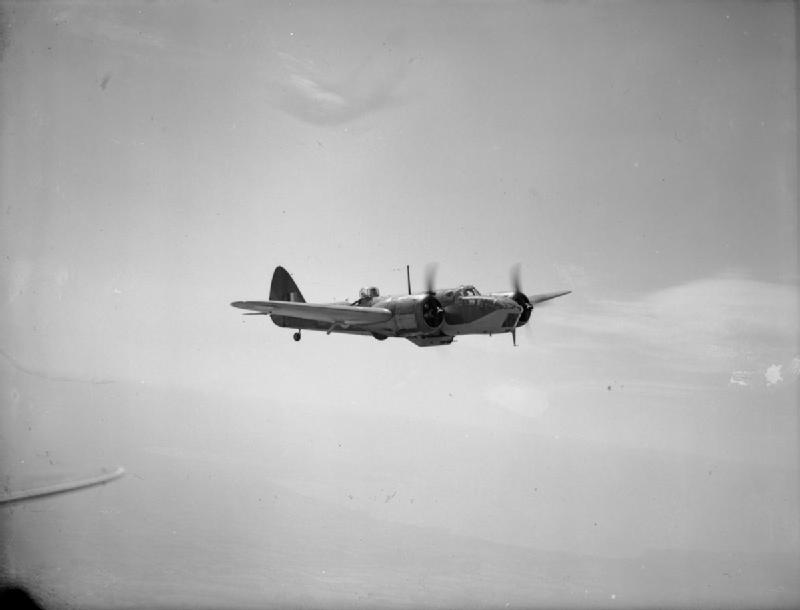
Pressure on the timber supply
Bristol's first sketches for metal aircraft dated back to 1914, but official interest did not appear until the rise in aircraft production during the First World War began to put pressure on the supply of high-quality timber. Even in the early days of powered flight, some manufacturers were starting to consider using metal in airframes to replace wood. Metal structures, even metal frames covered with fabric, offered greater strength for handling and transport, as well as better resistance to tropical climates. In 1916, Bristol's designer Frank Barnwell presented the design for a two-seat metal reconnaissance aircraft, the M.R.1 — for Metal Reconnaissance — and secured a contract for two evaluation aircraft.
Duralumin and double skin
Barnwell borrowed from naval experience and used duralumin sheet, varnished to prevent corrosion, from which he built the fuselage in four sections. The construction used a double skin: a smooth outer covering riveted over an inner skin corrugated lengthwise.
Metal wings that fell behind schedule
The aluminium spars proved difficult to make sufficiently rigid, and Bristol subcontracted their manufacture to The Steel Wing Company, in Gloucester, which had built experimental steel wings for other aircraft. With the first M.R.1's fuselage finished before the wings, Bristol decided to fit a conventional set of wooden wings, with ailerons only on the upper planes, for the flight trials in mid-1917; they performed well and the aircraft was delivered to the Air Board in October 1917. The second M.R.1 did not fly until late 1918, when the metal wings were finally ready.
More questions
Aviation history
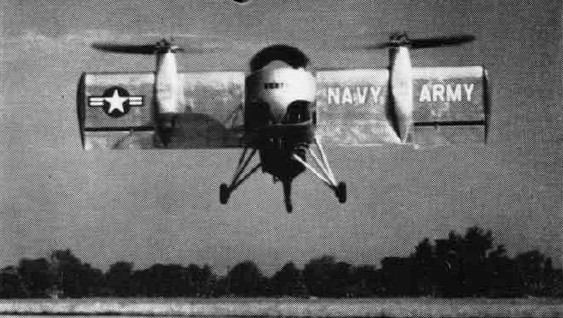
What was special about the Vertol 76?
Vertol's VZ-2 tested the tiltwing concept for vertical take-off and landing. After ground trials beginning in April 1957, it first took off on 13 August only… more…

Aviation history
Which was the most-produced American fighter of the Second World War?
The Republic P-47 Thunderbolt, of which 15,636 or 15,683 units were built, depending on the source. It was also one of the heaviest fighters of the conflict… more…

Aviation history
Who flew the E-66 at 2,149 km/h?
Konstantin or Vladimir Kokkinaki, depending on the source. Konstantin is credited with the absolute record on a closed 100 km circuit, at 2,148.66 km/h, set… more…

Fly-by-Owen (CC BY SA), vía commons Aviation history
How many I-11Bs were built?
Between 208 and around 450, depending on the source: one of the AISA I-11 reference sheets gives 208 examples built, while All-Aero speaks of around 400 built… more…

Aviation history
How many HH-53s could be converted to Pave Low III?
Eight HH-53C aircraft received an improved systems package and were redesignated HH-53H Pave Low III. The other figure in circulation, nine MH-53H and 32… more…

SCDBob (CC BY SA), vía commons Aviation history
What did the A129 Mangusta's armor protect?
The fuselage: the A129's airframe is armored and, according to All-Aero, designed to protect against 12.7 mm rounds, with partial protection against 23 mm… more…


