Did you know…
What could fit in the C-5A Galaxy's cargo hold?
Short answer
The C-5's cargo hold measures 121 ft (37 m) long, 13.5 ft (4.1 m) high, and 19 ft (5.8 m) wide, just over 31,000 ft³ (880 m³). It holds up to 36 463L master pallets or a mix of palletized cargo and vehicles, and up to six AH-64 Apache helicopters or five Bradleys at once.

A 37-metre cargo bay
The C-5's cargo compartment is 37 m (121 ft) long, 4.1 m (13.5 ft) high and 5.8 m (19 ft) wide, giving slightly more than 880 m³ (31,000 ft³). That volume holds up to 36 463L master pallets, or a combination of palletised cargo and vehicles.
Bridges, Apaches and Bradleys
The C-5 Galaxy can move practically any type of military combat equipment, including items as bulky as the Army's 74-short-ton (67 t) armoured vehicle launched bridge. Among the loads it accepts in a single lift are up to six Boeing AH-64 Apache helicopters or five Bradley fighting vehicles.
From the CX-HLS to the Lockheed contract
In 1961 several aircraft companies began studying heavy jet transport designs. The official request for proposals for the "Heavy Logistics System" (CX-HLS) was issued in April 1964, and in May of that year bids were received from Boeing, Douglas, General Dynamics, Lockheed and Martin Marietta. After a first screening, Boeing, Douglas and Lockheed received one-year airframe study contracts, and General Electric and Pratt & Whitney received engine contracts. Lockheed was selected as the winner in September 1965 and was awarded the contract in December 1965.
More questions
Aviation history
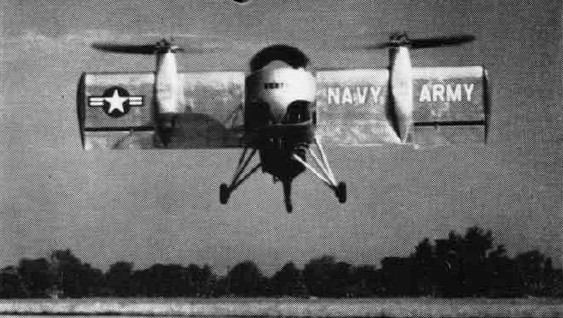
What was special about the Vertol 76?
Vertol's VZ-2 tested the tiltwing concept for vertical take-off and landing. After ground trials beginning in April 1957, it first took off on 13 August only… more…

Aviation history
Which was the most-produced American fighter of the Second World War?
The Republic P-47 Thunderbolt, of which 15,636 or 15,683 units were built, depending on the source. It was also one of the heaviest fighters of the conflict… more…

Aviation history
Who flew the E-66 at 2,149 km/h?
Konstantin or Vladimir Kokkinaki, depending on the source. Konstantin is credited with the absolute record on a closed 100 km circuit, at 2,148.66 km/h, set… more…

Fly-by-Owen (CC BY SA), vía commons Aviation history
How many I-11Bs were built?
Between 208 and around 450, depending on the source: one of the AISA I-11 reference sheets gives 208 examples built, while All-Aero speaks of around 400 built… more…

Aviation history
How many HH-53s could be converted to Pave Low III?
Eight HH-53C aircraft received an improved systems package and were redesignated HH-53H Pave Low III. The other figure in circulation, nine MH-53H and 32… more…

SCDBob (CC BY SA), vía commons Aviation history
What did the A129 Mangusta's armor protect?
The fuselage: the A129's airframe is armored and, according to All-Aero, designed to protect against 12.7 mm rounds, with partial protection against 23 mm… more…


