Did you know…
What happened to the Arrows after the 1959 cancellation?
Short answer
They were ordered destroyed: in the two months following the cancellation, orders were given to scrap all the aircraft, the engines, the production tooling and the technical data. The announcement, on 20 February 1959, is known as "Black Friday" in the Canadian aerospace industry. The decision cost around 14,500 jobs at Avro Canada.
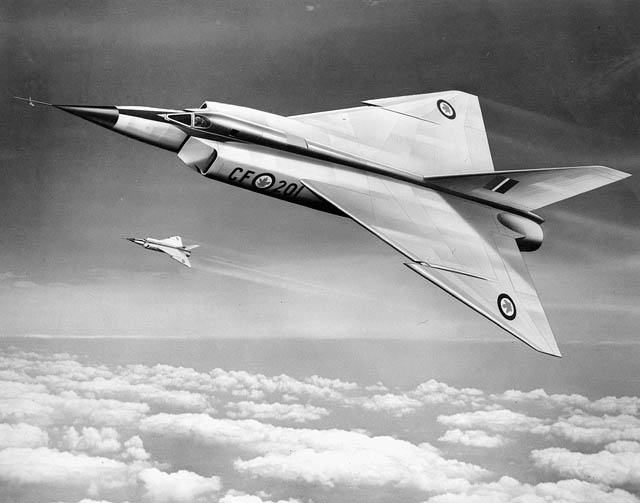
The destruction order
The cancellation of the Arrow was announced on 20 February 1959 and became known as "Black Friday" in the Canadian aerospace industry. Over the following two months, orders were given to scrap all the aircraft, the engines, the production tooling and the technical documentation.
The aircraft affected
The RL-201 had made its first flight on 25 March 1958, with chief development test pilot S/L Janusz Żurakowski at the controls. Four more Mk. 1 aircraft were completed — RL-202, RL-203, RL-204 and RL-205 — powered by the Pratt & Whitney J75. The lighter and more powerful Orenda Iroquois was already nearing trials, and the first Mk 2 fitted with that engine, RL-206, was ready for taxiing trials.
The cost of the decision
Diefenbaker ended the Arrow citing a total cost of $1.1 billion and arguing that missiles, specifically the CIM-10 Bomarc surface-to-air missile, could do the job more cheaply. The decision cost around 14,500 jobs at Avro Canada and effectively ended the country's advanced fighter industry.
More questions
Aviation history
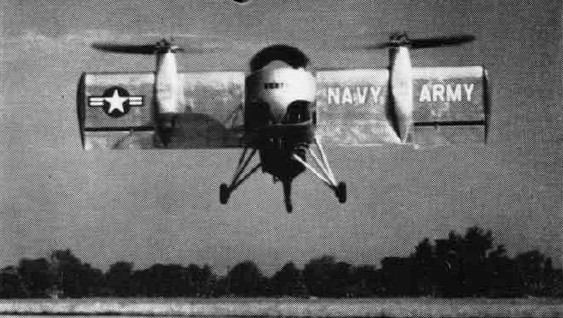
What was special about the Vertol 76?
Vertol's VZ-2 tested the tiltwing concept for vertical take-off and landing. After ground trials beginning in April 1957, it first took off on 13 August only… more…

Aviation history
Which was the most-produced American fighter of the Second World War?
The Republic P-47 Thunderbolt, of which 15,636 or 15,683 units were built, depending on the source. It was also one of the heaviest fighters of the conflict… more…

Aviation history
Who flew the E-66 at 2,149 km/h?
Konstantin or Vladimir Kokkinaki, depending on the source. Konstantin is credited with the absolute record on a closed 100 km circuit, at 2,148.66 km/h, set… more…

Fly-by-Owen (CC BY SA), vía commons Aviation history
How many I-11Bs were built?
Between 208 and around 450, depending on the source: one of the AISA I-11 reference sheets gives 208 examples built, while All-Aero speaks of around 400 built… more…

Aviation history
How many HH-53s could be converted to Pave Low III?
Eight HH-53C aircraft received an improved systems package and were redesignated HH-53H Pave Low III. The other figure in circulation, nine MH-53H and 32… more…

SCDBob (CC BY SA), vía commons Aviation history
What did the A129 Mangusta's armor protect?
The fuselage: the A129's airframe is armored and, according to All-Aero, designed to protect against 12.7 mm rounds, with partial protection against 23 mm… more…


