Did you know…
How much nasa scientists earn?
Short answer
NASA scientists and engineers are US federal civil servants paid on the General Schedule, so their salaries follow published GS grades and steps rather than negotiation. New PhD-level researchers typically enter around GS-11 to GS-12, and senior staff reach GS-14 or GS-15; exact figures vary by grade, step and the locality adjustment for each centre (data from September 2026).
Paid like civil servants, not like a lab
The central fact about working as a scientist at NASA is that it is a United States federal job. Most researchers, engineers and astronauts on the agency's own payroll are classified under the General Schedule, the government-wide pay system administered by the Office of Personnel Management. That system sets a grade for the job — GS-1 at the bottom to GS-15 at the top — and within each grade ten steps that advance with time in service and performance. A hiring manager cannot simply offer more; the vacancy announcement states the grade range, and the salary follows from it.
On top of the base table comes a locality adjustment, which is why the same grade pays noticeably more at Ames Research Center in Silicon Valley than at Stennis in Mississippi. Every vacancy posted on the federal jobs portal lists the grade, the step range and the resulting salary band for that specific duty station, which is the only reliable way to read a number.
Where a career lands on the ladder
Graduate-level scientific and engineering positions usually start in the GS-7 to GS-9 range for a bachelor's degree, with a doctorate or substantial research experience qualifying for GS-11 or GS-12. Technical leads, principal investigators and branch chiefs sit at GS-13 to GS-15. Above that sit the Senior Executive Service and the Senior Scientific and Technical positions, a small population.
The part that is not on the table
A large share of the people doing science for NASA are not NASA employees at all. Contractors, university researchers on grants, and staff of federally funded centres such as the Jet Propulsion Laboratory, run by Caltech, are paid on their employers' scales. Federal benefits — pension, health insurance, leave — are also a meaningful part of the civil-service package that a headline salary figure does not capture.
More questions
- Image pending
Astronauts and life in space
Why does astronauts float in space?
Because they are in free fall, not because gravity is absent. At the International Space Station's altitude of about 400 km, Earth still pulls almost as hard… more…
- Image pending
Astronauts and life in space
Why did yuri gagarin die?
Gagarin died in an aircraft crash, not in a spacecraft. On 27 March 1968 the MiG-15UTI trainer he was flying with instructor Vladimir Seryogin went down in… more…
- Image pending
Astronauts and life in space
How much an astronaut is paid?
NASA's civilian astronauts are ordinary federal employees, paid on the General Schedule grade-and-step scale with no bonus per flight, per spacewalk or per… more…
.png)
Astronauts and life in space
Why is blue origin so slow?
Blue Origin was built on deliberate, owner-funded incrementalism: its motto is Gradatim Ferociter, step by step, and it spent its first two decades on… more…
Astronauts and life in space
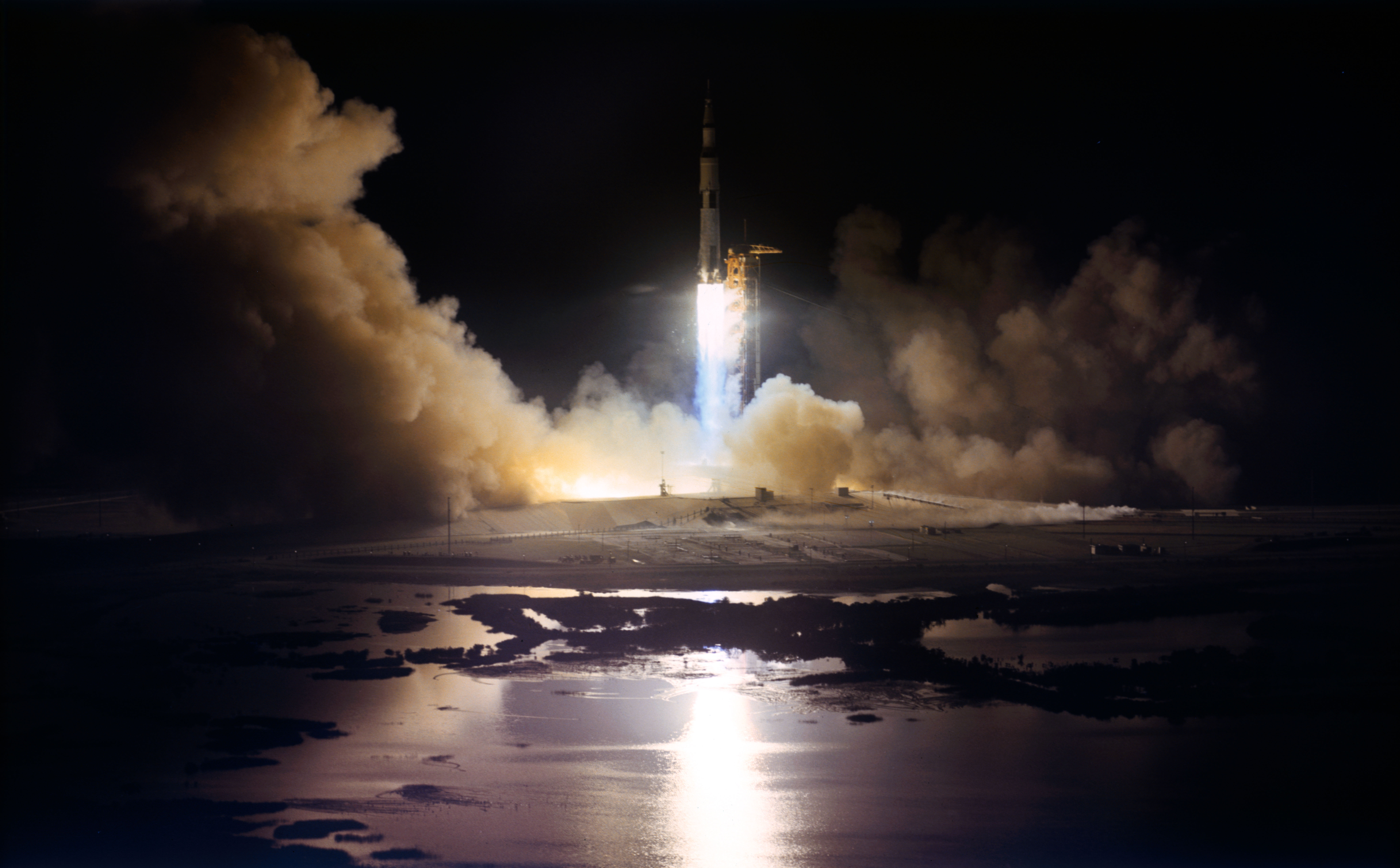
When did astronauts last walk on the moon?
Apollo 17, in December 1972. Eugene Cernan and Harrison Schmitt landed in the Taurus-Littrow valley on 11 December 1972, worked on the surface for three days… more…
- Image pending
Astronauts and life in space
How high do astronauts orbit the earth?
Crewed spaceflight today happens a few hundred kilometres up. The International Space Station orbits at about 400 km, lapping the planet roughly every 90… more…
