Did you know…
How much gravity is in space compared to earth?
Short answer
It depends entirely on where in space you are, and near Earth the answer surprises people: at the International Space Station's 400 km altitude, gravity is still about 90 percent of its surface strength. On the Moon it is roughly one sixth of Earth's, on Mars about 38 percent, and only far from any massive body does it approach zero.
Near Earth, almost all of it remains
Gravitational acceleration falls with the square of the distance from a body's centre, and orbital altitudes are small compared with planetary radii. Earth's mean radius is about 6,371 km; a station at 400 km sits some 6,771 km from the centre. The resulting acceleration is close to 8.7 m/s² against 9.81 m/s² at sea level — around 90 percent. Crews float because the whole vehicle is in free fall, not because the pull has gone.
At geostationary altitude, 35,786 km above the equator, the picture changes. Distance from the centre grows roughly sevenfold and gravity drops to something near 0.22 m/s², a little over two percent of the surface value. Even there, it is what keeps a satellite in place.
Standing on other worlds
Surface gravity varies with a body's mass and radius together, which is why intuition based on size alone misleads. The Moon offers about 1.62 m/s², roughly one sixth of Earth — the reason Apollo crews adopted a loping gait. Mars gives about 3.72 m/s², close to 38 percent. Jupiter, despite being gaseous, presents about 24.8 m/s² at its cloud tops, some 2.5 times Earth's.
The genuinely weightless case
True absence of gravity does not exist anywhere in the observable universe, because the field of every mass extends without limit. What exists is negligible field strength: deep interstellar space, far from any star, where residual accelerations are vanishingly small. Aboard a spacecraft the practical condition is microgravity, typically around a millionth of Earth gravity, produced by drag, tidal gradients along the vehicle and the movement of the crew themselves.
More questions
- Image pending
Astronauts and life in space
Why does astronauts float in space?
Because they are in free fall, not because gravity is absent. At the International Space Station's altitude of about 400 km, Earth still pulls almost as hard… more…
- Image pending
Astronauts and life in space
Why did yuri gagarin die?
Gagarin died in an aircraft crash, not in a spacecraft. On 27 March 1968 the MiG-15UTI trainer he was flying with instructor Vladimir Seryogin went down in… more…
- Image pending
Astronauts and life in space
How much an astronaut is paid?
NASA's civilian astronauts are ordinary federal employees, paid on the General Schedule grade-and-step scale with no bonus per flight, per spacewalk or per… more…
.png)
Astronauts and life in space
Why is blue origin so slow?
Blue Origin was built on deliberate, owner-funded incrementalism: its motto is Gradatim Ferociter, step by step, and it spent its first two decades on… more…
Astronauts and life in space
When did astronauts last walk on the moon?
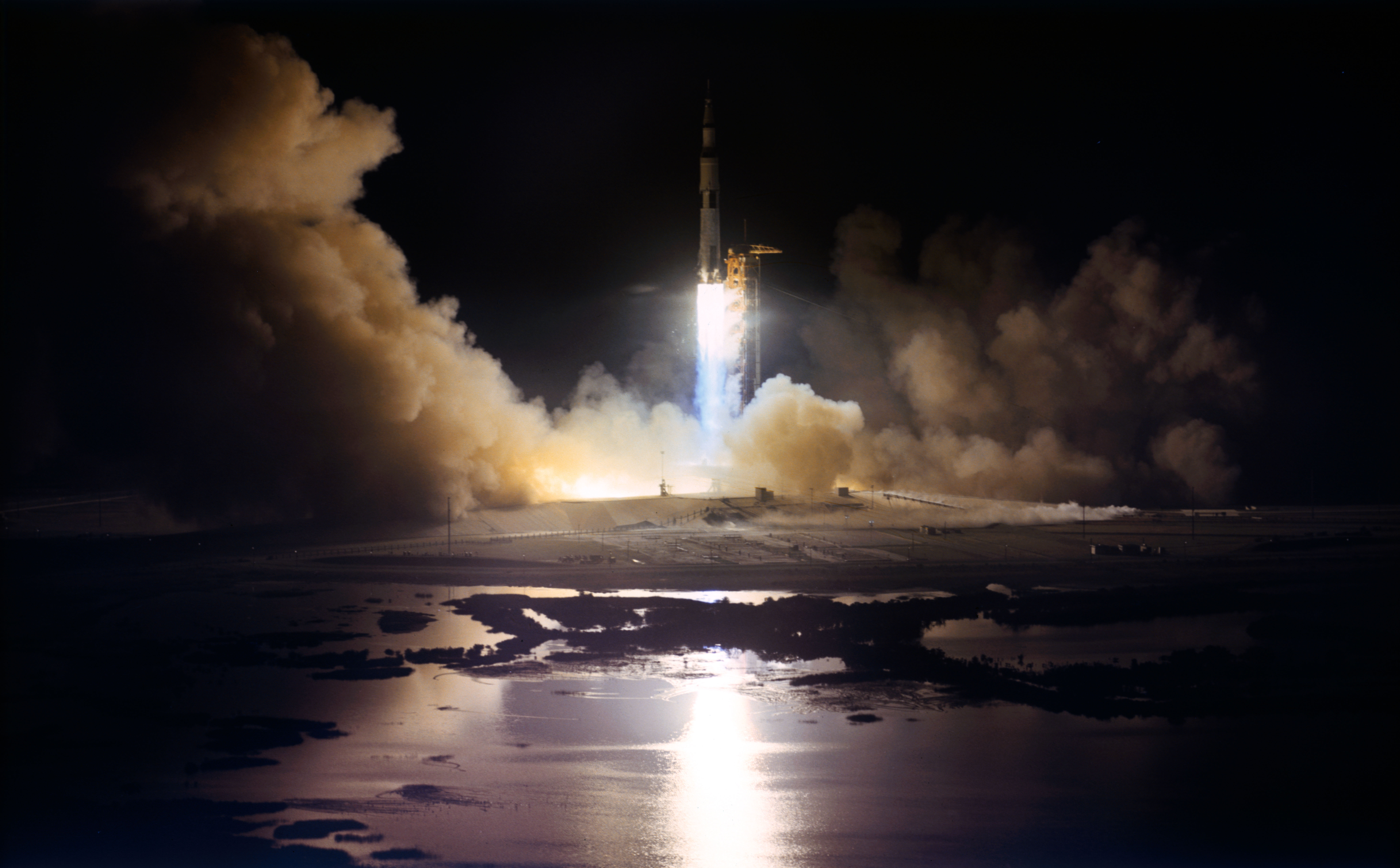
Apollo 17, in December 1972. Eugene Cernan and Harrison Schmitt landed in the Taurus-Littrow valley on 11 December 1972, worked on the surface for three days… more…
- Image pending
Astronauts and life in space
How high do astronauts orbit the earth?
Crewed spaceflight today happens a few hundred kilometres up. The International Space Station orbits at about 400 km, lapping the planet roughly every 90… more…
