Did you know…
How much gravity in space station?
Short answer
Almost as much as on the ground: about 8.7 m/s² at the International Space Station's altitude of roughly 400 km (250 mi), close to 90% of the 9.80 m/s² measured at sea level. The crew floats because the station is in permanent free fall, and the accelerations actually felt on board are on the order of a millionth of g.
Nearly a full g, and nobody feels it
Gravity falls with the square of the distance from Earth's centre, not from its surface. With a mean radius of about 6,371 km, the planet's centre is only some 6% farther away from an orbit 400 km up than it is from the launch pad, so the local pull is still about 8.7 m/s², close to 90% of the 9.80 m/s² at sea level. An 80 kg crew member would register roughly 72 kg on a scale bolted to a fixed tower at that height. What is missing aboard the station is not gravity but any surface pushing back.
What microgravity actually measures
The station and everything inside it fall around the planet at the same rate, so the useful figure for science is not the gravitational field but the residual acceleration left over: typically on the order of one millionth of g. It comes from crew movement, pumps and fans, thruster firings, the faint aerodynamic drag of the residual atmosphere, and the gravity gradient that very slightly separates objects stowed far from the centre of mass. Sensitive experiments sit in racks with active vibration isolation to keep that residue as low as possible.
Why it cannot be engineered away
Drag makes the orbit decay, so the station has to be pushed back up periodically; during those reboost burns the acceleration on board climbs far above microgravity levels and delicate experiments are paused. Placement matters too, since the quietest volume is close to the centre of mass. Spinning the structure to create artificial gravity has been studied for decades but never flown on the ISS: the whole point of the laboratory is the absence of weight, not its recovery.
More questions
- Image pending
Astronauts and life in space
Why does astronauts float in space?
Because they are in free fall, not because gravity is absent. At the International Space Station's altitude of about 400 km, Earth still pulls almost as hard… more…
- Image pending
Astronauts and life in space
Why did yuri gagarin die?
Gagarin died in an aircraft crash, not in a spacecraft. On 27 March 1968 the MiG-15UTI trainer he was flying with instructor Vladimir Seryogin went down in… more…
- Image pending
Astronauts and life in space
How much an astronaut is paid?
NASA's civilian astronauts are ordinary federal employees, paid on the General Schedule grade-and-step scale with no bonus per flight, per spacewalk or per… more…
.png)
Astronauts and life in space
Why is blue origin so slow?
Blue Origin was built on deliberate, owner-funded incrementalism: its motto is Gradatim Ferociter, step by step, and it spent its first two decades on… more…
Astronauts and life in space
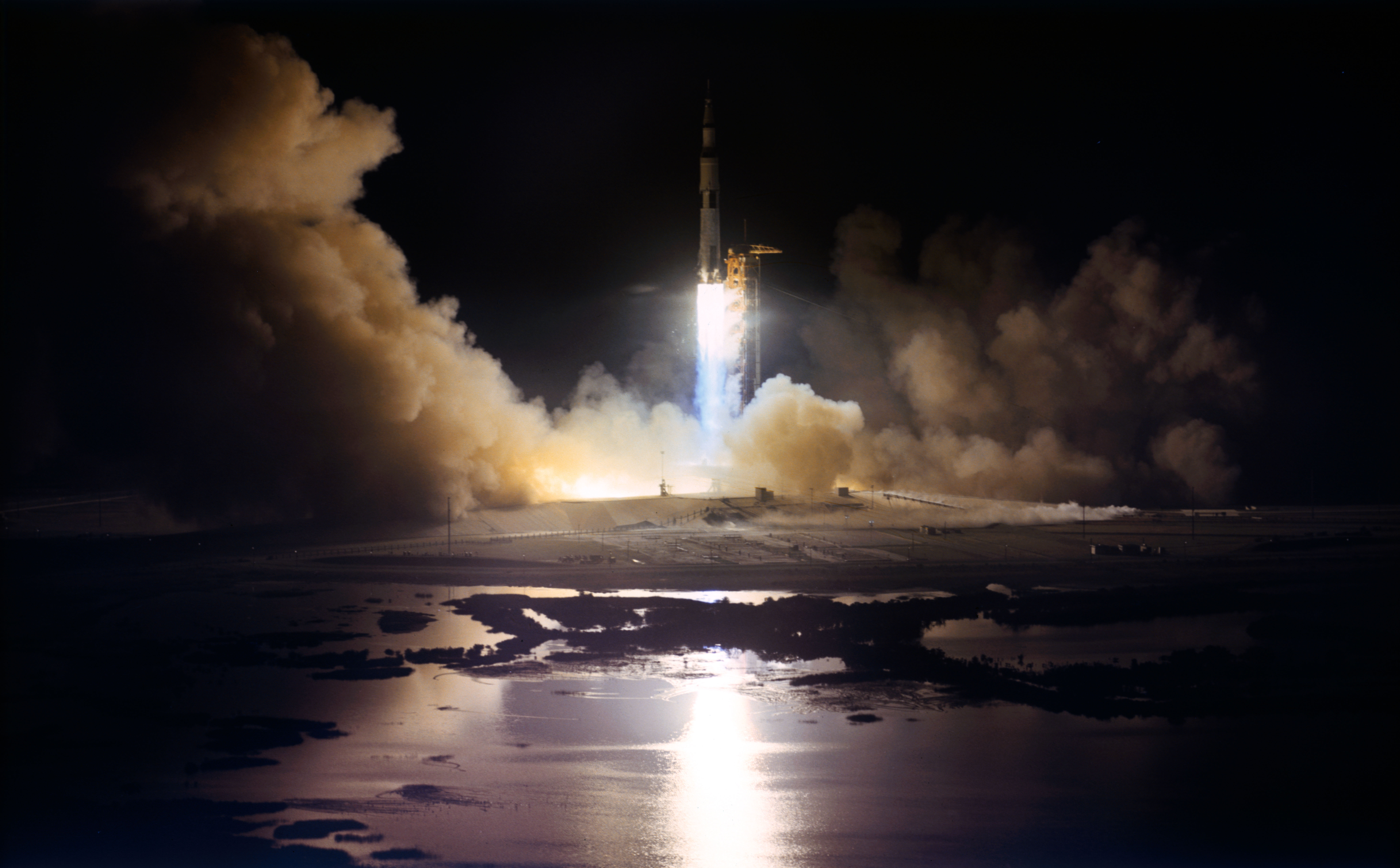
When did astronauts last walk on the moon?
Apollo 17, in December 1972. Eugene Cernan and Harrison Schmitt landed in the Taurus-Littrow valley on 11 December 1972, worked on the surface for three days… more…
- Image pending
Astronauts and life in space
How high do astronauts orbit the earth?
Crewed spaceflight today happens a few hundred kilometres up. The International Space Station orbits at about 400 km, lapping the planet roughly every 90… more…
